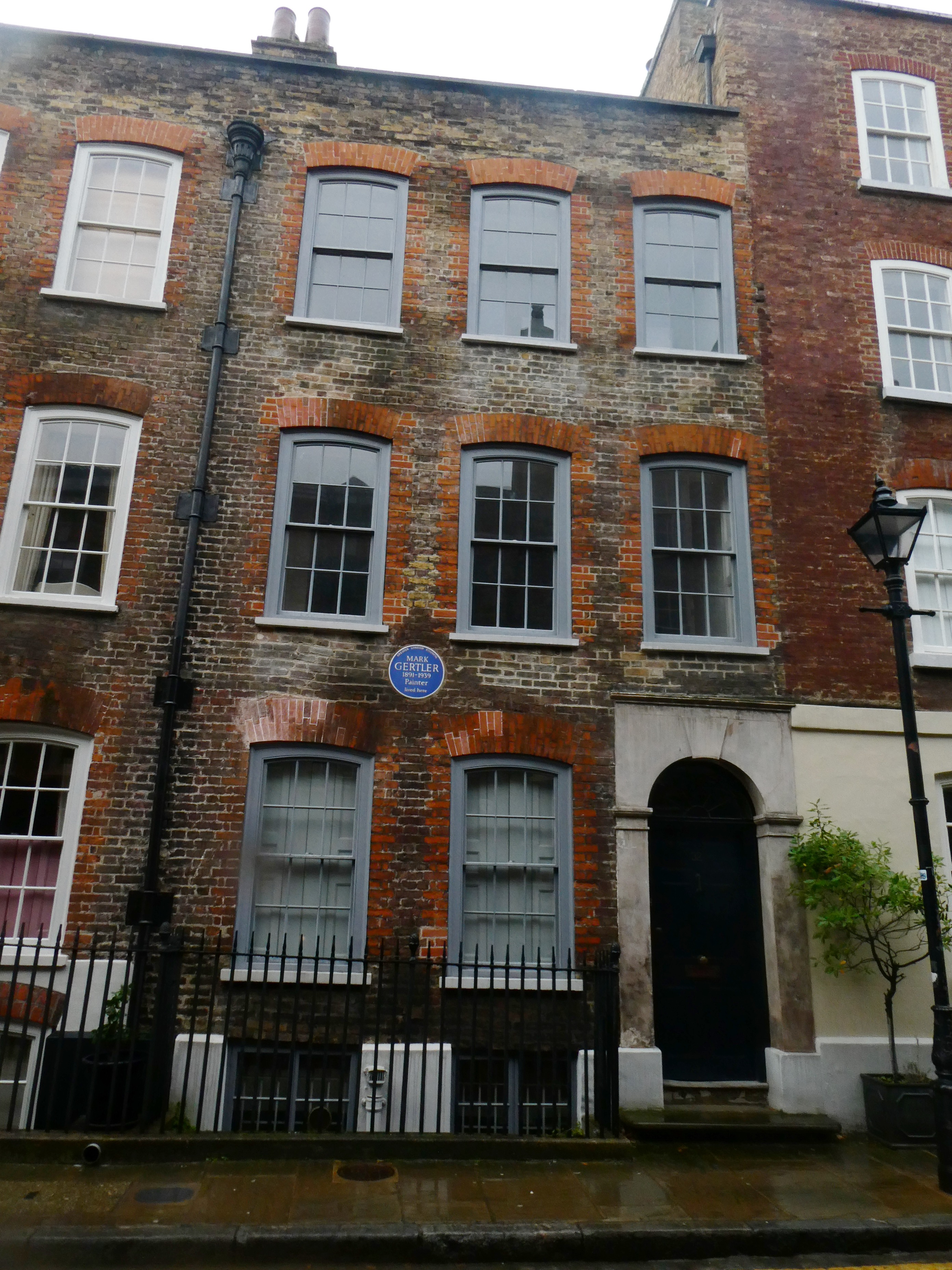
We recently visited Dennis’ Severs’ House at 18 Folgate Street, Spitalfields. This was a revelation to me, and I’ve discovered new things since my visit, about Dennis himself, his life, the creation of the interiors in the House, and the life of the Spitalfields community around him, which make the visit an even more poignant and illuminating experience.
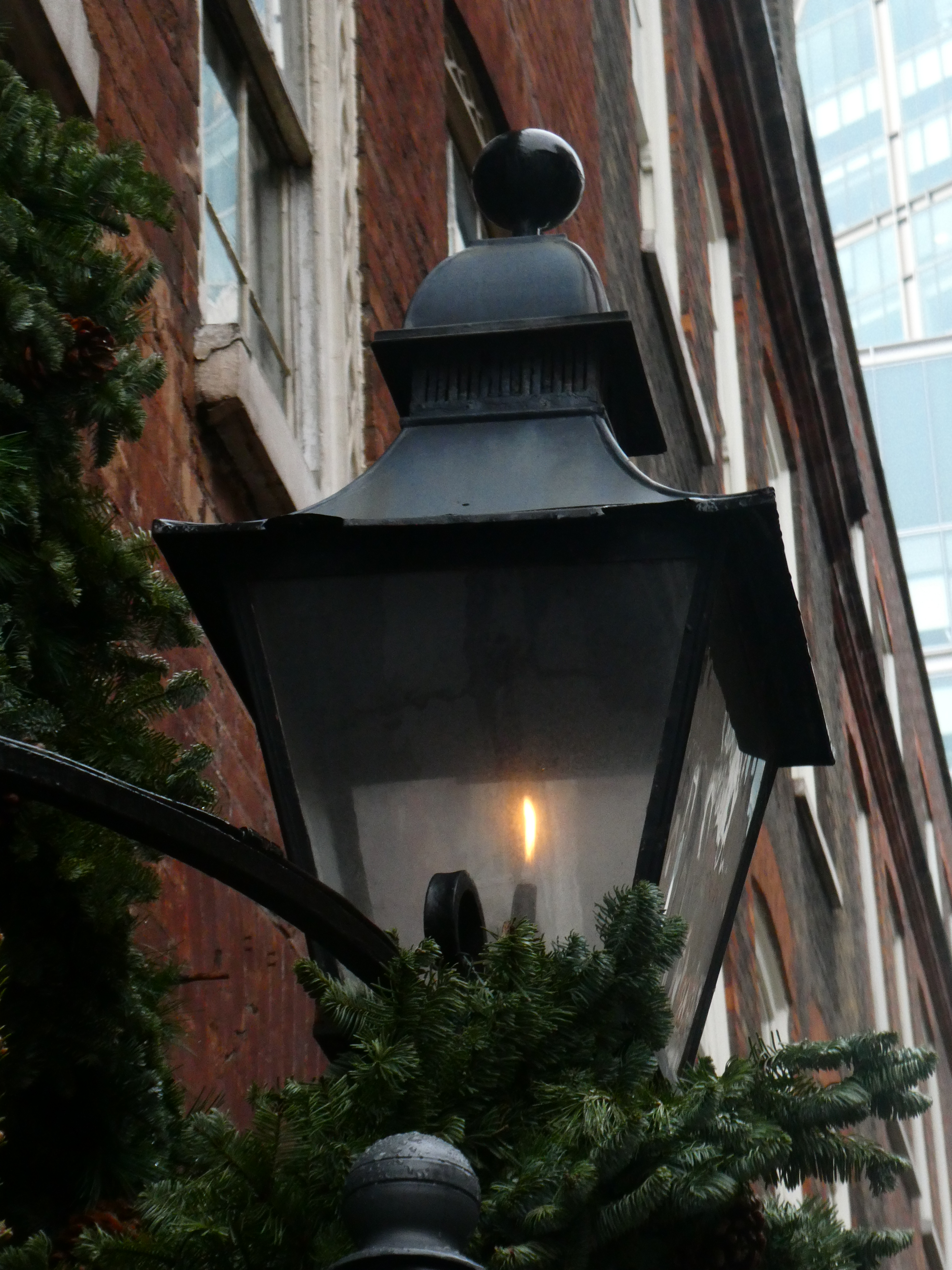
Dennis Severs (1948-1999) was born in the USA and came to Britain to settle; he purchased the down-at-heel property at 18 Folgate Street in the 1970s and created a series of stage sets in this 18th century house which evoke various scenes from the 1700s and the 1800s. We experienced these as he intended – on a silent visit, wandering through the rooms on four floors, with little information, just allowing the atmosphere, the scent in the air, the quality of the candlelight, the open fires burning in the grates, the shadows, the decor of the rooms and the choice and placement of the objects to speak to us and to conjure up stories.
In each room, you feel as if the living occupants of the time have just left, or are just about to enter.
When we emerged from the house afterwards back into 21st century Folgate Street, I felt as if I’d been a time traveller, and had spent the last 45 minutes in another world.

In one of the lamplit rooms, mince pies were being kept warm by the open fire, a dresser along one wall groaned with food – tarts, jellies, pies, mounds of candied fruit – and I felt as if a jolly Dickensian character like Fezziwig was about to stride forward from the shadows and say, “Welcome! Welcome! Come in and make yourselves comfortable, and help yourselves!”
Mr Fezziwig, by the way, was the kind employer in Charles Dickens’ A Christmas Carol, whom the First Spirit encouraged Ebenezer Scrooge to remember from his youth – an open-hearted gentleman under whom young Scrooge was apprenticed, who told everyone to stop working and come and prepare for the Christmas party where they were all to make merry.

In another room we were invited to contemplate the aftermath of the scene in Hogarth’s painting, ‘A Midnight Modern Conversation‘, a reproduction of which hung above the fireplace. In this painting, a group of men are carousing round the table, and one of them has fallen on the floor, drunk. In Dennis Severs’ re-imagined scene everything was re-created in detail, as if the disorderly drinkers had just lurched out of the room and left the scene; amongst many other elements, I saw a pie on a side table discarded and surrounded by crumbs, and a general sense of disarray clung to the room.
Everywhere in the house homemade paper chains hung from the walls and swags of winter greenery were festooned in the hallways and landings. On the top floor was the early 1900s room, and here was evidence of near-dereliction and disrepair, and in the background the eerie sound of a male presenter’s voice on the radio.
We were left to make our own interpretation of the state of the room, its decor and the arrangement of objects. To me it symbolised a moral neglect, the culture and societies and political situation in which the world became engulfed by the First World War, Also to me it suggested a man called away suddenly to the war, forced to leave his life in an unfinished state, to an uncertain future, from which he may never return to rebuild that life. Others will interpret that room totally differently. In a way, visitors are invited not even to interpret, but to experience the rooms and accept every feeling that arises.
You can read more about Dennis Severs’ house here on the house website. No photographs are allowed inside the house so I was unable to share any here, but you’ll find photos on the website.

(photo credit Jamie Robinson)
After the visit, I looked up a website called Spitalfields Life: remembering Dennis Severs and this contains the stories of several members of the local artistic and gay communities who knew and loved Dennis, and includes photos of them too, taken in the House. The information on this website gives a strong sense of the local Spitalfields community which Dennis enriched with his colourful character, and how well loved he was.
(photo credit Jamie Robinson)
I learned that when Dennis bought the house in 1979 from the Spitalfields Trust it was derelict, as were several of the houses in Folgate Street, which had been in the past home to the silk-weaving Huguenot community that thrived in Spitalfields from the late 17th century and into the early 19th century. Dennis gradually renovated the house and created the stage sets in the rooms, all on a very low budget. He constructed and painted ‘oak panelling’ using unwanted pallets picked up at Spitalfields Market, he foraged among stalls of bric-a-brac and sourced damaged objects which he could arrange in the rooms to create the scene he visualised.
Even now, remembering going through that house is almost like a dream, as if I have somehow been transported in spirit, just like Ebenezer Scrooge, into other lives and other times.


Why not sign up to my mailing list – you’ll receive a monthly newsletter straight to your inbox in which I share gems and snippets from my research discoveries, and news and insights from the writing and publishing worlds. Plus you’ll be the first to know when I have a new book coming out.
If you enjoy my articles and would like to support me on my writing journey, you can do so here at buy me a coffee and I’ll be very grateful.

 scskillman.com