Inspirational and Not-So-Inspirational Teachers… and Books Where the Student Falls in Love With Her University Tutor

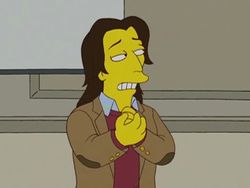
My teenage son was talking to me about the Simpsons episode when Marge Simpson fell for her university tutor, while she was going out with Homer.

Steffan August, Marge Simpson's teacher at Springfield University
Steffan August, Marge Simpson’s teacher at Springfield University

We got onto the subject via inspirational teachers. He mentioned his options at school and why he’d chosen not to go with certain subjects. And what did it come down to? Yes, the quality of the teaching. Did he like the teacher? And did they make the subject interesting?

That was what it was all about.

A sober reflection.. and it reminded me of how vital our teachers are to us. If a subject is taught imaginatively, we love it. If we have a dull teacher, we’ll probably dislike that subject. We may even choose to drop it.

What a tragedy.

But Marge Simpson’s predicament drew me on to other aspects of teaching – by the inspirational and the not-so inspirational:

  “Falling for your university tutor.”

I immediately thought of how fertile a subject this can be for novelists. And yet there are few examples.

Malcolm Bradbury wrote his novel The “History Man”about university life in the seventies. It centred upon the dreadful Howard Kirk. He was the prototype of the libidinous university tutor of the early 1970’s; but also in terms of his sociopolitical theories and his whole worldview,  and how it impacted on his attitude to relationships, he was a man of his time.

Anthony Sher as Howard Kirk in the BBC TV adaptation of The History Man

In the TV adaptation of the book I remember one particular scene. Howard and his wife were sitting at the breakfast table with their children and he was having a go at her for giving the kids the choice of too many breakfast cereals. “Stop giving them so many options!” he snapped.

Another famous example is Joyce Carol Oates’ novel “Beasts”, set in a New England college. As I read Oates’ account of a university seminar, and she described the reactions of the girl students to their tutor, I had a terrifying moment. It was truly sinister. I thought, “Was Joyce Carol Oates one of the people in my Contemporary American Lit seminar?” Was there a Junior Year Abroad student from the US sitting in our circle? Because she exactly captured the effect our tutor had on us; how we felt about him, how we reacted, the things he said, his personal style…

Then I worked out the dates Joyce Carol Oates would have been at university, and reasoned with myself – and breathed more freely.

The similarity, though, was still uncanny.

My first adult novel (unpublished) was set in a university; the main characters were undergraduates, and it revolved around relationships between the academics, as well as those between the students and their teachers.

Have you read any novels in which the student falls for her university tutor? It seems that they may be few and far between. But I’ll be happy for you to prove me wrong! Find out here about other books I love.

Romantic Moments

What are the most romantic moments of your life?

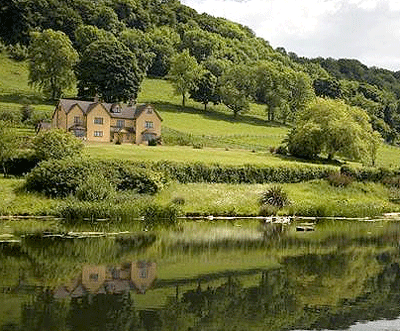
Cotswold house in a romantic setting

 As a mystery romance novelist I have my own ideas!

The setting for my novel Mystical Circles is a gracious farmhouse in the Cotswolds; surrounded by garden, orchard, and its own land rising up the steep side of the valley to a ridge overlooking  the panorama of the Severn Vale, it also boasts a fine tithe barn. It’s my idea of a romantic location. Though I will admit that some of the things that go on in it do not quite qualify for that description! For intrigues, liaisons and relationships flare and flourish or fizzle out quickly within this close circle.

Nevertheless, there are genuinely romantic moments in my novel. There is a sunken garden with a water lily pond; an African thatched gazebo reached by a winding path through azaleas and rhododendrons; and up the wooded slope behind the farmhouse, a hermitage, ideal for “one-to-one counselling sessions”. Also the sitting room, with its leaded window panes, through which the morning sun streams, tinting the oak floor timbers gold, and enriching the colours of the silk long- fringed rugs is often the venue for a romantic get-together; or maybe the library, with its mellow oak panelling, the dreamy atmosphere, the softly glowing lamps.  These are all suitable locations for romantic moments.

But in real life true romantic moments are few and far between.

To me, the essence of a traditional romantic moment is this: a serendipitous conjunction of beauty, happiness, dreams, and a loving relationship between a man and a woman. Notice my use of the word ‘traditional’!

You need to inhabit a romantic moment fully to claim it.

I can think of moments which had most of the ingredients of being romantic… except that I lacked the confidence to be fully alive to them.

You need to be relaxed, accepting, and totally at one in the moment.

These are some examples of romantic moments garnered from my own memories (the names of the ‘romantic heroes’ concerned are disguised!:

1.  lemon souffle in a restaurant in Albemarle Street, London, with Mr X

2.  on a London underground escalator when Mr X turned to me and said: “One day we’ll be together forever.”

3. On the shore of a certain Balearic Island, near dusk, watching a sea that looked like caramel silk, when Mr X turned to me and said “When I become Y (naming the promotion he was hoping to get, which we’d discussed), we’ll come back here and stay at the Z Hotel (naming the Hotel Romantic-but-Very-Posh-and-Expensive which we on that trip had been unable to afford to stay in).

Here are my further ideas of what would constitute a romantic moment:

1) A chance meeting with an ex-lover in a supremely beautiful place (and I spent ages trying to  make that work in a previous novel but it just didn’t come off).

2) The “bone fida mini-break” beloved of Bridget Jones –  in a fine country house hotel such as the one which Daniel Cleaver whisked Bridget off to, filmed at Stoke Park  (although it all went sour when they met up in the foyer with Mark Darcy and his attractive companion Natasha).

3) The spontaneous / surprise weekend in Paris in the springtime (referred to in a stage farce I greatly enjoyed, when the main character, a philanderer played by Leslie Phillips, spirited his mistress Janie off on just such a break, having purchased  beautiful lingerie to lay out on the bed for her, and was then interrupted by other visitors whom he hadn’t bargained for).

True romantic moments are few and far between in real life. That is, of course, the nature of serendipity. And it’s why romance fiction is the most popular literary genre.

I hope that when those moments come, you are able to fully inhabit them.

What are your romantic moments? Dare you let me know about them in your comments – disguising the name of the romantic hero, of course?

Books That Shock, Move and Change Their Readers

I have loved many books in my life, but the ones that stand out for me have three ingredients: archetypal themes, emotional charge and X factor. And they are the ones which can indeed change the way you see the world.

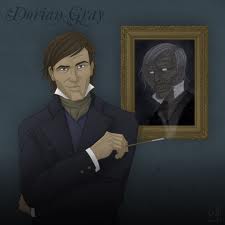
The Picture of Dorian Gray by Oscar Wilde

My three nominations will be grouped under the headings of the power they exerted upon me, the reader:

1) The power to shock and move

Shusaku Endo’s Silence, set in the 17th century, is the story of the persecution of a Jesuit missionary sent to Japan. It has been called “Endo’s supreme achievement” and “one of the twentieth century’s finest novels”. In this book, the Catholic Endo explores the theme of a silent God who accompanies the believer in adversity. It was greatly influenced by the author’s experience of religious discrimination in Japan, racism in France, and tuberculosis. During the years that have elapsed since I read this book, I have never forgotten the image of the Japanese Christians being tied to a stake at the sea’s edge, and forced to endure the sea rolling back and forth over their bodies, and singing: We are going to the temple, going to the temple of God. Somehow for me this stands as an image of a race, whose native religion is so different from Christianity, assimilating Christian theology into their own belief system, and expressing a faith which transcends personal suffering. How has it changed me? It has informed my understanding of the way human beings adopt different faith systems ever since.

2) The power to change your view of human nature

Oscar Wilde’s The Picture of Dorian Gray is considered by some to be the greatest horror story ever written. When I finished reading this story I felt “scoured out” emotionally, psychologically and spiritually. This tale of how one man’s soul can be destroyed through the devious manipulations of another, is summed up in a terrifying image: the portrait that reflects the creeping corruption of a man’s soul, and whose destruction must result in the death of its subject. I felt the real villain of the piece to be Lord Henry Wotton who first stirs up the artist and persuades Dorian of his beauty, thus sewing the seeds of his eventual destruction. Beauty, and our perception of it and response to it, lies at the heart of this masterpiece. Since reading it, I have never seen human beauty with the same eyes.

3) The power to give new insight into human psychology

Dostoyevsky’ s Crime and Punishment

Another unforgettable moment is provided by this great novel, which tells the story of impoverished student Raskolnikov who determines to rid the world of the grasping old woman money lender. He persuades himself that his actions are benevolent, for the greater good of the community, and thus he has a high moral purpose. But when he is forced to kill the old woman’s half-sister, innocent Lizaveta, then his conscience starts its work. Again one moment has remained with me: when Raskolnikov is eventually compelled to give himself up to the police who have been long hunting him: It was I who killed the old woman and Lizaveta. This profound novel, once read, stays with you forever. And this indeed sums up the power of a novel which will change how you see the world.

What about you? Have you read these novels? Do you share my feelings about them, or disagree? Or perhaps you can suggest another  novel, which is for you more powerful than any of these? Let me know! I’d love to know your choices!

Defining Moments of Life: Journey To a University Open Day

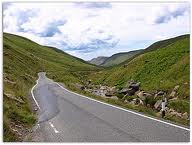
road through Cambrian Mountains

The beautiful Cambrian mountains  – spectacular scenery to drive through, to your daughter’s first university open day.

 A misty, rolling, dreamlike landscape – ideal for a journey, but not a place that many find easy to live in.

The route took us from the Midlands through the England/Wales border country, to Aberystwyth on the west coast of Wales.

And as with all bittersweet journeys it wasn’t simply the destination that defines the journey in my mind, but the words of the lady who owned the b & b we stayed at overnight.

“My son wouldn’t go there. He wanted to get as far away as possible. He wanted to get out of Wales.”

So she named the university he went to, in England, and then said with a laugh, “And he’s never been back.”

Of course it had a happy note. He’d met his future wife there and now they were settled in England. His Welsh wife would have willingly returned to Wales, but he had no desire to at all.

At Aberystwyth, a lovely, remote but small and friendly community, I thought of the fact that the majority of students come from outside Wales.  And all the Welsh young people probably want to get away from the place.

All around, amongst the crowds of visitors, I saw over and over again, one parent and one innnocent seventeen year old. I thought of how this moment is one of those defining moments in life. Your young person may spend three years here, may meet their future life-partner here, will make choices and decisions here that will impact the course of their lives.

Your young person may go there, and, like the son of the  b& b owner, “never come back”.

Now I understand why attending a university open day can be  a time both when you dare to believe in new directions and exciting opportunities for the future, but also a time when you may understand why the end of all our seeking is to return to where we began.

What defining moments have you had? Consider leaving a comment, and sharing your thoughts with me!

The Writer’s Journey: A Satisfying End to the Story

The way in which a novel ends is critical to its success

A satisfying end determines whether readers will go away and say to their friends, “I’ve just read this fantastic novel!”

I believe that a novel is defined by the way it ends. The theme becomes clear, and the focus of the story shines out.

 So important is the end, that it can spoil an otherwise excellent novel

As a regular Amazon reviewer, I’ve read novels thinking, This is superb. I’m going to give this novel 5 stars. And then I’ve reached the end, and my potential review slips a star.

So how do fiction writers ensure their novels come to a satisfying conclusion?

A novel is an organic thing. Writers may set out on the journey with the goal of exploring what it is they want to say. The theme may be as yet unknown. Only by a satisfying end to the story will that theme reveal itself. Characters can take over and change their creators’ minds. A pre-determined end turns out to be totally inappropriate. A story may have its true conclusion earlier than you had envisaged. Or too many strands are tied up neatly. You need to backtrack, finish the story at an earlier point, leaving some questions still open in the mind of a reader.

A novel may have a closed or an open ending. The end may be happy, sad, bittersweet or ironical. But certainly the end is determined by the way in which the main protagonist has pursued that over-arching desire which is the spine of the story.

Here are 5 questions to ask yourself as you consider the end of your novel:

1) Is there a “deus ex machina” in your conclusion? Or has the ending evolved from the choices made by the main protagonist? Could this ending have occurred if the protagonist had not made those choices – the motivation for which you have developed throughout the novel, folding them through the plot in a skilful weaving of characterisation and action?

2) Have you answered too many questions and tied up too many loose ends?

3) Have you said more than you needed to? Have you failed to respect the intelligence of the reader?

4) Is your ending climactic?  or could the reader have predicted it?

5) Has the outcome been foreshadowed? Could the reader say, ‘Oh yes, of course, this makes sense because…”

Take some great endings as an example.

John Fowles’ novel “The Collector” has a conclusion which penetrates the reader to the core, it is so chilling. And yet it has an organic relationship with the events of the novel and the development of the two characters.

Tolkien’s fantasy masterpiece “The Lord of the Rings” is one that satisfies on many levels. One aspect of the ending which greatly satisfies me comes when Tolkien notes that the power of the Dark Lord is reduced and shrunk but not totally annihilated. It is still there, in a corner. It can be reawakened. I found this a profound recognition of the nature of evil in this world.

Finally, a very well-known happy ending is to be found in Jane Austen’s “Pride and Prejudice”. And yet we are still left with the fact that Mrs Bennett and Lydia and Wickham will all continue to be problems in the future. The problems they pose will be of a slightly different nature as a result of the events of this story – but they’ll still be there, because they are inextricably bound up with those characters.

Have you any examples of novels with endings you love? Or maybe you remember only too well those novels spoilt by an ending which failed to satisfy? Let me know what you think! Leave a comment and tell me about the novels which delivered all they promised, and those who let you down with their endings!

Do Fiction Writers Use Real Life Characters in Their Novels?

Surely if you put a real person in your novel they might recognise themselves?

Is it all right to use real people to create characters in your novel?

Kenneth Branagh as conceited fop Gilderoy Lockhart

Suppose they recognise themselves?

In my experience this is extremely unlikely.

JK Rowling based the character of Gilderoy Lockhart on someone she knew. In “Harry Potter and the Chamber of Secrets”, Gilderoy is the new Defence Against the Dark Arts Teacher and he is a conceited egoist whom Hermione has a crush on. Kenneth Branagh had great fun with the role in the film of the book. JK Rowling is quoted as saying the original of Gilderoy is probably the last person on earth who’d be likely to recognise himself in the character who’s based on him.

The only character who is deliberately based on a real person is Gilderoy Lockhart. … the living model was worse. [Laughter]. He was a shocker! … I can say this quite freely because he will never in a million years dream that he is Gilderoy Lockhart.

Can Authors Always Get Away with Using Real People in Their Novels?

The answer to this is probably yes!

That’s because self-knowledge is a rare commodity, and most people are unable to recognise their own characteristics in a fictional character.

Authors are, in theory, supposed to protect themselves with the formula “All characters in this publication are fictitious and any resemblance to real persons, living or dead, is purely coincidental”.

But what is coincidence, in the creative imagination?

In the process of creative writing, the character will gain fictional attributes anyway. And other people you’ve known may well insinuate themselves in.

I’ve used several real people as models for characters in my novel “Mystical Circles“.

I hazard a guess not one of them would ever recognise themselves.

And not one of them is a pure, clear representation of a living person. Other bits and pieces have attached themselves to my fictional creation.

In any case, how can you  fully inhabit the character, mind, body and spirit of another real person? Impossible. Imaginative sympathy is the key.

I believe authors fictionalise characters by letting go of the need to “copy”, “represent real life” or “get the facts right”.

Instead we trust to our unconscious (as Carl Jung knows very well!) to process observation, imagination and knowledge.

What do you think? Do you believe you’d recognise yourself if someone put you into a novel? And if you’re an author, what’s your take on this? Let me know what you think about this!

The Double-Edged Sword of an Artist’s Silence

If I didn’t make films I don’t know what else I would do, apart from playing jazz and making a nuisance of myself.” (Woody Allen)

Woody Allen’s words above show the nature of passion for art. For many creative people cannot imagine giving up, retiring, or falling into silence, before they die.

The master of comic fiction, P.G. Wodehouse, continued writing until the very end of his life. At the age of ninety three on his deathbed he was working on his final novel “Sunset at Blandings”. He’d reached chapter 16 of a planned 22 chapters. It was as full of spirit and youthful fun as all his many novels.

Ask a group of writers why they write and you will receive many answers. But common to many is the simple assertion “I feel compelled to write.” Compelled, that is, in the same way as Woody Allen feels compelled to make films. And this is often the case, until new circumstances intervene.

And for creative people, these circumstances may be of their choosing – or tragically otherwise.

I think of three novelists who fell into silence, for different reasons. The first is one of my favourites, Susan Howatch. Find out more about Susan Howatch’s “retirement” from writing on this thread on Vivienne Tufnell’s blog.

I followed and contributed to this thread because I share the feelings expressed by many about Susan Howatch – together with the disappointment that there will be no more from this much-loved author of the Starbridge series, and St Benet’s Trilogy. No more Nicholas Darrow. No more psychospiritual drama from that direction. No more sinuous and fluid psyches reaching out…  we, her legions of fans, will just have to go back and read those masterworks again from the beginning!

Jim Crace made a similar decision, but gave advance notice of it. He announced his next book would be his last. He created a strong impact with his novel “Quarantine” set in the Judaean wilderness, which examined those “on the edge” who wandered there 2,000 years ago, together with Jesus. Crace, writing as an avowed atheist, nevertheless developed the character of Jesus in a unique and compelling way. He has written many other successful novels too. But now he’s happy to “quit while he’s ahead”.

I used to feel the same about Iris Murdoch as I do now about Susan Howatch. I marvelled at “A Severed Head”, “The Bell”, “The Message To The Planet”, “The Book and the Brotherhood”.

Iris Murdoch’s silence was enforced through Alzheimer’s. Ironically, when the first signs of it arose she thought it was writer’s block. I could hardly bear to see the film “Iris” about the devoted support she received from her husband, because I found it so upsetting that she fell victim to such a horrific condition. Although I know full well the much-loved Terry Pratchett is on that same journey. Nevertheless I find it chilling to contemplate that this could happen to people with such truly brilliant minds.

But in the case of these writers, having been so prolific, at least one can say they’ve given of their best. And are greatly loved for it.

Have any of your favourite authors fallen silent? Do you lament that no more stories will fall from their pens? Or, perhaps, eagerly fall upon the publishers’ promises that here is another author who will fill that silence?

Unconscious Research and Dream Yoga

What might walking backwards through the Australian rainforest have to do with a mystery romance novel set in the Cotswolds? It was all part of my “unconscious research”. And it was a long research journey too, I admit. If you’re intrigued, go to Martin Willoughby’s blog to read my guest post on how “Dream Yoga” played a role in the creation of the story of “Mystical Circles”.

Minor Characters Who Highlight the Theme in Great Fiction

The success of a great novel does not lie entirely in the hands of its hero. Many of my favourite novels come with a surprise gift – the character who is most interesting of all, who is not the main protagonist. This is the character you wonder about later, the character that seems to step outside the story and comment on it, or the one whose dilemma is never really solved by the outcome of the plot. Here are three examples:

1) Mr Bennett in Pride and Prejudice

Lizzie’s father Mr Bennett is the character around whom the story problem – the Entailment – is centred. He could have seen the crisis coming, and had the power to avert it – Lydia’s elopement with Wickham, which threatened to ruin all of them. Instead, he allows himself the luxury of standing outside the story and commenting flippantly on it, as if the fate of his family had never hung on the decisions he made. In the end, the family is saved, by good fortune operating through the characters of Lizzie and Darcy – and not by Mr Bennett fulfiling his duty. And yet he says, And so Darcy did everything… I shall offer to pay him tomorrow; he will rant and storm, about his love for you, and there will be an end to the matter. And near the end we have Mr Bennett’s delicious irony in this remark to Lizzie: I admire all my three sons-in-law highly. Wickham, perhaps is my favourite; but I think I shall like your husband quite as well as Jane’s.

2) Gollum in The Lord of the Rings

Gollum is for me the most haunting character in Tolkien’s great novel. Starting out as one of the River Folk, who evolved from the loveable hobbits, he became consumed by his lust for the Ring. And yet he is offered redemption, by Frodo. Frodo uses his original name, Smeagol, to try and recall him to a sense of who he once was. He demonstrates trust in Gollum. This indicates Gollum can be redeemed if he chooses. And there are moments when he comes close, moments when we long for him to be redeemed. Yet Gollum’s final choice, to grasp the Ring, brings about his own destruction, and that of the Ring itself.

3) Mr Tumnus in The Lion, the Witch and the Wardrobe

Mr Tumnus the Fawn is the character who first comes into my mind whenever I think of The Lion,the Witch and the Wardrobe. Childlike, pure, guileless, representing the natural world, the first inhabitant of Narnia whom Lucy meets, who offers her hospitality and friendship – yet he’s prevailed upon to spy for the White Witch, and first alerts her to the presence in Narnia of a Daughter of Eve. And he suffers for it. But ultimately he is redeemed.

Do you have any examples of minor, or secondary characters in your favourite novels? Perhaps they may be for you the most interesting character of all. Let me know. I’d love to hear from you!

Structure, Collapsed Middles and Fiction Writing

One of the greatest challenges I have found in writing a novel can come  through a surplus of ideas. Which ones do you choose, and which have to be set aside to be used in another novel? The result of trying to pack in too many ideas is often a collapsed middle. So the best way to deal with this dilemma is to look at overall structure first.

And then, when it comes to writing the novel, I suggest doing the first draft in a relatively short concentrated space of time: say, six weeks. If you take too long to complete that first draft you may become vulnerable to “writer’s block”.  Even if there are many interruptions, and it’s difficult to keep up the momentum of the writing, I believe that if you care about writing your novel, you will find the time. You will prioritise and remove distractions from your life.

In addition, writer’s block may also happen when you lose passion and excitement with your characters. Suddenly they no longer inspire you. Graham Greene illustrates this situation through the main protagonist in his novel “The End of the Affair”:  “When I begin to write, there is one character who obstinately will not come alive… He lies heavily on my mind whenever I start to work like an ill-digested meal on the stomach robbing me of the pleasure of creation in any scene where he is present… he never surprises me, he never takes charge. Every other character helps, he only hinders.”

Here are three possible ways of overcoming this situation:

1) Plan the novel beforehand. As I mentioned above, structure is vital. I can recommend designing your novel using Snowflake Pro, novel design software created by Randy Ingermanson, who has (with Peter Economy) also written an excellent book on Fiction Writing.  If you start by establishing structure, and move out to the details, then you are working from a stable position, and will avoid what Ingermanson calls “the flabby middle”.

2) Have a regular writing schedule – don’t allow long spaces of time to elapse between writing sessions. The habit of discipline should train both mind and body; the mental powers of imagination, observation, research, and concentration, allied to the body that sits at the table or desk, the hand that holds the pen and writes, or taps the keys of the laptop.

 3) Trust the unconscious if your character is failing to live up to his promise. This is the situation Graham Greene describes. But be encouraged by this: he goes on to say “So much of a novelist’s writing… takes place in the unconscious… the superficiality of one’s days.  One may be preoccupied with shoppping and income tax returns and chance conversations, but the stream of the unconscious continues to flow undisturbed… one sits down sterile and dispirited at the desk, and suddenly the words come as though from air: the situation that seemed blocked in a hopeless impasse moves forward: the work has been done while one slept or shopped or talked with friends.”

So then you can be bold and strike out and ask What if? and then go with whatever crazy idea first strikes you. Allow somebody new and unexpected to enter. Perhaps move your character to another setting, present the character with an unforeseen challenge.. Of course overproliferation of characters and locations is another danger. But this is your first draft. You can fix it later, can’t you? And it’s better than giving in to writer’s block. The important thing is to play your part, and show up for work – so you are there, on the spot, ready for when the words come as though from air.