Here is Molly, who has now learned to lie on the rug in front of the fire, instead of trying to climb onto the fire and play with the flames:

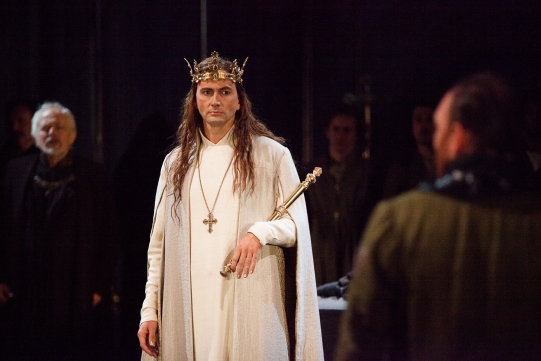
The highlight of our Christmas was a visit to the Barbican Theatre, London, on Saturday 21 December 2013, to see David Tennant performing in the role of Shakespeare’s Richard II.

Richard II is one of English history’s villains.
So who better to play him on stage and change our view of him than one of our contemporary heroes, the charismatic David Tennant?
But Richard II is also one of those kings who is a mystery to many of us; what we do know may be gleaned from primary school history, or a visit to Westminster Abbey.
There the main thing we learn about him is that he was murdered on the orders of his successor, Henry IV, and his body was initially buried somewhere else, but eventually Henry IV felt so guilty he moved the former king to the grand tomb he’d originally had built for himself in Westminster Abbey – which is where we may contemplate him today.
Richard II: An Unbalanced King, we are told in the brilliant comic classic book 1066 And All That, was only a boy at his accession: one day, however, suspecting that he was now twenty-one, he asked his uncle, and, on learning that he was, mounted the throne himself and tried first being a Good King and then being a Bad King, without enjoying either very much.
David Tennant’s Richard II showed us a petulant, whining, rather effete, figure in what my two teenagers could only describe as long hair and a long white nightie (and of course a crown on his head).
We were there because my two teenagers love David Tennant for being Doctor Who.
Yet how he opened up my view of this bad king.
All the raw vulnerability of the character was there, and I ended up feeling much more about Richard than that he was simply a baddie basking in undeserved glory in a tomb in Westminster Abbey.
Instead he was a real live fragile human being, with his moral weakness and disastrous decisions, different on the inside from the outside, as we all are.
This is what I wrote about Richard II in an ezine article in 2011:
For example, take a walk round Westminster Abbey, as I did the other day – here, in this major spiritual hub and London tourist attraction you’ll pass the shrine of St Edward the Confessor, and find clustered around him many monuments and tombs. The official tourist guide says these speak both of human dignity and achievement. But do they? Among them we find both the goodies and the baddies. Some are noble but others got there by ruthlessly exploiting everyone and everything in their lust for power.
Of course, after contemplating Richard II, who was so awful he was murdered by his successor, but still eventually ended up in the grand tomb he’d built for himself in the abbey, we can then move on to Poets Corner which shows us a much better aspect of human nature, celebrating creativity and genius to uplift and inspire us.
But now Shakespeare and David Tennant between them have deepened my view of Richard – as all great creatives must do with the characters they portray.
The WordPress.com stats helper monkeys prepared a 2013 annual report for this blog.
Here’s an excerpt:
A New York City subway train holds 1,200 people. This blog was viewed about 7,700 times in 2013. If it were a NYC subway train, it would take about 6 trips to carry that many people.
Click here to see the complete report.
On Saturday night 7 December 2013 our local community choir, Songlines, conducted by Bruce Knight, gave a concert at St Mary’s Church, in Leamington Spa, to raise money for Water Aid.

It was a night where we saw and felt the power of music to bring joy and to uplift.
A standing ovation and calls for an encore confirmed this.
Our programme encompassed community choir arrangements of the moving Zulu song Egalile, full of exhuberant synchronized movements, including our well-rehearsed African shuffle; Let the River Run by Carly Simon, Sunday Morning by Reed & Cale, arr.Knight; the Beatles’ song Nowhere Man; Wake Up by Nick Prater arr. Ali Orbaum, and the Samoan song Fa’afetai i le Atua arr. Tony Backhouse.
A smaller group called Extra-stronglines also sang the gorgeous harmonies of the Beatles’ song Because.
A highlight was a performance of the South African National anthem Nkosi Sikeleli’l Afrika in tribute to the recent passing of Nelson Mandela.
And at the end, we walked off the stage, singing Love is like a river, let it flow, let it flow, let it flow.
Long may we celebrate the gift of music in our lives.
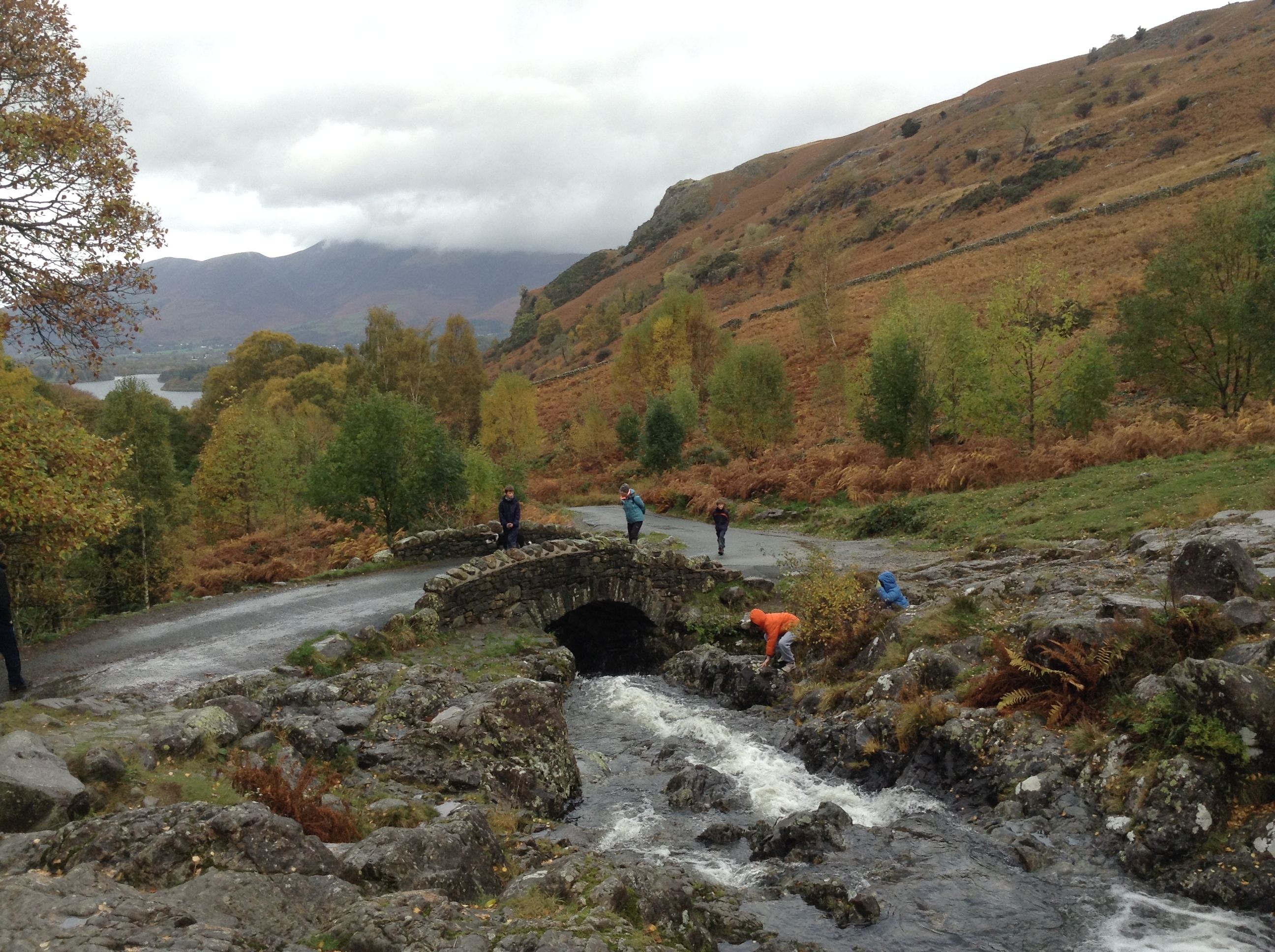
We spent a few days in England’s lovely Lake District during the recent autumn half term.

The Lake District is special to me, not only because of its association with numerous famous writers, with Beatrix Potter, John Ruskin, William Wordsworth; but also because of memories from childhood holidays there, and the fact that I regularly visited it during the time I spent as an undergraduate at Lancaster University (approximately 40 minutes drive from Windermere).
As a member of the university hiking club, I became familiar with the Old Man of Coniston and Scafell Pike and I soon learned that hiking didn’t mean gentle rambling, it meant something very akin to mountain-climbing except without the ropes and crampons, as we scrambled up and slid down steep slopes of scree!


Bowness-on-Windermere is distinctive for me, as I would go there with my parents when they came to visit me for the weekend. For me, it was a translation from the world of student accommodation to the Old England Hotel. I returned there on later occasions with friends, for afternoon tea on the terrace, overlooking Lake Windermere. The Old England Hotel has held a special place in my memory ever since.
It is said that the Lake District has the highest rainfall in England. Those who go there must take mist, rain, muted colours, a moist atmosphere, brooding clouds, along with everything else the Lake District has to offer; and be prepared to carry on regardless, wearing waterproofs. If you experience the lakes and mountains in bright sunshine, count yourself blessed!
The Lake District is an inspirational place that speaks directly to the spirit.
Here are some more images from our recent visit:


Watch the new official trailer for Mystical Circles on my YouTube channel.

Directed, produced, filmed and scripted by my daughter Abigail Robinson, who is a Creative Media Production student, it’s been six months in the making, and Abigail has done brilliantly.
For those of you living in England, in the deep chill of November, watch the idyllic shots of the Cotswolds in high summer, and may your spirits be lifted, as mine are.
Please share in the comments as I’d love to know your thoughts on the trailer!
So many children’s bedrooms up and down the UK and around the world must look similar to this one, in our home.

In the recent celebrations of the 50th anniversary of the BBC drama series Doctor Who, the question has been posed: why do you think Doctor Who is so popular?
Since everyone in our house loves the Doctor, I’ve asked myself this question. And I concluded that we love the Doctor because:
* As a fictional character, he is a perfect combination of science and religion. He has the Christlike qualities of power, knowledge and goodness; combined with the vast possibilities of science. He plays into our archetypal longings for balance and justice in the universe, plus our thirst for knowledge and our fascination with the potential of science and our quest for empowerment.
* he has power over time. Time, death and the ageing process are among those things we cannot control, though we dream of doing so.
* he engages us on a spiritual level. He represents the perpetual battle between good and evil.
* the character of the Doctor, with all this power, knowledge and goodness, contains both playfulness and gravity. We respond at a deep level to paradox. Every one of the eleven actors who has played the Doctor has at some level combined the weight of ultimate responsibility and moral integrity with a quirky, mercurial quality. And the twelfth Doctor seems set fair to carry this same quality.
* we are always learning new things about the Doctor. He always retains his mystery.
* the Doctor is essentially lonely and poignant. He loves, and he evokes love. Yet he can never become emotionally attached to any one human – not without tragic repercussions or complex tampering with the space time continuum.
* he regenerates, just like nature, just like the Green Man, a symbol of rebirth, found in many cultures from many ages around the world.
The Doctor is all these things and more.

And we love him not only because of all this, but because of the genius of all those involved: the executives, actors, writers, directors, producers, monster-creators, technical people, visual and special effects people and composers and musicians. They will have overcome everything that human weakness can throw at them, during the fifty years of the programme’s life, as we saw only too well from the Adventure in Space and Time episode about BBC executive Sydney Newman, actor William Hartnell, producer Verity Lambert, and director Waris Hussein.
It all seems summed up in David Tennant’s cry: “I don’t want to go.”
Yet the archetypal power of this fictional character, his relationships, his story represents for many our dream of transcending those limitations and that frailty.
Mystical Circles is on Kindle Countdown Deal for seven days.
On 21 November the price drops to 99p.

Two days later it steps up to £1.99.
And on 25 November it returns to its original list price £3.37.
Go over to the Kindle Store to get it when the price is right!
Meanwhile my new novel A Passionate Spirit nears completion, as I revise the manuscript for a commissioning editor.
A Passionate Spirit is a psycho-spiritual suspense novel with a dramatic storyline.
It features a fictional character my editor described as a wonderfully creepy and intimidating baddie.
Other hot news is I will be uploading a new trailer video for Mystical Circles on my YouTube channel within the next week.
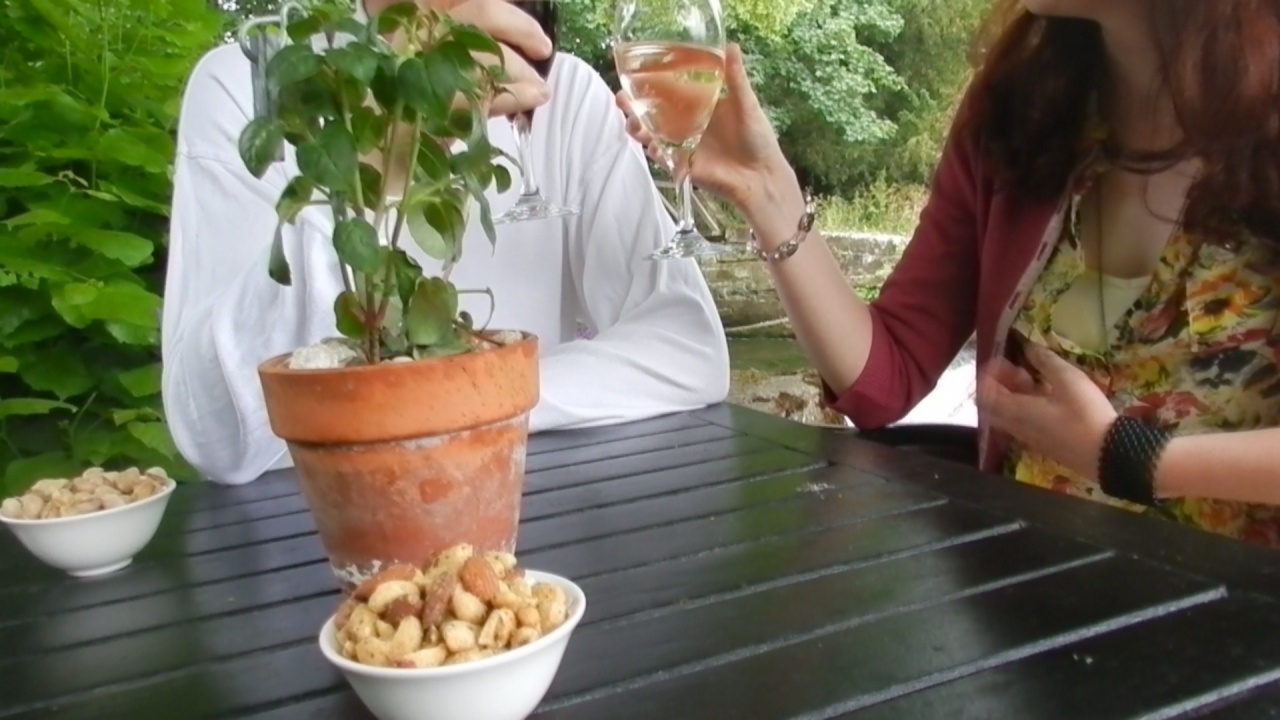
To whet your appetite here are a few preview shots from the trailer.


I’m a great admirer of JK Rowling both as an author, and on a personal level. So when I knew she’d published her first adult novel, I was keen to read it.
When I began to read The Casual Vacancy several months ago, I found it a struggle to get through the unrelenting nastiness of the characters, without finding any one individual I could identify or empathize with. And at that time I chose to put it down.

Nevertheless, I was determined to come back to the novel later when I felt ready to tackle it. And I’m glad I did. I very quickly began to recognize elements from the hometown of my childhood – local characters & social/political/economic issues.
When the author begins to fill in the backgrounds of the characters, giving them greater depth, I started to feel, at some level, empathy for Terri, and for Krystal, and for their terrible plight – and glimmers of humour also relieved the grimness of the characters’ behaviour.
JKR inspires both pity & anger with her waspish vignettes of mothers who betray their children with submissiveness, moral weakness & cowardice, & fathers/husbands who trample close relationships with arrogance, intolerance & cruelty, & teenagers full of hatred & resentment. She also penetrates right to the heart of class consciousness & snobbery, & those who live with an innate sense of ‘superiority’. These attitudes riddle our society, & our hearts & souls; they blight lives, destroy hope, & ensure injustice and inequality prevails. They lower people’s self-esteem and propagate lies that last a lifetime. All this JKR skilfully conveys in The Casual Vacancy.
I found many sharp portrayals: the conversation as a social worker visits a drug addict; the inner life of a bullied teenager as she self harms, her situation made worse by a harsh, unsympathetic mother; the fragile threads upon which a drug addict’s rehabilitation depends; the pressures at home which force teenagers into depraved company and behaviour. JKR accurately conveys the effect that going to a certain sort of school has on one’s sense of self-worth, and upon the choices one makes in one’s friendships and future life.
It’s clear to me that the characters in this novel are behaving ‘their’ way – in other words, the default setting of human nature. It would be pointless and disingenuous for any of us who live in contemporary English society to pretend that we cannot recognize something murky of ourselves somewhere in this novel: something that points up the ‘devices and desires’ of our own hearts.
However, although I enormously admire what JKR has done in this story, I still feel it lacks a strong enough spiritual message or act of redemption at the end; and the potential for that is very strongly present as the narrative progresses.
JKR may not have wished to commit herself to an explicit spiritual message in the novel. But I cannot help feeling there is clear potential for an authentic Christian witness in this story, pointing to a different attitude, a different way of life.
Jesus knew all about the default setting of human nature, and the untrustworthiness of the human heart.
In John’s Gospel we read these words : But Jesus didn’t entrust his life to them. He knew them inside & out, knew how untrustworthy they were. He didn’t need any help in seeing right through them.
For The Casual Vacancy is, to me, essentially a story of ourselves as we are, now, in our communities, in our society today, just as we always have been; unredeemed, doing things ‘our way’ and not God’s way, and reaping the consequences. It’s only JK Rowling’s decision not to take the opportunity for a stronger redemptive message which prevents me from giving her book the highest possible rating.