“Mystical Experiences and Glimpses of Eternity” Mini Series Part 6 – An Inspiring Project in Brisbane, Australia: The Relaxation Centre of Queensland

In Australia I found a unique Centre – located in Brisbane, and run by an Englishman.

35 years ago, LIONEL FIFIELD, formerly an accountant, set up an organisation called The Relaxation Centre of Queensland, using premises in Brisbane.

I spent nearly five years living in Brisbane, and during that time I must have tasted every kind of course, workshop  and seminar that the Relaxation Centre had to offer.

There was only one problem. Attending courses at the Relaxation Centre was addictive.

And I have not found any similar organisation in England – though I believe that it would meet a great need.
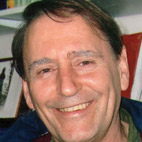
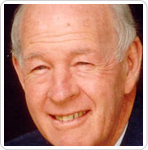
Lionel Fifield
Lionel Fifield

Lionel Fifield was an engaging inspirational speaker. He had an entertaining, at times Monty Pythonesque style. And the Australians loved him – and I have every reason to believe they still do.

Here is what Lionel says of himself: “For over 35 years now he has been co-ordinating and developing a programme at the Relaxation Centre of Queensland focusing on managing stress, facing fears, building confidence, improving communication and exploring potential. Lionel likes to talk about his own “funny ways” and how quickly we can separate ourselves from each other and from our own sense of knowing.”

The Relaxation Centre maintains that it advances no one particular religious or spiritual system, and   many who teach there have different spiritual outlooks. Spiritual healing, however, has long been on the agenda. I explore spiritual healing in my current work-in-progress, a romantic suspense novel called “A Passionate Spirit”.

BERT WEIR, leader of The Centre Within courseat the Relaxation Centre, was another inspirational figure. Formerly a salesman, Bert was a man full of humour and practical hints.  “I’m a very practical man,” he would begin his course, “and I will only talk about things that work.” There was much psychological wisdom, too, in the Centre Within Course, and many practical strategies to combat stress and anxiety and false attitude. Again, The Centre Within Course was addictive. I must have taken the complete course at least four times.  And therein lies the danger of inspirational speakers – do we attend purely to delight in the entertaining style of the speaker? Maybe – but we can always hope we are learning something along the way that is permanent!

Bert Weir
Bert Weir

A third individual stands out in my memories of the Relaxation Centre, and this was a character I shall name only as GREG, teacher of a Dream Interpretation course. Greg again was a very down-to-earth character full of wisdom and humour. Nobody would have guessed he was a spiritual adept in the art of dream yoga – an art he had learned from an old Tibetan lama he’d met in Sydney.  Later he was to provide inspiration for my novel “Mystical Circles”.

When I took Greg’s course in dream interpretation there grew upon me this feeling. “There’s something light and bright and fluid and flexible about him… something Puckish, childlike, teasing and infinitely wise and spiritually attuned… he’s like a children’s storyteller, a street corner entertainer.. . he’s mobile, passionately involved and sincere, yet also detached, low-key, non-judgemental.”

It was from Greg that I first heard of the concept of having “a fluid and flexible ego” (mentioned in my novel “Mystical Circles“).

An adept in Tibetan Dream Yoga, Greg possessed the gift of “shapeshifting”. I witnessed his face changing during the course of one of the dream yoga sessions. I later put this experience into my novel “Mystical Circles” when Juliet sees Craig’s face changing. I had by that stage learned that this is one of the arts of a shaman, and part of the skills of shapeshifting. I make no value-judgement at this point; I simply tell you what I have observed, and what has arisen from my own experience.

All these people were way-markers for me. It’s no accident that for me, my spiritual journey began with a mountain and that journey took me to another mountain, in Australia again.

As T.S. Eliot says in his poem “Little Gidding”:

For the end of all our exploring will be to arrive where we started and know the place for the first time (tweet this)

If you live in the UK, have you ever found a centre which runs courses like The Relaxation Centre of Queensland? Whatever you believe, does the work of this centre ring any bells for you? Do you identify with this journey? Share your thoughts and feelings with me about this journey of the spirit. I’d love to have your comments!


Success or Failure Revisited: Top Tips To Becoming a Successful Person

I used to believe that in order to be successful I had to avoid being ordinary.

And interestingly, I learned this at an Enneagram Workshop.

Since then I have gradually confirmed that many of those we most admire for their success in this world, started out as very ordinary people – consider, for instance, the two most obvious candidates, Lord Alan Sugar, or Richard Branson. And I believe that many of our flawed notions of success and failure are bound up with false ideas of what “being ordinary” or “being extraordinary” really means.

Before I consider the top tips for success, I’ll list popular reasons people have given for failure: being born poor, not having a good education, having bad luck, being accident-prone, being lazy, making bad decisions, giving up, selling out on your dreams, falling short.

So now we have faced up to some supposed reasons for failure, what are the opposites to each baddie on the above list? What are my top tips to becoming a successful person? I’ll arrange the tips under three key headings. And each of these is something to which people have, in my experience, attributed their success:

1. Character and Personal Qualities

The following have all been cited on different occasions, as reasons for success: hard work, drive, personality and ambition, having a clear vision, being a positive thinker, daring to be different, being realistic, having the persistence and courage to hold onto your dreams, setting goals, demonstrating confidence and willpower, showing leadership qualities, having the ability to inspire confidence in people, being knowledgable in your chosen area, demonstrating skill, being a bit loud-mouthed, pushy and opinionated, exploiting contacts, believing in yourself and in what you’re doing.

2. Background

Under this heading we find: genetic inheritance, early formative childhood experiences, being pushed or abused or challenged or encouraged by your parents; education (either being forced to fight for one, and winning it against all odds; or opting out of the academic system all together and ‘learning in the university of life’ instead; or progressing smoothly through to the achievement of a first-class degree from Oxford or Cambridge); having a brilliant or a wretched childhood (both can become launch-pads for success).

3. Good luck

Into this camp falls: serendipity, chance, being in the right place at the right time, being born with a silver spoon in your mouth, the magic of believing, being gifted and talented, being beautiful, just getting lucky, falling on your feet, swarming up ladders and avoiding snakes, meeting the right people at the right time.

I hope the above examples – some of which represent demonstrable fact, and some of which have simply emerged from popular perception, folklore or myth – will demonstrate that there is no reliable formula which is always guaranteed to create success in any given case. However, observation of human life teaches us that if you fail you can still succeed; and that conversely you can have a period of success followed by a period of failures. Additionally, it is not true that age predisposes you either to success or failure. George Eliot said: It is never too late to be what you might have been.

Finally, then, I offer my own key: have the courage to dream big dreams, and never give up on them.

Share this:

“Mystical Experiences and Glimpses of Eternity” Mini Series Part 5 – Secret India: The Land of the Gods and Neel Kanth, Mountain of Light

Does an experience of joy and spiritual upliftment only count as a mystical experience if it changes your life?

I believe these experiences gather significance cumulatively, over the course of a lifetime, through the repetition of events grouped around a similar theme – just as in a recurring dream.

And for me the recurring theme is mountains.

Welsh Mountains
Welsh Mountains

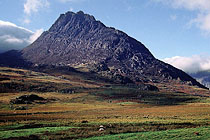
When I was about seven years old our family went on holiday to Wales. Early one morning, a few of us got up and set out from our guesthouse for a walk before breakfast. To me, the world was fresh and new, everything was full of potential and wonder, the air held a miraculous clarity, the sky was a pure translucent blue… and at the end of the road was a mountain.

All I could think was “At the end of the road there’s a mountain – and we’re going to climb it.”

And that “start of the holidays” experience of mine was to inform all subsequent “glimpses of eternity” throughout my life.

Several years later I joined the Yoga for Health Foundation which was then led by Howard Kent (1919-2005). I wouldn’t describe Howard Kent as charismatic – probably one of the things I appreciated about him – but I liked and respected his character – wisdom, spirituality & a dry sense of humour.

I went on a Yoga Tour of North India and Nepal with Howard Kent and a group of yoga enthusiasts.

We flew to Delhi and our trip included Agra (the Taj Mahal), Varanasi  (the Burning Ghats by the Ganges),  the erotic temple carvings of Khajuraho, as well as the Red City of Jaipur, and finally Khathmandu in Nepal.

I have a vivid memory of time spent at twilight on the roof of a derelict maharajah’s palace in the jungle near Khajuraho, with Howard Kent and another member of our party, during which we talked about whether it was a good idea or not to renounce the world. (We concluded it wasn’t). Out in the jungle we heard a tiger growl. Otherwise there was an overwhelming silence and tranquility. And I even remember the cloud formation in the sky, which presented itself to me in the shape of a giant fish.

But this post is about one other aspect of that Indian tour – our journey through the Gharhwal Himalayas, (known as “the land of the gods” ), a journey which took us from Rishikesh to Badrinath, centre of Hindu pilgrimage.

And there, in Badrinath, one peak – Mount Neel Kanth – encapsulated all my recurring experiences around mountains.

Mount Neelkanth, Badrinath

I quote here from a passage in my journal, written on the night of our arrival in Badrinath.

“this town and the mountains around it have an awesome quality… an almost palpable presence filled the valley… the source of this power was Neel Kanth, a mountain of white crystal whose peak appeared between the two dark slopes of Naryan… luminous in the full moon.. it shone out like a mystical vision.” The next day, I wrote,”the spiritual intensity of the night had vanished but a deeper serenity remained.”

Is there a recurring image in your life – in your dreams, or in the real world, which means a lot to you on your journey? Whatever you believe, does this ring any bells for you? Do you identify with this journey? Share your thoughts and feelings with me about this journey of the spirit. I’d love to have your comments!

Mystical Circles – Is Everything Really As Perfect As It Seems?

For those who’ve been following my series on “Mystical Experiences and Glimpses of Eternity” you may recognise this as the perennial question – unspoken – in the mind of anyone on the spiritual journey I describe.

And it’s certainly the question behind much of my exploring."Mystical Circles" new print edition published August 2012

My heroine Juliet explores this too – in an idyllic farmhouse in the Cotswolds.

Hi, you in crowded, stressed old London from me in the peaceful, perfect Cotswolds. Massive change of plan. I’m in love. Craig is gorgeous, sexy, intelligent. Paradise here. Staying forever.

Juliet, concerned that her younger sister has fallen for the charismatic Craig, leader of the Wheel of Love, sets off for the Cotswolds to investigate.

She arrives at Craig’s community hoping to rescue Zoe. But intrigues, liaisons and relationships flare and flourish or fizzle out quickly within this close circle, and despite her reservations, Juliet is drawn into the Wheel of Love with completely unforeseen consequences.

“Mystical Circles” is available now in the new print edition from Booklocker. The new edition has a well-designed interior & is a smaller size than the previous (US Trade) edition. Plus a brand new cover design. If you enjoy romantic suspense why not try it out here? You can try before you buy – and download the first three chapters. Enjoy!

“Mystical Experiences and Glimpses of Eternity” Mini Series Part 4 – Cottingley Fairy Photographs and Esoteric Teachings

I want to be a very serene loving being in tune with the universe.

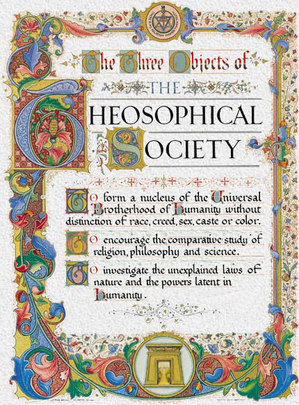
Theosophical Society

So said a fellow-member of my study group at  The Theosophical Society, at 50 Gloucester Place, London W1.

She spoke those words in answer to a question from my next inspirational figure. He had asked, “Why are you here? What do you hope to find?”

I’ve remembered her words for decades. And they appear in my romantic suspense novel Mystical Circles. Those words speak to my heart. Why? Because they seem to sum up the spiritual hunger many people feel, well outside the gates of  organised religion.

The Theosophical Society was my next port of call after THE CENTRE FOR SPIRITUAL AND PSYCHOLOGICAL STUDIES.  Ever-hungry for new spiritual experiences, I  alighted upon the Theosophical Society, and discovered the esoteric teachings of Helena Blavatsky, and started attending talks by another inspiring teacher.

His name was Adam Warcup, and unlike me he has sustained his commitment to Theosophy over the years, and still lectures at the Theosophical Society.

So what is Theosophy?

Theosophy, maintains its adherents, is nothing other than a body of Ancient Teachings. And the motto of the Theosophical Society is: “There is no religion higher than truth.”  But the first person who brought those teachings to the West and who managed to convey them in an understandable and accessible form was Helena Blavatsky ( on 21 June 2012 she was, together with Annie Besant, the subject of a programme presented by Melvyn Bragg on BBC Radio 4).

The idea that The Truth was to be found in this body of Ancient Teachings appealed to me strongly, as a spiritual seeker who had already  discounted what the organised religions had to offer.

And so I entered a world in which I heard, for the first time, of the Cottingley Fairy Photographs; of elemental beings; of the Devachan, (the Abode of Shining Beings), of visions of life after death much more detailed and vivid than those to be found in the Bible (as I saw it then). And fluent communicators who sounded intellectually respectable and who were able to express all these things in a way I found compelling.

I was so won over by what I heard at the Theosophical Society that the BBC producer I worked for in the Religious Schools Radio office in Portland Place asked me to go there and make notes on the lectures  for him, so that he might include an item on these “ancient teachings” in one of his programmes about spiritual seeking in London today.

Whilst I may not now, as a Christian,  subscribe to many of those beliefs, I still look at the world through the eyes of someone who understands what the other person believes. (click to tweet)

I think the reason for this is the level of my emotional engagement with those beliefs. I first heard of the Cottingley fairy photographs through a book I found at the Theosophical Society. I believed in the fairies at the time – as of course did Sir Arthur Conan Doyle several decades earlier, whose name will be forever closely associated with the case. Many years later Elsie Wright, one of the girls, confessed to having faked the photos. And yet there are those who insist on believing. And the story has an enduring fascination, as shown by the movie “Fairy Tale – a True Story”.

Fairy Tale - a True Story (movie)
Fairy Tale – a True Story (movie)

I  will always have empathy with all those who seek as I did, and rest awhile in these beguiling teachings.

I may also end with another quote, this time from Shakespeare, through the words of Hamlet to Horatio in Hamlet Act 1 Scene 5:

There are more things in heaven and earth than are dreamt of in your philosophy.

Whatever you believe, does this ring any bells for you? Do you identify with this journey? Share your thoughts and feelings with me about this journey of the spirit. I’d love to have your comments!
“Mystical Experiences and Glimpses of Eternity” Mini Series Part 3 – Sir Laurens Van Der Post, Explorer of the Spirit

We shall not cease from exploration wrote TS Eliot in his poem “Little Gidding”.

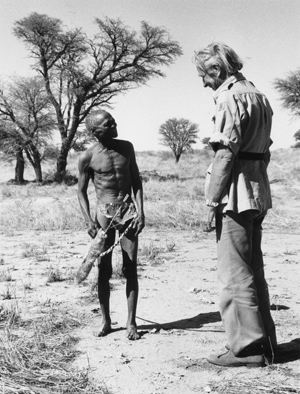
Sir Laurens Van Der Post with bushman
(credit: http://www.jonathanstedall.co.uk/heaven/sample.php)

And the end of all our exploring

Will be to arrive where we started

And know the place for the first time.

These words seem very appropriate for author and explorer Sir Laurens Van Der Post (1906-1996), whom I first came across at a talk he gave in London, and whose spiritual writings had a profound impact on me.

I met  Sir Laurens at a meeting of  THE CENTRE FOR SPIRITUAL AND PSYCHOLOGICAL STUDIES, a group I mentioned in my last post. Based in London, it was run by a lady who seemed to have a talent for booking charismatic spiritual figures as Keynote Speakers at the various meetings.  Sir Laurens Van Der Post was one of them.

Sir Laurens gave a talk, accompanied by a slideshow of his Africa photos, called “All Africa and Its Heart Within Us”.

As I listened to him, I felt that for him Africa proved the touchstone for his spiritual seeking.

We can all be explorers of the spirit and we don’t need to travel anywhere to do it.

Different life-experiences may trigger religious or mystical experiences for us. But Sir Laurens wrote: I was compelled towards the Bushmen of the Kalahari  like someone who walks in his sleep, obedient to a dream of finding in the dark what the day has denied him.

I loved Sir Laurens’ philosophical ideas and his way of approaching the mystery of life. He was a friend and close associate of Carl Jung, another man of wisdom whom I greatly respect and admire. The first book of  Sir Laurens’ which I read was Venture into the Interior. In that book I remember him describing his experiences in a Japanese prisoner-of-war camp in World War II. He said that as his eyes met those of his torturer, The distance between us was the distance of unreality.

Those words have stayed with me across the years. And they have linked into many areas since then. For instance, they remind me of John Berryman’s poem The Song of the Tortured Girl, in which the girl is clearly spiritually, emotionally and mentally detached from the physical torture she is suffering. And they also link in to Sir Alister Hardy’s research into triggers for spontaneous religious experiences. He found that in the greatest number of cases, Depression/Despair was the trigger.

Sir Laurens’ ideas also link in to a film which I loved. The Gods Must Be Crazy came out in 1980, although I didn’t see it till several years later. Set in Botswana, and made by a South African film-maker, it tells the story of a scientist, his romantic aspirations, and a Bushman of the Kalahari meeting up with the ‘civilised world’. As I watched it, enjoying the comedy but also the wisdom, I couldn’t but be reminded once again of Sir Laurens and his deep respect and love for the Bushmen.

Sir Laurens Van Der Post with a praying mantis (credit: www.jonathanstedall.co.uk/heaven/sample.php)
Sir Laurens Van Der Post with a praying mantis (credit: http://www.jonathanstedall.co.uk/heaven/sample.php)

We can all be explorers of the spirit, and we don’t have to travel anywhere, geographically. As a famous example of this, I like to cite Emily Bronte. She travelled little in her life but she was herself a mystic as her poem No Coward Soul is Mine testifies. What she learned of life she learned in her own home, through her own family members, and through those who lived in the Yorkshire moors she herself inhabited.

For Sir Laurens it was Africa. For each one of us it may be different.

Have you done any spiritual exploring? Did you need to travel far? Share your thoughts and feelings with me about this journey of the spirit.  Have you been inspired by any books or authors in this way? I’d love to have your comments!

“Mystical Experiences and Glimpses of Eternity” Mini Series Part 1: Stirred By A Scientist to Share a Childhood Religious Experience

What’s the difference between nature or music appreciation… and a mystical experience?

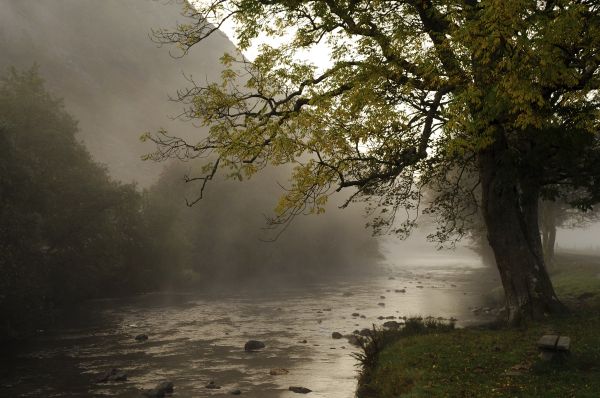
Early Morning Mist, Beddgelert, Wales (deryckdillon.co.uk)

When does “being moved by something beautiful” become a religious experience?

Surely the criterion for a mystical experience is that it changes your life?

In my case, it did.

My early childhood mystical experiences ultimately led me on a spiritual journey of many years – which, along the way, bore fruition in my novel “Mystical Circles”, and is now bearing fruit in my new novel  “A Passionate Spirit.”

And for me this spiritual journey didn’t start by opening a book or listening to a clergyman. It started with a direct personal encounter with Divine Reality.

And the person who encouraged me to take it forward was a Scientist.

The name of the scientist was Sir Alister Hardy, Marine Biologist, who wrote the book “The Biology of God: A Scientist’s Study of Man the Religious Animal.”

Sir Alister Hardy, founder of the Religious Experience Research Centre, and winner of The Templeton Prize 1985

At the University of Wales, Lampeter, you’ll find the Alister Hardy Religious Experience Research Centre. Find out about it here if you want to enquire further, or contribute an experience of your own.

Sir Alister found in a study of 3000 contributed experiences that there were 21 triggers for spontaneous mystical experiences. These included such things as childbirth, the prospect of death, illness and crises in personal relations. But top of the list came  depression/despair, and then prayer and meditation, and then, natural beauty.

A few months before my 17th birthday, I wrote to Sir Alister, having read an article in The Times about him.

He appealed “to all those who have at any time felt that their lives have been affected by some power beyond themselves, to write an account of their experience and the effect it has had on their lives” and to send it to him.

I wrote the story of my childhood religious experiences, and sent it to Sir Alister. In his reply to me, he wrote that my experiences were “the feeling of an ecstatic joy in relation to the universe brought on by some particular aspect of nature… what Rudolf Otto called the numinous, the sense of the Holy.”

Thus began a journey of many years – a fascinating journey of spiritual enquiry and research – and several more mystical experiences along the way.

For me, then, University intervened, but after my graduation and return home, I wrote to the R.E.R.U. at Oxford again.

“What can I get involved in?” I asked. “How can I further my spiritual search?”

Edward Robinson, the new Director, replied, and pointed me to this organisation:

The Centre for Spiritual and Psychological Studies.

(find out about more about my involvement with this organisation here)

And thus, with a weekend symposium in rural Gloucestershire and a group of diverse and sometimes eccentric people of many religious backgrounds (celebrated, in fictional form, in my novel “Mystical Circles”) I began my long spiritual journey.

But don’t forget, as T.S. Eliot says in his poem ‘Little Gidding’, the end of all our exploring will be to arrive where we started and know the place for the first time (tweet this).

My first childhood religious experience involved a mountain in the early morning. And my journey took me to another mountain at the other side of the world where I was to recapture that same experience, early in the morning.

In this mini-series I’m going to tell you about some of my “glimpses of eternity” and also introduce you to a few of the fascinating individuals who’ve been way-markers on that spiritual journey.

Join me in my next few posts and find out about my roll-call of spiritual guides (saints as well as sinners).

And do share your own experiences with me, if you wish!

“Mystical Experiences and Glimpses of Eternity” Mini Series Part 2 – The Curious Case of the Kindly Professor and the Cunning Cult Leader

This sounds like a case for Sherlock Holmes and Dr John Watson, doesn’t it?

"Holmes gave me a sketch of the events"
“Holmes gave me a sketch of the events”

The kindly professor in question is:

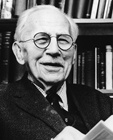
Dr Raynor Johnson, Physicist, and Master of Queen’s University Melbourne – scientist turned spiritual seeker.

And the cunning cult leader is:

Anne Hamilton-Byrne,a “self-appointed mystic” who led a cult proclaiming herself to be a reincarnation of Jesus Christ.

I met  Dr Raynor Johnson at a meeting of THE CENTRE FOR SPIRITUAL AND PSYCHOLOGICAL STUDIES, a group which had its base in London.

It was run by a very correct, well-spoken and elegant lady called Alison Barnard who lived in Wimpole Mews, and seemed to have a talent for booking charismatic spiritual figures as Keynote Speakers at the various meetings. We met in the Royal Overseas League, St James’s Street, London. Speakers included the likes of Sir Laurens Van Der Post, Dr Raynor Johnson, and similar figures. I’ll be focusing on Sir Laurens in a later post.

RAYNOR JOHNSON  was born in Leeds, spent much of his childhood in Whitby, read Physics at Oxford University, and later moved to Australia to live where he became Master of Queen’s University Melbourne. He was influenced by the author Ambrose Pratt to study psychical research & mysticism, and he was transformed from “one of the most promising scientists of the age to a spiritual seeker.”

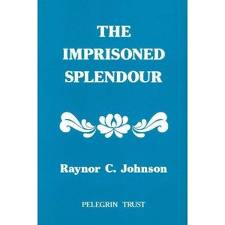
During his life he published many books on spiritual philosophy, psychic phenomena and mysticism. His most popular book is “The Imprisoned Splendour” (published in 1953).

The Imprisoned Splendour by Raynor C. Johnson

I remember him as a gracious, kindly, modest man of immense spirituality and wisdom. I was bowled over by him, spoke to him after his talk, subsequently read many of his books, and wrote a letter to him at his home in Australia to which he replied in a letter I have kept ever since.

Of Raynor Johnson I think it would be true to say: I thought what he said was true because I was so enamoured of his personna.

After I read his books – particularly “The Imprisoned Splendour” –  I lived in an elevated state for several weeks. I have a vivid memory of walking up the platform at Charing Cross Station to catch a train, surrounded by people rushing to and fro, and I felt wrapped in a limitless joy and peace.  I understood why things are as they are, I understood the over-arching spiritual purpose of it all, and I felt at peace with it.

It was many years later that I discovered that Raynor Johnson was instrumental in starting the group which later came to be called “The Family” (an Australian cult which kidnapped and abused children,) together with Anne Hamilton-Byrne, the “self-appointed mystic” who led the cult proclaiming herself to be a reincarnation of Jesus Christ. Raynor Johnson provided premises (called Santiniketan Hall) at his home in Victoria (from which he wrote an inspiring letter to me in 1976) and recruited middle class professionals who all subscribed to the bizarre beliefs of the cult whilst adding to its respectability. I knew nothing of this association during the entire time I was enamoured of Raynor’s Johnson’s writings and spiritual ideas, and continued to know nothing until a number of years later.

After one of the children was expelled from The Family, and exposed its practices to the authorities, the cult was raided by the Victoria police on 14 August 1987 – (as it happens, the year of Raynor Johnson’s death). Anne and her husband were arrested in June 1993 by the FBI in the USA. In August 2009 Anne’s grandaughter and a former cult member successfully sued her for psychiatric and psychological abuse and “cruel and inhuman treatment”.  She was also sued for misappropriation of money, and made a secret out-of-court settlement with a victim as recently as August 2011.

I believe that this kindly professor was exploited by a cunning and manipulative person who later went on, using his cloak of respectability, to commit evil acts  – but none of us are proof against being exploited or used.

However, if you follow the links and read of the case, I hope it will serve to help you understand why people do become deluded by self-appointed mystics, why they join cults, and why they become drawn in by false teachings.

Some of these experiences and reflections have played into the characters you will meet in my novel “Mystical Circles” – as well as those in my current novel “A Passionate Spirit”.

And perhaps the best postscript to this lies in these words: Watch out for false prophets. They come to you in sheep’s clothing, but inwardly they are ferocious wolves. By their fruit you will recognise them.

(New Testament: Matthew 7:  15,16)

Share your thoughts and feelings with me about this journey. Do you identify with it? Have you ever been drawn into beautiful philosophical teachings by a charismatic figure? Have you been inspired by any books or authors in this way? I’d love to have your comments!

Musings From a Saxon Sanctuary – A Lesson of History: Success or Failure Turns on Quirks of Fate

Hidden in the heart of rural Warwickshire is a Saxon Sanctuary I only recently discovered.

http://raggedrobinsnaturenotes.blogspot.co.uk/2011/02/wootton-wawen.html

It’s in St Peter’s Church at Wootton Wawen, situated between Henley-in-Arden and Stratford-upon-Avon. In the Lady Chapel, an exhibition tells the story of Wagen’s woodland village in the Forest of Arden.

Wagen was a Saxon lord who owned the land (the “manor”) of Wootton before 1066.  And I thought of him as I  looked through the exhibition. When William the Conquerer took over, he  swiped that land from Wagen and gave it, (as was the way of many English monarchs) to a pal of his. In this case the lucky recipient was Robert of Tosny, Earl of Stafford. History doesn’t record what happened to Wagen.

As I wandered around the church,  I mused upon the lessons of history, and whether I can learn anything from them, in my life.

Along with the Saxon Sanctuary, three other streams of thought  played into my musings – a recent TV programme on the 50 greatest treasures found by members of the public; a BBC TV drama production of  Shakespeare’s “Henry V”; and our planned visit to Bosworth to see the re-enactment of the Battle of Bosworth where Richard III was killed, thus signalling the end for the Plantaganets and the rise of the Tudors.

Here are a few historical snippets that sprang into my mind, in no particular order:

A Viking with “bad attitude” buried his plunder meaning to come back later and collect it – but he never did. It lay in the earth until it was found  by chance 1300 years later.

Henry V triumphed at Agincourt, then married Catherine daughter of the King of France. Their son Henry VI was a bit of a wash-out as a king, and would have preferred not to be king at all; he shrank from the role whereas his father had been famed for his valour. Following Henry V’s death when his son was 9 months old,  Catherine  went off and married Owen Tudor and thus started the Tudor dynasty.

When Richard III fought Henry Tudor at Bosworth, Henry was the rank outsider, and Richard would have been expecting to win. Shakespeare has him saying, “A horse! A horse! my kingdom for a horse!” He probably never said it but with those words Shakespeare exactly captures not only the poignancy and significance of that moment, but gives us a metaphor for human life many can recognise.

Mary I believed she’d restored Catholicism to England. She meant to secure a Catholic future – but whatever she achieved was only temporary. Her pregnancy turned out to be a phantom one, she died, and the throne passed into the hands of her protestant half-sister.

So I meditated on the fickle changes of fortune, and how they interface with our lives.

Consider the following:

What might have happened if:

– Richard III’s (metaphorical) horse had been available at the moment he needed him?

– Mary I had had a successful pregnancy which led to the birth of a healthy baby, thus securing a Catholic Tudor dynasty in England?

– if Harold had beat William at the Battle of Hastings in 1066?

– if James II had won the Battle of the Boyne?

– if Charlotte, the beautiful daughter of George IV and Caroline of Brunswick, (as beloved as Princess Diana was when she died in 1997)  had safely given birth to a healthy child, and lived to claim the throne and reign for 60 years, before Victoria was ever thought of?

– if Edward VIII had not met Mrs Simpson?

Some of these events could be interpreted as arising from errors of judgement and human failings; others from quirky twists of fate.

Many potentially great or significant people have been swallowed up by fate and removed from the arena of the world; and thus prevented from affecting the destiny of the human race. Shakespeare was well aware of that.

So what do I deduce from this? And is this something that can apply to anyone who has a dream or vision or sets out upon a course of action with a great goal in mind – such as a creative writer who would like their words to be read by many?

Simply that success or failure is not determined by hard work and striving.

Certainly “hard work and striving” cannot just be dispensed with. But perhaps we have to live with a healthy knowledge that that they may in a moment be swept away, and rendered irrelevant, by a quirky twist of fate.

What do you think? Do you share my fatalism? Or are you a historian who disagrees with my interpretation of English history?  Do consider leaving a comment!

The Novels of Susan Howatch, Love, Miracle Wine and the Language of Invitation

Image
The Trinity – icon by Andre Rublev

Do you want to be well-integrated, do you want to feel whole, happy, or in tune with your deeper self?

These are the questions that novelist Susan Howatch asks her readers in her Starbridge series of novels, and her St Benets Trilogy.

And then, when her readers respond to this question, they find stories with themes of repentance, forgiveness, redemption, resurrection and renewal. That, in Susan Howatch’s own words, is what her books are all about.

For anyone with spiritual yearnings, Susan Howatch’s books are manna for the soul. And I am one of those.

This icon by Andre Rublev is seen by some as depicting the three men Abraham entertained (as told in the Old Testament story), who turned out to be angels; or the Holy Trinity. Jesus is the centre figure, God is on the left, and the Holy Spirit is on the right.  The message is: at that table, there’s a place for us. This image represents an invitation to us to step up to the table.

A well-known miracle of Jesus is the one where he changed water into wine at the wedding in Cana, in Galilee. In that culture Jewish weddings lasted several days and it was vital to provide enough wine. So it would have been a major social disaster for the wine to run out. And when Mary, Jesus’ mother, said to him, “They have no more wine” his reply was something along the lines of “What is that to me?” Yet she turned to the servants and said “Do whatever he tells you.”

What he did is very well known. He instructed the servants to fill up several huge wine jars with water, and then to serve it to the guests. And then people started saying to the host, “Usually the best wine is served first. But you have saved the best till last.”

Wine here may be a metaphor for what we most need at this time.

And I believe that on an individual level, in our world, we need the message of invitation, acceptance, inclusion and love.

Despite all the obvious practical and physical needs we all have, especially in our troubled times of economic difficulty, and ideological strife, I believe this is what we need: the language of inclusion, invitation, acceptance and love, instead of the language of fear and violence and hatred and self-gratification, which often deafens us in our world.

What’s your take on this? What is the “wine” you feel we have all run out of?  Please consider leaving a comment!