The other day I was reading through the typescript of the novel I wrote about my university life, finished a few years after I graduated:
it was called “A Degree Without Honour“.
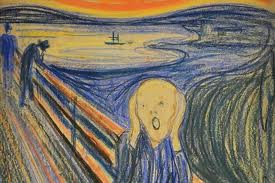
The Scream by Edvard Munch
I had some astonishing shafts of self-knowledge from it… things I was entirely unconscious of whilst writing it. I was trying to see what I could learn from it, though I admit I meant initially to pick out a passage which might help in my current novel.
But then the ms had to be put away in the bottom drawer of the filing cabinet again – I could bear only so much of delving into the past like that!
Anyone reading an old journal, or looking through old photos, might feel the same.
The sometimes unwelcome light of self-knowledge, in extreme cases, may make us feel like the tormented figure in the famous painting “The Scream” by Edvard Munch.
“The Scream” is uncomfortable viewing. Through his art, Munch’s fascination with self-image, and obsessive self-expression are themes that still resonate today.
It occurred to me, that humans desire more than anything else, “to be known”. The current passion “to become a celebrity” and for social networking are just two of the many contemporary phenomena that express this.
But we can bear only so much knowledge – either of ourselves, or of others.
As I read in a recent article on “The Scream” from the London Institute of Contemporary Christianity, we seek “an identity that gives us a unique sense of belonging and a connection to others. Knowing this, in modern life, truly sets us free.”
When I was a little girl, my friend Alison and I created imaginary worlds.A map of the imaginary world “Coneland” created by Alison & Sheila as children
One of these was the land we named “Coneland”. We wrote stories about the royal family of this land; at the bottom righthand corner of the map is the palace and the royal park, situated of course in the capital city, Coneington.
Alison is now a gifted textile artist who regularly exhibits her work in London and throughout the UK. Early expressions of her creative imagination may be seen in the worlds we designed before the age of 10.
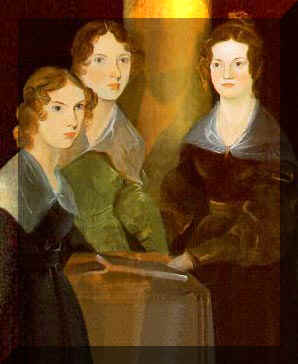
Among the most famous examples of imaginary childhood worlds is that composed by the Bronte sisters, “Gondal”. Emily and Charlotte and their siblings actively worked on the complicated fantasy world of “Gondal” for 16 years, and some of their creations at this time may be seen in the Bronte Museum at Howarth in Yorkshire.Painting of the Bronte sisters by Branwell Bronte
Of course, the artist Grayson Perry is well known for his childhood teddy bear Alan Measles, who was “the dictator and god of the imaginary world” in which Grayson Perry dwelt throughout his childhood (and of course well into his adulthood!)
In 1979 an author called Robert Silvey wrote a letter to “The Author”, a journal published by the Society of Authors, in which he invited contact from anyone who had created imaginary worlds in their childhood. He was gathering material for a book which was to be An Enquiry into the Imaginative Worlds of Childhood.
Alison and I sent off copies of our material; pictures and maps, a description of our imaginary world, the land of “Coneland” and its inhabitants.
This is an extract from Robert Silvey’s reply:
“It’s so interesting having two perspectives on this same ‘paracosm‘ (as we call it). The first thing that struck me about the map of Coneland was the similarity of the outline to that of the New Hiniwan States of which I was for some years the President. I suspect that this similarity has something to do with the dimensions of foolscap paper!”
Sadly, Robert Silvey died before completing the book.
But it remains true, as he said in his original letter to “The Author” magazine, that “had it not been for the subsequent fame of the Bronte sisters, no one would ever have heard of Gondal or Angria. Yet they were not the first, not will they be the last, children whose fantasy-life takes the form of an imaginary world.”
Did you ever create imaginary worlds during your childhood? And how has that influenced your adult life and vocation? If so, I’d love to hear from you!
Who’d have thought there’s a connection between emigrating to a far country, and being snatched by one of Doctor Who’s greatest foes: the Weeping Angels?
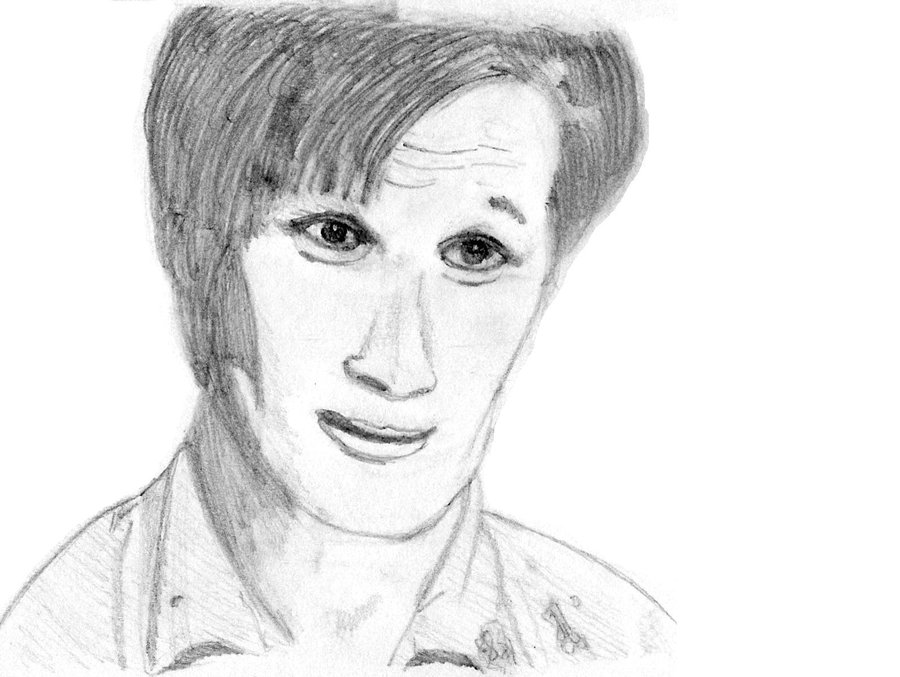
But I believe there is. “I’m the doctor” by MagicMoonCat on Deviant Art
The Weeping Angels played a vital role in the plot of the latest Doctor Who Episode, “The Angels Take Manhattan”, during which we, and the Doctor (played by Matt Smith),said goodbye to two beloved characters, Amy and Rory, played by Arthur Darvill and Karen Gillan.
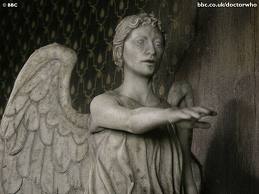
And I believe the reason why the Weeping Angels grip us is because they concentrate two of our greatest fears: Being Snatched Away, and Being Left Behind. weeping angel
Even when a family member who emigrated to a far country comes back home to visit England, it’s never the same.
The reason why is this: the time she spends here is Special Time.
And the time which the Weeping Angels snatch is OrdinaryTime.
Ordinary Time, Now, which can never be regained.
I lived and worked in Australia for four and a half years before returning to live in the UK. And during the time I was there I had a strange feeling, that I was existing in some kind of afterlife, in “the spirit world” – and that life back in England was “life on earth”.
I mention this because I think it feeds in to what I’m saying about the Weeping Angels, and the haunting power of what they do, and why the idea of them has such a grip on the imaginations of millions who watch Doctor Who.
The Weeping Angels snatch you away from your ordinary time, now, and steal all the energy you would have used to live in that time – and they transport you back to some period in the past.
I can imagine the creator of the Weeping Angels, Steven Moffat, standing in a churchyard or cemetary perhaps, and thinking about people who are snatched away.
Then he would have looked at a statue of a weeping angel, and thought: What if it dropped its hands and looked at me, and our gaze met? And that was all that was needed for me to be snatched away?
In fact, the story he tells is that he stood before a shackled gate, through which he could see a weeping angel statue in a graveyard.
And he still can’t understand why his idea touched so many people so deeply.
In moments like that, in the unconscious, far-reaching ideas are born.
“You don’t have to have everything together to make a difference to people’s lives. You just have to share your brokenness.”
So says Rob Parsons, author, public speaker, and founder of the charity Care For the Family.Rob Parsons OBE (credit quotestemple.com)
“Most people don’t want answers,” says Rob. “They can find their own answers. They just want to know they’re not alone.”
Care For the Family is a national charity which aims to promote strong family life and to help those who face family difficulties. And of all the charities I support, this is the one charity where, when you receive letters whose ultimate purpose is to ask you for more money, the letters are always worth reading for their own sake – even if you are most definitely not in a mood to be asked for more money. Rob’s letters are always funny, touching, moving. His letters are a gift in themselves.
The son of a Royal Mail postman and an office cleaner, Rob says that when he received his OBE from the Queen he thought of saying, “My dad used to deliver letters for you.”
Rob is a perfect example of someone who has built his success on vulnerability. Over the years he has shared many of the joys and sorrows of his own family life; the mortification, the pain, the insecurity, the sense of failure. I feel I know his wife Diane, and his son Lloyd and daughter Katie almost as well as Rob himself. The stories he shares often amaze me; they always touch a nerve of truth. I trust that he shares nothing without permission! And all I can say of Lloyd is that if I were to meet him in person, I would think, Your reputation precedes you, Lloyd.
I have been listening to Rob, and reading his books, for several years now. When I first heard him speak my children were young. When he spoke about teenagers, I thought, “Oh, I don’t have to worry about this teenage stuff – that’s years away.”
Now, however, I listen to Rob talking about teenagers, as I did last Tuesday evening in Birmingham, and think, “Yes. This is true. I have said those things. I do those things. That is what happens. That is what they do. That is how I feel about it.”
Rob says he built Care for the Family on vulnerability. “That is part of my story.”
On several occasions over the last few months I have commented on blogs or responded to online posts or newspaper articles by referring back to Rob Parsons, and what I have heard him say, and what I have read in his books.
This is because the same issue comes up again and again. Either people feel they never knew their father well when they were growing up; or fathers wish they had spent more time with their children when they were young.
On each occasion I have referred to Rob Parsons, and what he says about fathers. The important thing is to spend ordinary time with your children, he says. That is the time that really counts. Not the time you spend with them on expensive holidays you took them on because you worked “all the hours God sends” all year and often into the evenings and Saturdays, earning money to pay for the expensive holiday.
That expensive holiday will evaporate. Just being there, in ordinary time. So that you are around to listen, and to understand, and to chat, and to know things about your children. That is the most important message to all fathers.
Rob trained as a lawyer, but he then became a public speaker and writer. He could well be a stand-up comic – but to that gift he adds poignancy, sadness, and ultimately a powerful spiritual message.
Rob is a man who inspires, moves, and warns.
I commend him to you. If you haven’t read any of his books, please do.
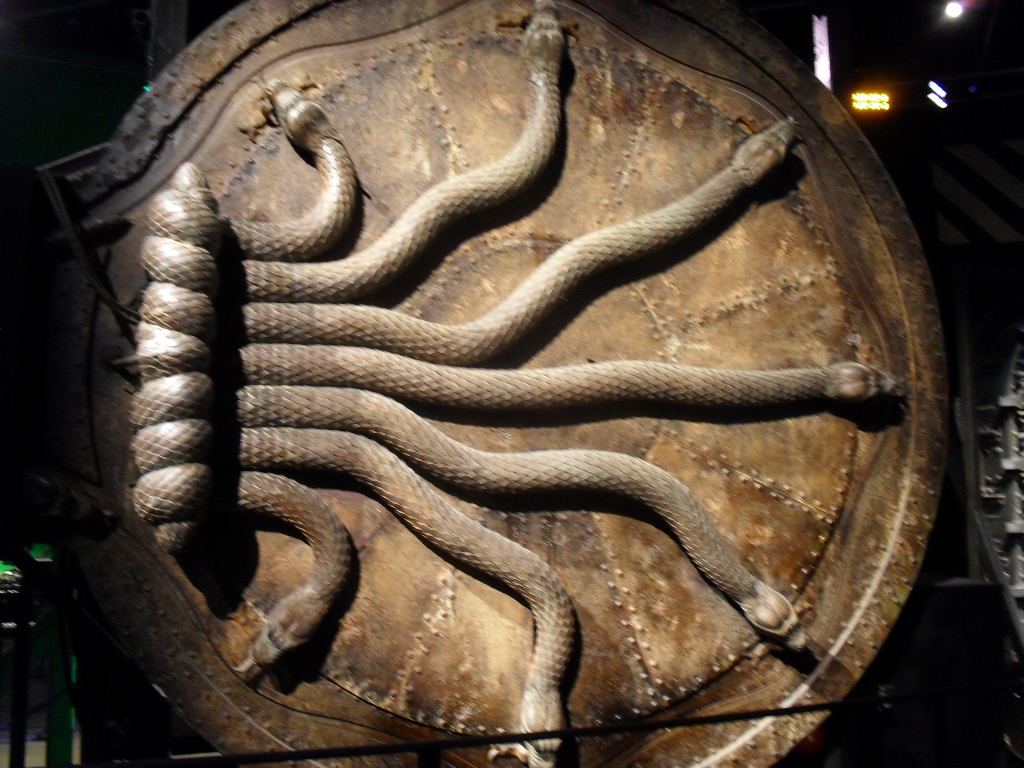
On a recent visit to the Harry Potter tour at the Warner Brothers Studios in Leavesden, I was moved.The door to the Chamber of Secrets
Not simply by the moment when I and my two children first stepped into the Hogwarts Great Hall, or by the moment when I first came upon the model of Hogwarts Castle, or when I first saw that beautiful Hogwarts Bridge out in the middle of the “Back Lot”, or by when I tasted my first Butterbeer, but by the whole experience, and the reflections that arose from it.Hogwarts Bridge
All these wonderful objects and scenes and lovingly created details and the magnificent model castle… all because of one woman’s imagination.
To see the products of J.K. Rowlings’ imagination brought into richly-detailed reality was awesome.
I thought, All this is here because of people loving her stories in their millions.
“People in their millions”, of course equals “money”, in the film industry.Dolores Umbridge’s study
But I was reminded of what J.K. Rowling said when asked in Trafalgar Square after the premier of the final “Harry Potter and the Deathly Hallows” film, “What do you want to say?”
And she said, “Thank you – for making this happen.”
And as I left the Warner Brothers studios I thought too of her words, displayed in the exhibition: “Stories can only live if someone listens.”
On a recent visit to the Churchill War Rooms in London, I experienced in my imagination what it would have been like to work as part of Winston Churchill’s team underground during the Second World War.
As I walked through the offices and passed the displays and spent time in the Churchill Museum, I was particularly struck by the meaning of the words Cometh the hour, cometh the man.
These facts stood out for me afresh:
1) If Winston Churchill had died a few years earlier he’d have been a brilliant failure.
2) He entered office as Prime Minister at the age of 65.
3) His inspirational speeches made a profound impact on the outcome of the Second World War by raising the morale of the nation.
4) He was a difficult man personally, yet he inspired admiration and loyalty and devotion in all who worked for him.
5) We owe our freedom to him.
6) Times were uncomfortable and hard and restricted, yet people accepted it.
7) His speeches move us even now, and we can apply them to our lives even 67 years after WW II ended.
Another thing that shone out was the personal account of Churchill’s secretary – she described what it was like to type out his letters as he dictated them to her.
As someone who has had experience of numerous bosses in this kind of office situation, I thought to myself, He sounds like a nightmare boss. I’d have hated working for him!
And yet those who worked for him had only admiration, devotion and loyalty. One of the comments his secretary made was especially meaningful: “Sometimes what he was saying was so interesting, I would forget to type.”
I would recommend a visit to the Churchill War Rooms to anyone visiting London. It is a profoundly moving experience, which should make you look at your own daily life, and even your place in history, and in this world, with new eyes.
The London postal service once had to deliver a letter from India addressed as follows:
“The tool shop
opposite the Woolwich Ferry
London”
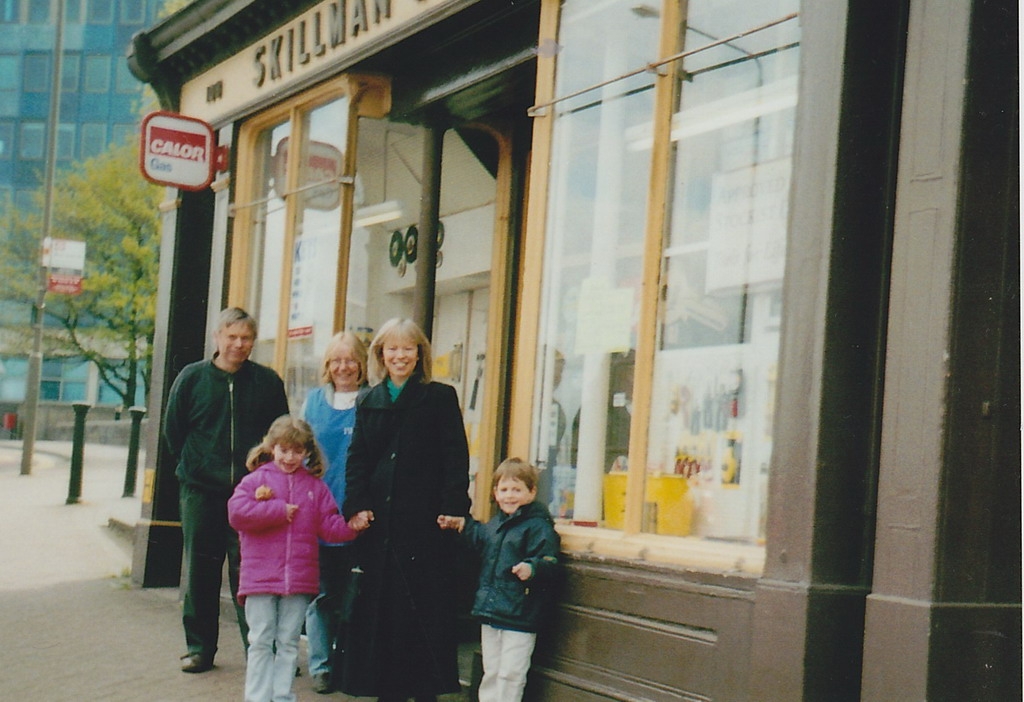
The original Skillman’s of Woolwich in 2002. Chris Skillman,former MD, is on the left of the group
It arrived safely at its destination: A.D. Skillman & Sons, 108 Woolwich High Street, London SE18.
Skillman and Sons of Woolwich (founded by my grandfather Alfred Daniel in 1900) was a byword throughout south east England for generations. A sign used to hang up outside the shop:
“If you want it, we’ve got it. If we haven’t got it, you don’t need it.”
Every member of our family worked there over the years; I used to do holiday jobs selling packets of loose nails from the pigeonholes at the front, or stocktaking at the back, or peeling potatoes for my aunt in the flat upstairs or collecting stamps for her from the Co-Op in Hare Street, Woolwich.
Now of course Woolwich is seeing regeneration, not least through the beautiful Royal Arsenal Thames Riverside, together with the Greenwich Heritage Centre and Firepower, the Royal Artillery Museum very close by, and the wonderful Thames Barrier and Visitor Centre. All this regeneration is fuelled by the extension of the DLR from Docklands to Woolwich.
My grandfather Alfred Daniel started the business in 1900 further up Woolwich High Street and later moved it to number 108. My father Ken took over after the war. He was later succeeded by my brother Chris until the business closed in 2002.
But now Skillman and Sons has re-emerged. Not in Woolwich, but in Kensington.
That traditional tool-merchants business now has a new life, through the enterprise and imagination of another hardware store owner, Manish Vara, who is hoping to revitalise the Good Old Days of English service and quality – popularised of course through the current wave of nostalgia and euphoria generated by the Queen’s Diamond Jubilee and the London 2012 Olympics. A different manifestation of Skillman’s, more hardware than tool-merchant, has emerged. My brother Chris Skillman, MD of Skillman’s of Woolwich, wishes Manish well.
The new manifestation of Skillman & Sons which has emerged in Kensington
Perhaps some time the story of the shop opposite the Woolwich Ferry, and its 102 years of history, may weave its way into my fiction. The River Thames has strong resonance for me – not least when I took the ferry across from Woolwich at the age of twelve or thereabouts, supposedly on a round trip. But I got confused, and disembarked in North Woolwich, across the river, and wandered around lost for about an hour though to me it seemed an eternity!
If you have an interest in the history of south London, and you’d like to know more, I have published a full article about Skillman & Sons in Family History Magazine, which is re-published on my official website under the heading “My family background.” Do click here to read the article.
Are there any traditional shops or longstanding family businesses in your town or area which are part of the landscape of your life? Has the Diamond Jubilee celebrations and the tide of patriotism attendant on London 2012 opened up traditional Britain to you again? Please consider leaving a comment!
Throughout this series, mountains have been an important image for me. And now we arrive at the end of my mini-series, we find ourselves on a mountain again. And this mountain is on the opposite side of the world to the mountain where I had my first childhood experience – in Australia.mountain view Great Dividing Range
I’ve told this story before on this blog. And so it is with important experiences – the story must be told again and again.
On the border of Queensland and New South Wales, behind the Gold Coast, you may find the Macpherson mountain range, part of the Great Dividing Range. The road leads from Southport via Nerang up through Mount Tamborine to the town of Canungra where you may continue your journey to one of two mountain resorts: Binna Burra or O’Reilly’s. I was negotiating the mountain passes on the way to O’Reilly’s. In the passenger seat was my 18 year old niece Caroline, who was visiting Australia for a month (where I lived at the time).
Caroline had mentioned that she and her friend Jo (her fellow traveller to Australia) had gone to Sydney to stay in a house of students who they knew nothing of. And discovered that they were all committed Christians – just like Caroline and Jo. Caroline found that wonderful. I said, “Well, like attracts like” – for I at the time believed that this apparent coincidence was the operation of the Universal system / the principle of “reality follows thought.” But Caroline was having none of this. “No, it was God,” she said.
I didn’t want to argue with her. Especially as I was driving up a perilous mountain road at the time. My own beliefs were a mixture of NeoPaganism, Pantheism and Eastern Mysticism. I pursued gurus, tried Buddhism, practised eastern forms of meditation and various esoteric philosophies, teachings and techniques.
I prepared to go into “indulgent tolerance” mode whilst we climbed higher up the mountain range. It was because of that very black-and-white “certainty” that I had long mistrusted evangelical Christianity.
But Caroline then launched into a full exposition of the gospel and of the fact that Jesus Christ had come to bridge that divide between God and humankind; and when we reached our cabin in the resort, she drew for me a picture of a cross bridging that chasm. All the time I was in tolerance mode. I didn’t need evangelising. I considered myself knowledgable about the bible, & had been good at R.K. at school. So I just let Caroline do her thing, until she at last got distracted by a snake lying in the path.
For the next year I continued in my usual way, following my own spiritual interests, occasionally thinking of this episode. OK I hadn’t liked being evangelised. But I was impressed by her conviction, by her belief that her religion wasn’t a private matter, it was to be shared; and by her courage. I thought, “I wouldn’t do that.” It’s a personality thing too, but I actually believed everyone has a right to their own beliefs & it was no business of mine to try and convert someone else to my beliefs. But Caroline believed she not only had a right but a responsibility to tell me what she believes. I was impressed by that. But I didn’t do anything about it until 1991 a few months after I’d returned to live in England, with my parents in their Kent village near Tonbridge – and it changed my life.
Have you ever changed your life as a result of a conversation with one person? Or was it a long process, involving several people, covering a number of years? Please share your own stories with me!
Here is a list of some of my glimpses of eternity, listed by one identifier or the place where the experience occurred:
Mountain at end of road in Wales.
Hedge parsley in Kent.
Dream of the sea
Mount Neel Kanth in India.
Violin passage in Bach’s “St Matthew Passion”
Twilight on the beach at Mynt, Pembrokeshire coastline, West Wales
Taize service in church
Chalice Well Gardens in Glastonbury
The woodland between Conishead Priory & Morecambe Bay, Barrow-in-Furness
St Cuthbert’s Tomb in Durham Cathedral
On the mountain top at Binna Burra, Queensland.
Journey through the Cambrian Mountains to Aberystwyth in Wales
Do you identify with this journey? Share your thoughts and feelings with me about this journey of the spirit. I’d love to have your comments!
I’m off on holiday for a week. While I’m taking a break from my laptop my blog will be quiet. However there’s a post or two in the pipeline for when I get back – but you can expect a delayed response to any comments etc.
Mystical Circles new edition pub. August 2012
Meanwhile, though, consider this thought from an excellent book I’ve just read, Jeff Goins’ “Wrecked”:
“The world is broken and remains that way, in spite of our efforts to help it…. In a world that refuses to be healed, we must face the fact that we are not the heroes of our stories. It teaches us to rely on something bigger than ourselves and teaches the source of true compassion.”
I think this is a very profound statement: an acknowledgement that the world “refuses to be healed”.
I spent the first part of this book relating what Jeff Goins says to my own life experiences; and the next part seeing those experiences in a new light, and perhaps making sense of them. Finally the book challenged me to go beyond my comfort zone and to be willing to behave in ways that are “counterintuitive”. I found this book very moving and penetrating. It is full of wisdom, compassion and humanity.It’s an ideal book for young people to read – and the sort of book I wish I’d read during my university years.
In my romantic suspense novel “Mystical Circles” you will meet a number of people who ostensibly do want to be healed, and have come together – into a very beautiful, idyllic place – for that very purpose.
Not necessarily physical healing – but healing in mind and spirit.
You will also meet somebody who believes he can heal, and that he is the hero of his story.
We enter an esoteric community of people all of whom have come here with a range of different emotional and psychological and spiritual needs.
Freelance journalist Juliet believes she’s only here to rescue her sister from the arms of charismatic Craig, the group leader. And she feels distinctly put out when the group members start targeting her with questions about her own feelings and “needs”.
“Therapy or treatment?” queries one of the group members, Edgar. “What about those, Juliet? Have you ever had any?”
“No. There’s nothing wrong with me.”
“There doesn’t have to be anything wrong with you, dear. But you’ll have needs. We all have those. And they are what have brought us here.”
Craig promises to “heal” the members of the group. This is what his brochure promises:
If you’ve been searching all your life, but have so far not found what you’ve been looking for, you’ve come to the right place. Here at the Wheel of Love, you may sharpen your subtle knife and cut a window into heaven. There are no limits to what you can achieve here: only those you impose upon yourself. You’ve chosen to come so we promise to supply the necessary tools. If you accept these tools and use them well, you’ll enter a freedom you’ve never dared dream of.
Craig will reach deep down into your spirit and touch a part of it you never knew was there.
Read the novel, and judge for yourself whether Craig – and numerous people like him whom you may meet – delivers on his promises.









 scskillman.com