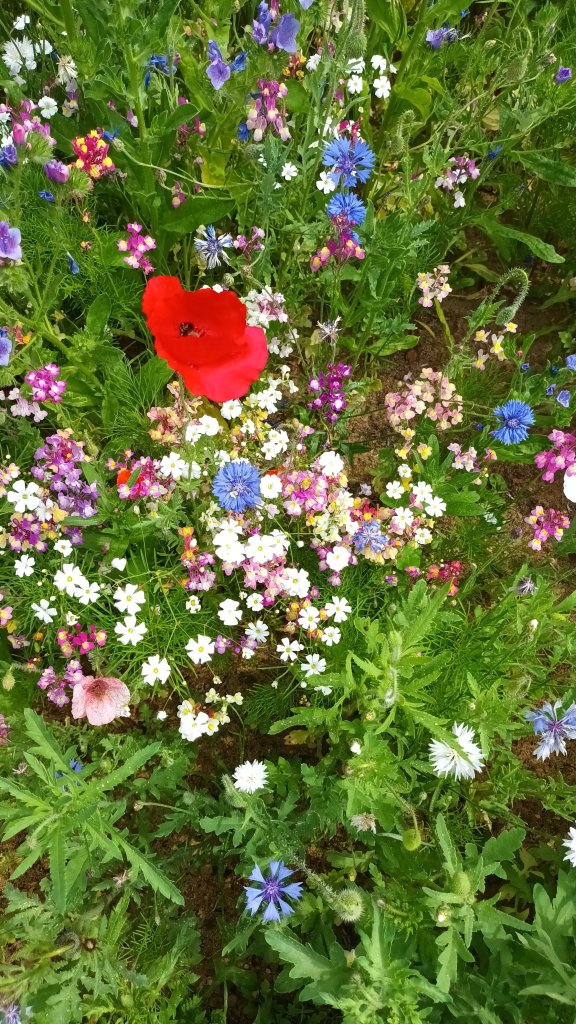
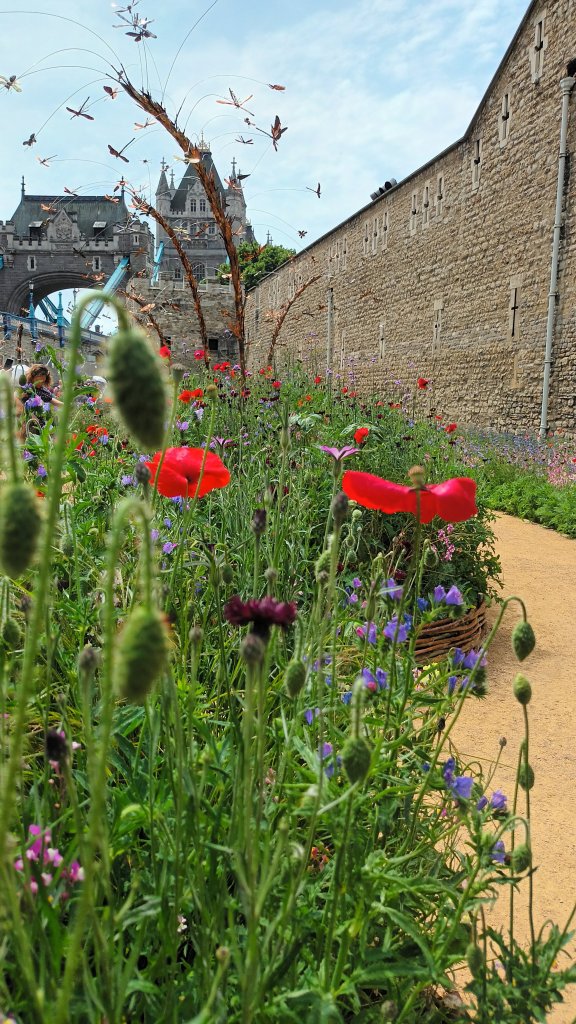
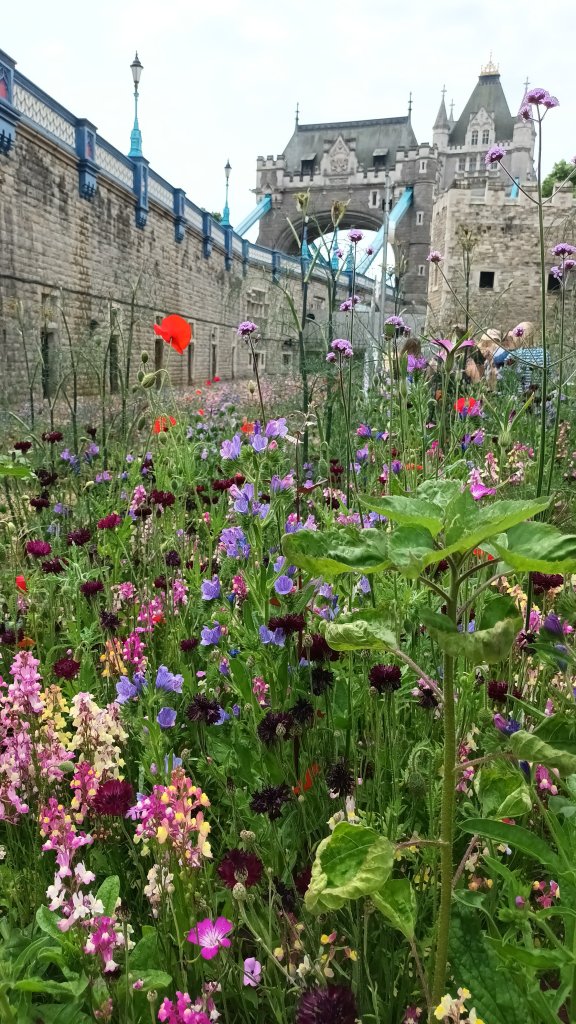
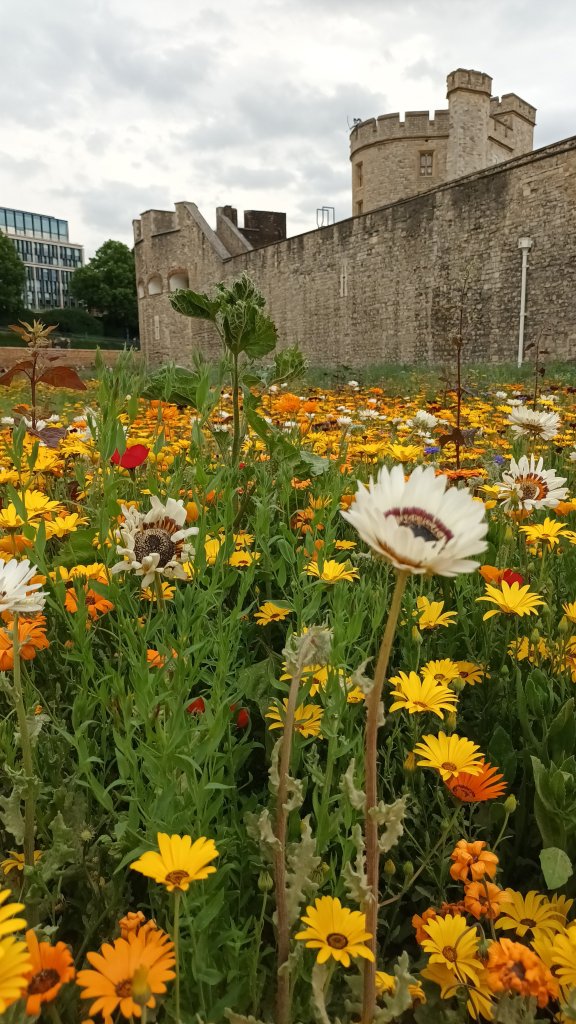
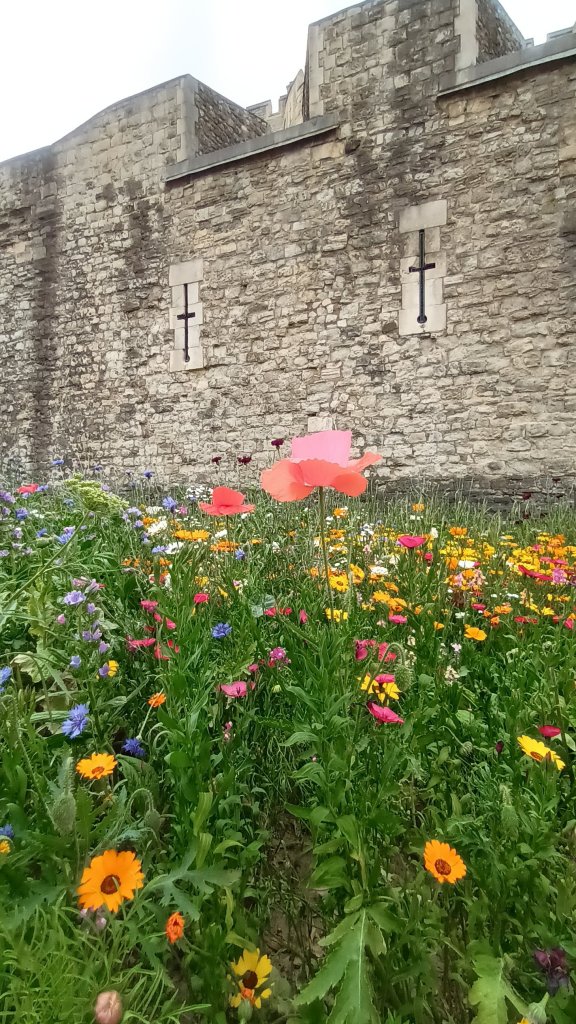
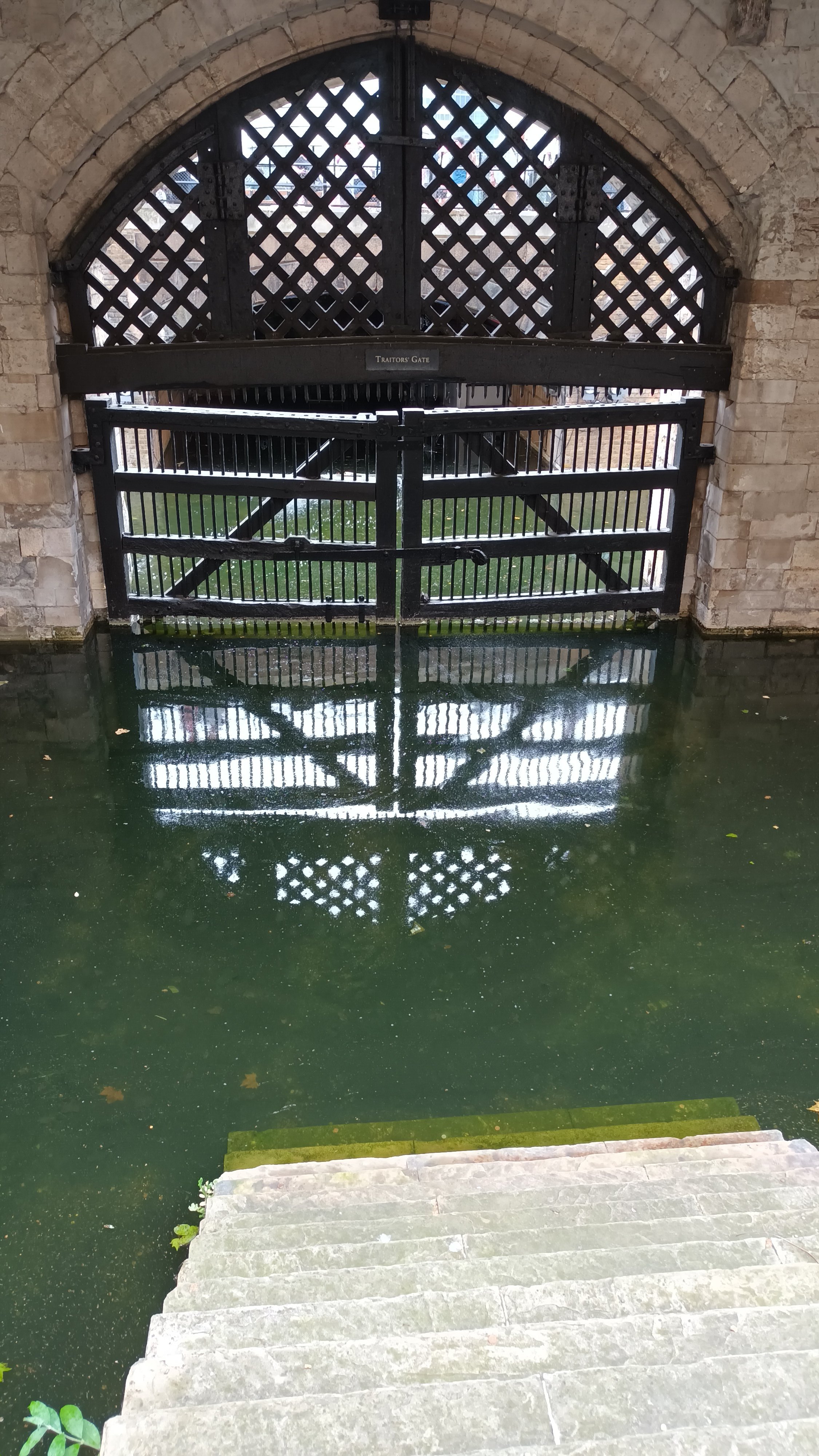
I loved our recent visit to the Tower of London where we enjoyed wandering through the Tower through a moat filled with wildflowers.
Superbloom celebrates the Platinum Jubilee year of Her Majesty the Queen. 20 million seeds were planted and the result is astonishingly beautiful and moving. Superbloom will be on till September 2022 – so hurry to book if you’ll be in London before then!
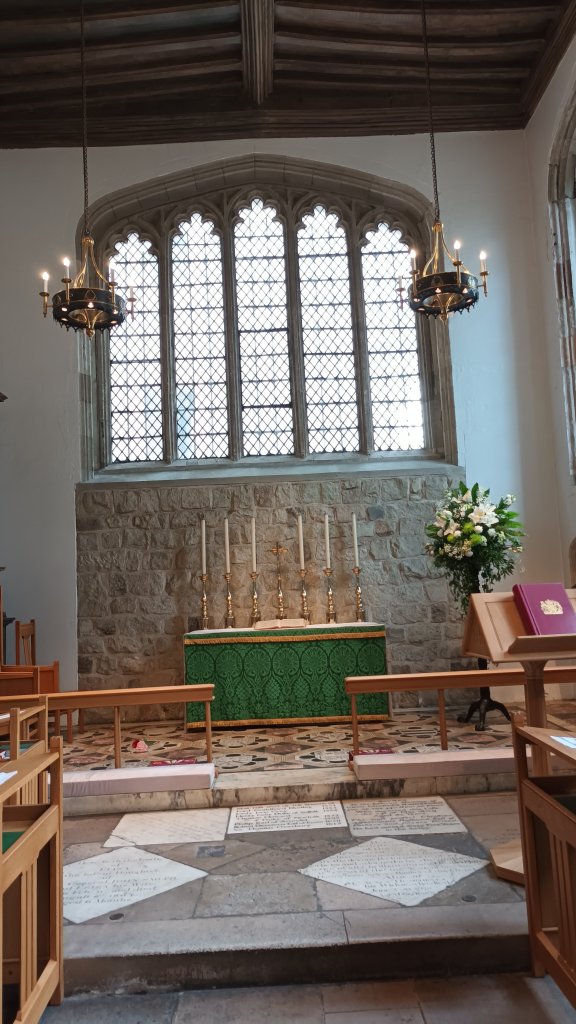
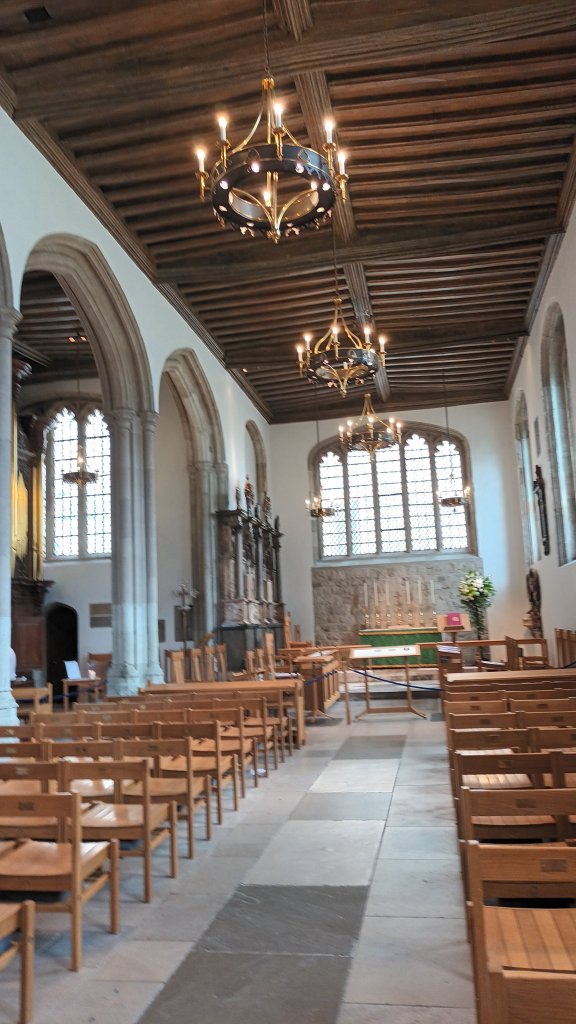
I always love going round the Tower. On this occasion we were able to enter the Chapel Royal, St Peter ad Vincula. This has such resonance for those who have read of the final hours of Anne Boleyn Lady Jane Grey and Catherine Howard who all lie beneath the altar pavement. I have never forgotten the accounts I’ve read of Anne Boleyn’s death, both in fiction and non-fiction: when it was clear her execution hadn’t been expected and no coffin had been made ready. So her ladies had to hastily bundle her decapitated body and her head into an arrow chest, and take it into St Peter ad Vincula and deposit it unceremoniously in the crypt beneath the altar pavement. Later, Lady Jane Grey and Catherine Howard both joined her, and they were both probably only about 16 years old. What poignant and horrific associations this church has, and yet of course, today, it is a place of serenity and peace.
We were lucky to be there to hear the organist rehearsing royal music for a wedding – before the Ravenmaster ushered us out so they could prepare for the wedding!
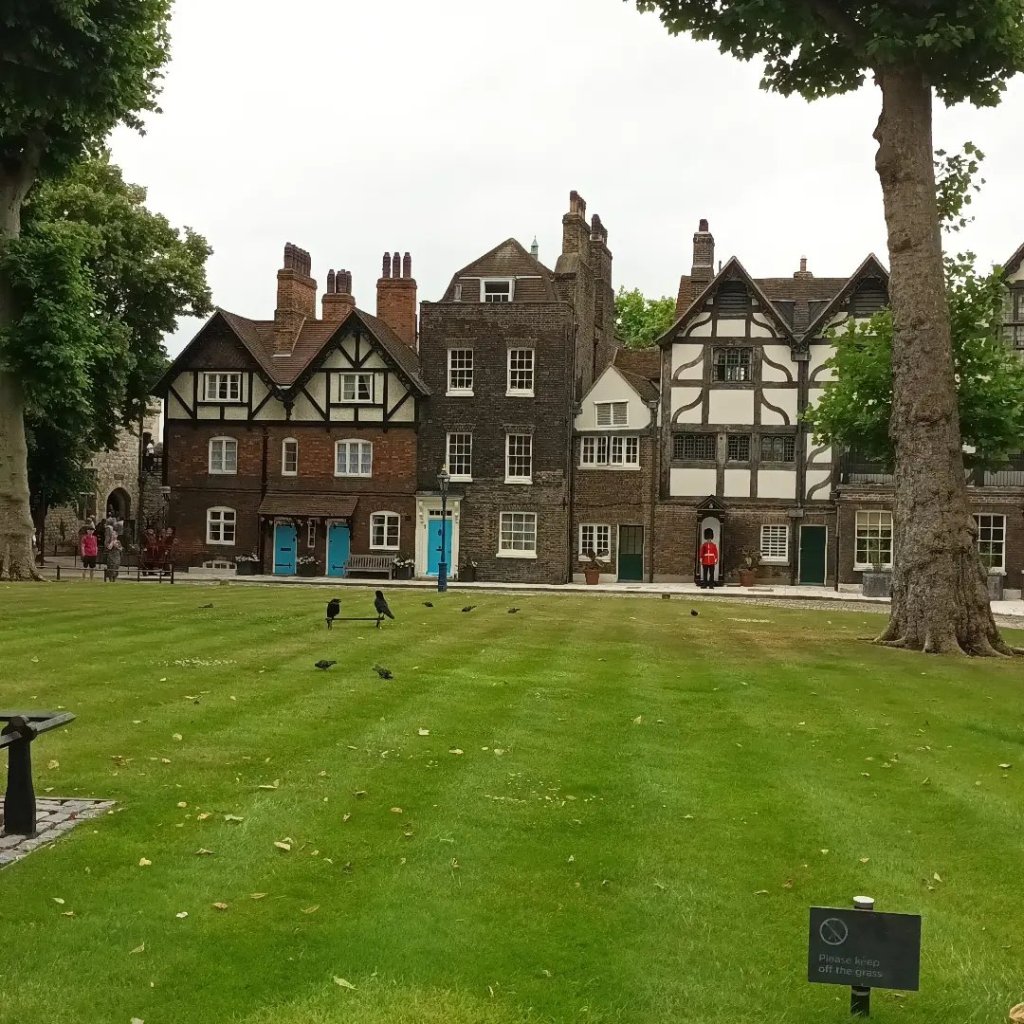
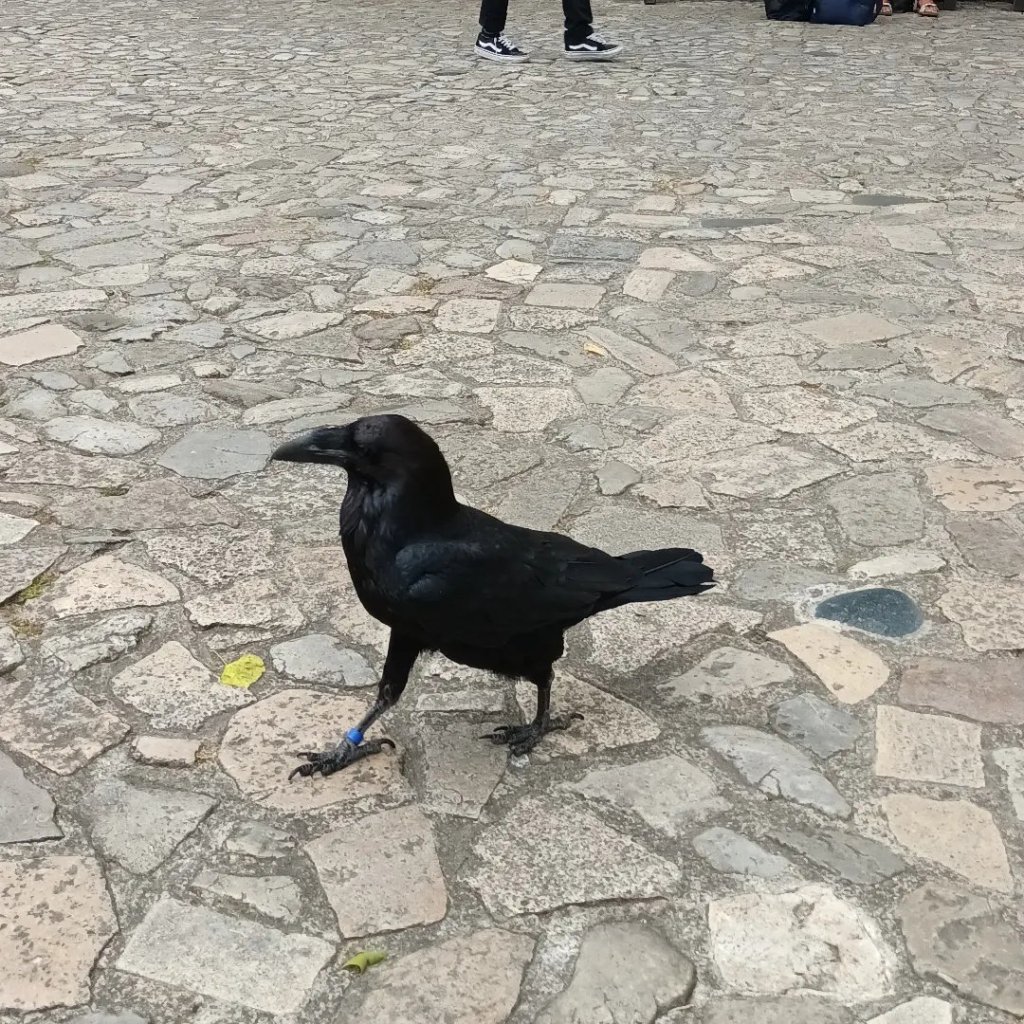
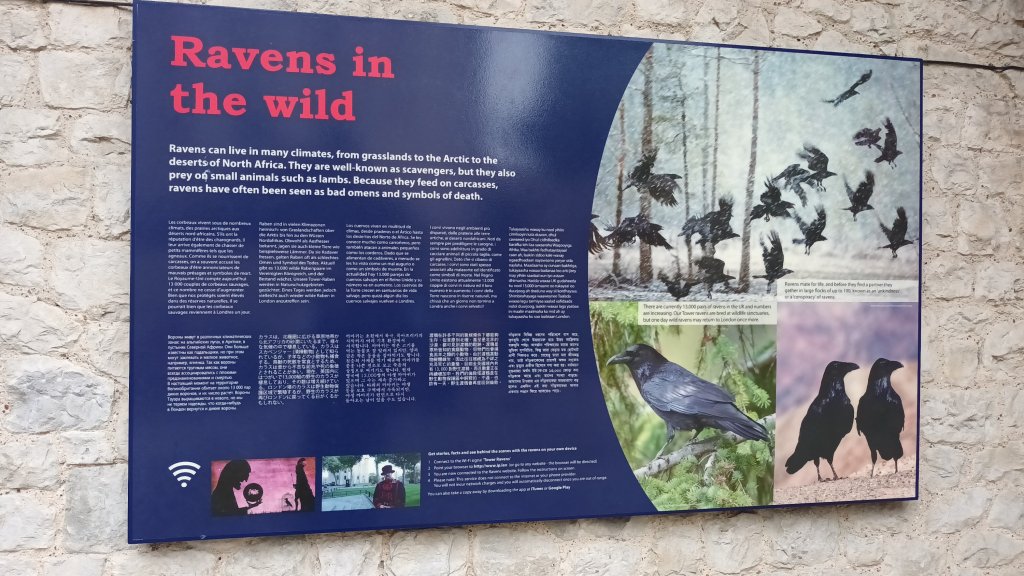
The ravens were well on display too, so pleased their time of isolation is past, and that they can once more strut around amongst the visitors to their hearts’ content.
Join me on my journey! I share snippets from my research discoveries along with publishing and writing news in my monthly newsletter. Click here to join.
Book Cover: The Fever of the World by Phil Rickman – published 2022
Phil’s genre defies categorisation, but Amazon often kindly list him under Welsh crime, and he variously takes the tags contemporary horror, horror thrillers, paranormal, women sleuths, gothic romance, and mystery, the last two being the case with his Book 1 in the series, The Wine of Angels. which was published in April 2011.
It’s fascinating wondering what Amazon will come up with next to describe his subject matter.
Book Cover: The Wine of Angels by Phil Rickman – published 2011
Phil Rickman created Merrily Watkins, young widowed woman vicar, and placed her in the beautiful black-and-white village of Ledwardine in the Welsh border country. He gave her an ancient draughty vicarage and a troublesome, rebellious teenage daughter Jane ( heavily into all things pagan). Then he made Merrily take on the role of Diocesan exorcist (known more subtly in the Church of England as ‘the deliverance ministry’, With that, he hit upon his winning formula, as an ideal vehicle for all the things he wanted to write about.
He created a main protagonist who finds herself constantly in tension with so many different areas of her life:
i She’s a woman in a leadership role in a traditionally male preserve;
ii She’s working for a huge institution, which historically holds, and still clings onto, a significant level of psychological and political power in the UK;
iii Her role in that organisation is one it still feels ambivalent about, is slightly ashamed of, likes to keep secret, and is wondering whether to ditch, to make itself more trendy and acceptable to the secular world;
iv She’s in an unstable personal situation: she loves a man who is himself vulnerable, and whom she fears to marry; her wilful daughter is obsessed with things the church fears, but she is indispensable in the resolution of Merrily’s cases; and through all this she is a discerning, intuitive, non-judgemental listener.
v She finds herself at the forefront of a conflict between the powerful undercurrent of myth/folklore/ancient pagan tradition that runs along behind human behaviour, especially in the Welsh border country, versus the things established religion says people should be guided by.
Phil Rickman’s devoted fans are, with this novel, reading Book 16 in a much-loved series, which many of us have followed all the way through. We therefore take-as-read the relationships and situations between the characters. This is a series that is almost essential to begin at Book 1, and not start halfway through.
Being in this position must make an author fear the possibility that he might not think of anything new to tell readers about his characters for fear of spoiling it all – along with the fear of bringing to an end something which is keeping so many readers reading. That was how Sir Arthur Conan Doyle felt with Sherlock Holmes, and we all know how he tried to kill the great detective off and had to bring him back from the dead!
MY REVIEW
I have loved all the books in the Merrily Watkins series and this new addition was particularly long-awaited due to the author’s sad ill health. I admire how he has come through this gruelling challenge, and completed this book despite such adversity. Phil Rickman still keeps us guessing about the relationship between Lol and Merrily and this to me is the clearest indicator he plans another Merrily book!
In this story there was more emphasis on Merrily’s self-willed daughter Jane, especially in the first part of the story, and I really feel that I’m on Jane’s side here. Jane comes up trumps again later on, using the simple strategy of eavesdropping on Merrily’s conversation with a haunted and disturbed ‘client’, and then doing her own investigations without telling Merrily. I have throughout this series long wished Jane and Merrily would communicate better, as they make such a wonderful duo of investigators into all things paranormal / weird / pagan / criminal.
Everyone in this story seems to be, or becomes, very knowledgable about the poetry of Wordsworth, even when (in Merrily’s case) they claim not to have read anything of his since school. I love Wordsworth: some of his poems have a luminous rhapsody about them. He was a mystic, a pantheist, and my favourite from early youth. Certain lines shine out to me: “We come, trailing clouds of glory… we forget that imperial palace from whence we came.”
Alongside the strong references to Wordsworth and his close relationship with the Wye Valley, I also love the way the author evokes Symonds Yat Rock, the sublime view of the river Wye, and the peregrine falcons soaring down from their clifftop home. Phil Rickman captures all this in his story. He brings together so many elements that fascinate me in fiction, along with family relationships: 1) A place of wild natural beauty on the Welsh border; 2) a creator famous for being inspired there (poet/composer/writer); 3) the ancient history associated with the region: standing stones, myths, along with the idea that history does not recede; 4) the faerie lore associated with the area, along with witchcraft traditions and ghost stories; 5) crimes/murder/dark deeds.
Over-arching all this we find the characters we love; Gomer Parry, redoubtable old man and ever-loyal to Jane, Lol and Merrily; Frannie Bliss, Scouser policeman; his sidekick David (or is it Darth?) Vaynor; Sophie, Merrily’s ally and rather subversive Bishop’s PA; a dodgy Bishop; the faithful, persistent, and highly-relatable character of Lol; the impetuous, inspired and rebellious Jane; the gifted, insightful, and non-judgemental listener and investigator Merrily.
In this story we also meet Arlo, former TV actor, now a very troubled vicar; Maya from the TV world who claims she’s seen spirits of dead children; Diana a sinister weirdo and probable succubus; and not least Wordsworth himself, obsessed with the vision of the eight year old girl he has met.
A worthy book in the series although I wish it had been longer and more complex, as we have come to expect from this series.
The book will uncover some intriguing stories about the town of Warwick, past, present and future; and will contain 100 photos mostly taken by myself, or by my photographer son and daughter Abigail and Jamie Robinson.
I have 3 more photos to take, some permissions to confirm, a visit to Warwick’s 17th century dungeon and another round of editing, and then I’ll be able to send it to the publisher Amberley.
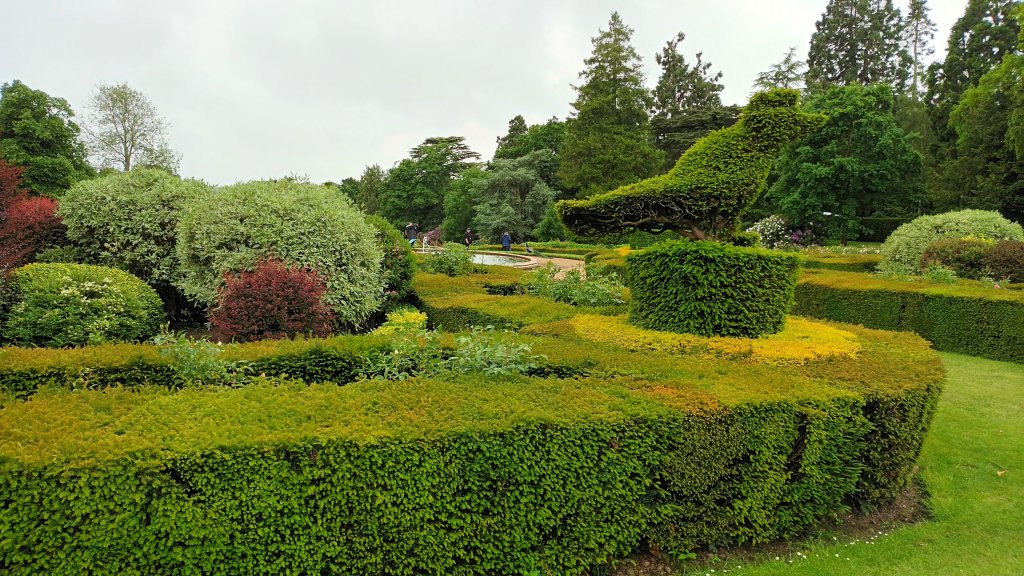
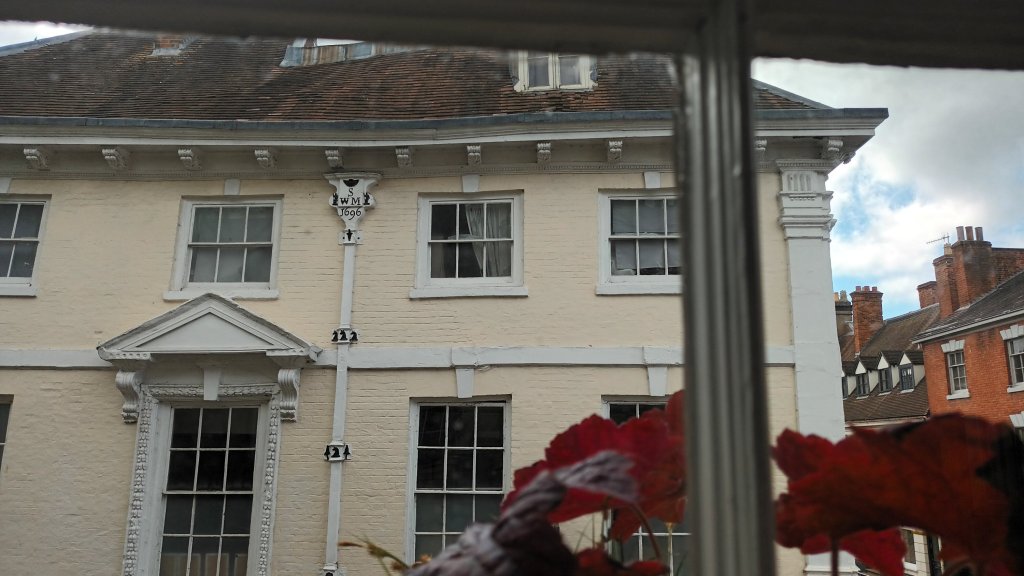
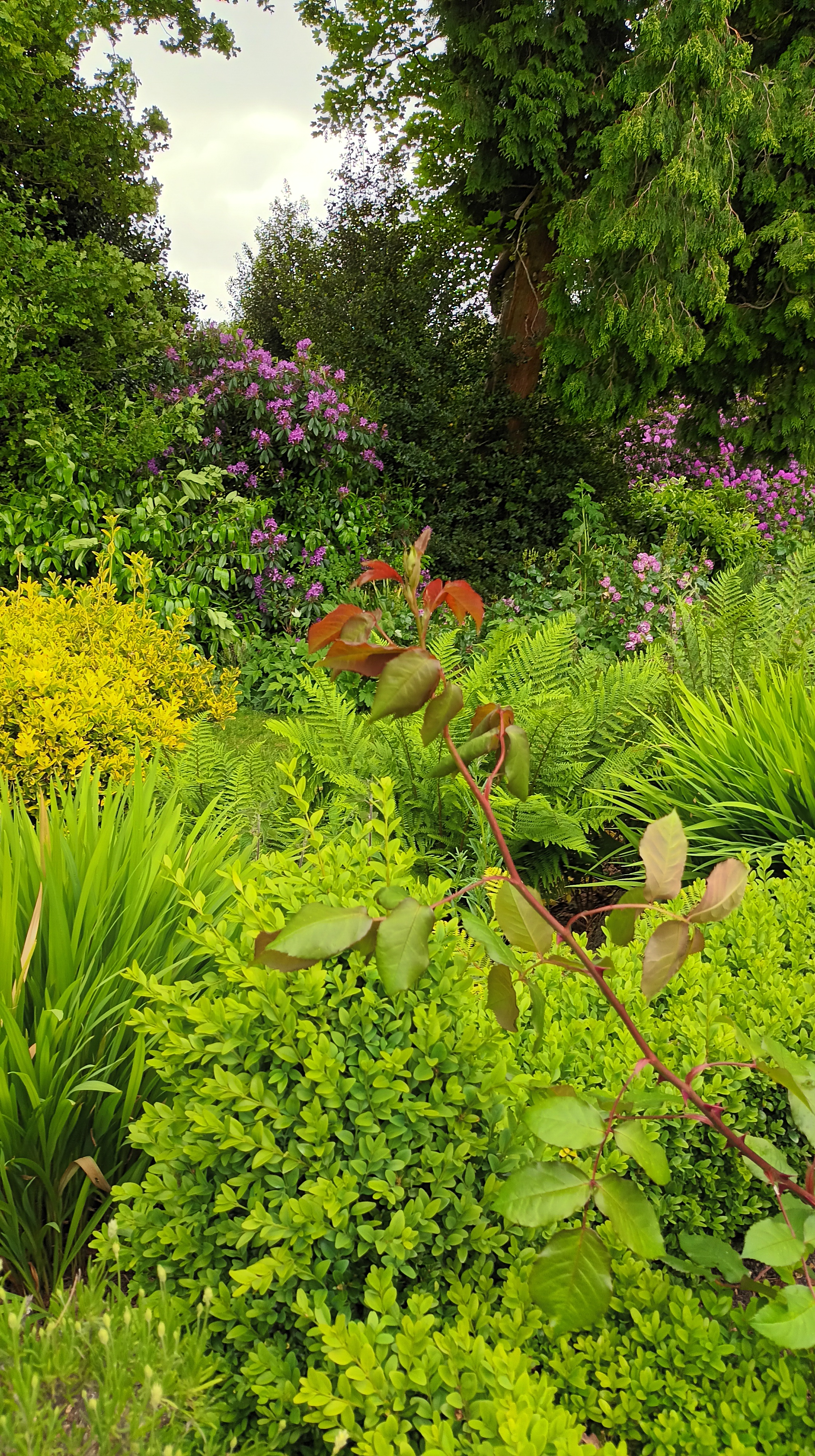
Here’s a taster of some of the photos that will be in the book.
A selection of photos from ‘A-Z to Warwick’ by SC Skillman to be published by Amberley: from top left to right, Ethelfleda’s mound at Warwick Castle; the castle peacock garden; the plaque commemorating the Donald Healey Showrooms at Healey Court; one of the plots in Hill Close Gardens; the 1696 house viewed through the Court House ballroom window; and Castle Lane behind Thomas Oken’s House
Sign up to my mailing list on the home page of this website.
Today I am delighted to share with you my review of a new novel, ‘Braver‘, prior to publication on 30th June 2022. I’ve met its author, Deborah Jenkins, during a recent writing conference and we are fellow members of the Association of Christian Writers, and often in touch via our Facebook group. Deborah is very helpful, supportive and encouraging to her fellow authors, and it was lovely to find advance copies of her new novel available to buy at the recent conference, and I snapped up a copy!
Book cover for ‘Braver’ by Deborah Jenkins published by Fairlight Books 30 June 2022
BLURB
Hazel has never felt normal. Struggling with OCD and anxiety, she isolates herself from others and sticks to rigid routines in order to cope with everyday life. But when she forms an unlikely friendship with Virginia, a church minister, Hazel begins to venture outside her comfort zone.
Having built her own life after a traumatic loss, Virginia has become the backbone of her community caring for those in need and mentoring disadvantaged young people. Yet a shock accusation threatens to unravel everything she has worked for.
A sensitive, thoughtful, touching novel about our contemporary society and the many ways in which people can be broken or vulnerable or ‘odd’ – along with the multitude of techniques with which people attempt to protect themselves, or try to cover it up.
We all have our own personal backstories which affect us now: our behaviour, our relationships, our approach to life. In this story, the main protagonist Hazel, living on her own in the London suburbs, and working as a Teaching Assistant in a local school, suffers from obsessive compulsive disorder and anxiety, and we see how she encounters a group of people who give her the opportunity to change her life.
The key people she meets are young Harry, bullied at school, terrified ‘the Social’ will find out about his abusive home life with his alcoholic mother; and Virginia, a warm, compassionate and caring church minister with her own tragic past, whose eagerness to help others gets her in deep trouble. I found the story very poignant and discerning.
The novel has been compared to ‘Eleanor Oliphant is Completely Fine’ and I can see a clear relationship between the two stories. By the end of Deborah Jenkins’ novel, we have a deeper insight into the complex and sometimes surprising ways we may become “braver” in our lives, no matter how diverse our circumstances. A beautiful and compelling story.
AUTHOR BIO
Deborah Jenkins is a freelance writer and primary teacher who has worked in schools in the UK and abroad. She has written several educational textbooks, as well as articles for the TES online and Guardian Weekend, among other publications. Her short fiction has appeared in magazines and anthologies, and she has also published a novella, The Evenness of Things. She lives in Sussex and enjoys reading, walking gardening, travel and good coffee. She writes a blog at stillwonderinghere.
‘Braver’ will be out on 20th June but you can pre-order a copy here
Recently two related memoirs have come into my hands within a short space of time. The first, Heaven is For Real I picked up from a secondhand book sale at a local Warwickshire Open Gardens event.
Heaven is For Real by Todd Burpo
The second, I bought at a writing conference in the Hayes Centre, Swanwick, just this weekend (3-5 June 2022).
Jonathan and Chantal Bryan, courtesy of Optimus Education Blog
This must have been the most stunning of all the talks we listened to during the weekend. The queue that formed afterwards to buy his book was the longest in the whole conference!
The curious relationship between the two books immediately struck me: for within both of them a child recalls his impressions during an apparent near-death experience, and over the course of time, relates the details to the adults in his life. It was fascinating to read both accounts, in different circumstances, and to pick out the many ways in which they corresponded with each other.
Jonathan Bryan’s account is probably the most outstanding because it emerged later after he had been taught to read and write, via his perspex spelling board from which he chooses letters and words using his eye movements. His experience took place in Intensive Care while he was in an induced coma during ventilation, which he was highly unlikely to survive.
“Alive. I had never felt so alive.” He describes a beautiful garden which he identifies as “Jesus’ garden” and he vividly relates how he walked and ran around and swung his free arms, sauntering through an orchard full of “trees laden with delectable fruit”, playing with other children by the trees: all things he had never experienced in this life in a crippled, dysfunctional body.
“With the sibilance of the oxygen silenced, I inhaled deeply, the fresh air revitalising my new body and filling my soul with joy… the atmosphere was saturated in a deep, contented peace.”
His most compelling image was “As I stretched my body to its full height (my scoliosis had elongated and vanished altogether), I realised the dragon cerebral palsy had been banished from the lair of my body.” He also describes meeting his friend Noah who had died the year before from a brain tumour. Four year old Colton Burpo also refers to meeting family members, some of whom had died before he was born. Jonathan refers to the choice he was given, to stay to meet the gardener, or to go back to his fragile, sick body, back to “my mind trapped in my silence; back to the family I loved.”
In Todd Burpo’s book, little Colton, whose experience took place when he was three years old and seriously ill with a ruptured appendix, also refers to the choice he was asked to make. This does seem a common feature of accounts of near death experiences.
I found both books very moving but Jonathan Bryan’s was the most powerful. Children’s author Michael Morpurgo wrote the foreword to the book, and Jonathan has founded a charity called “Teach Us Too” pleading for all children regardless of their “label” to be taught to read and write. A significant proportion of the profits from his book will go to that charity.
Do let me know if you’ve read either of these books, and what you think. But if you haven’t yet come across them, I do recommend both to you.
Thank you to Ruth Leigh who began the tour and to Ritu Bhathal who looks at the book on her blog. Both bloggers have shared lovely reviews of the book.
Full cover of Illustrated Tales of Warwickshire by SC Skillman published by Amberley 2021
Illustrated Tales of Warwickshire is published by Amberley, and the book deals with strange stories from around Shakespeare’s county, stories which cover many topics: folklore, ancient ceremonies, spooky experiences, intriguing people, witchcraft, mysterious murders among them.
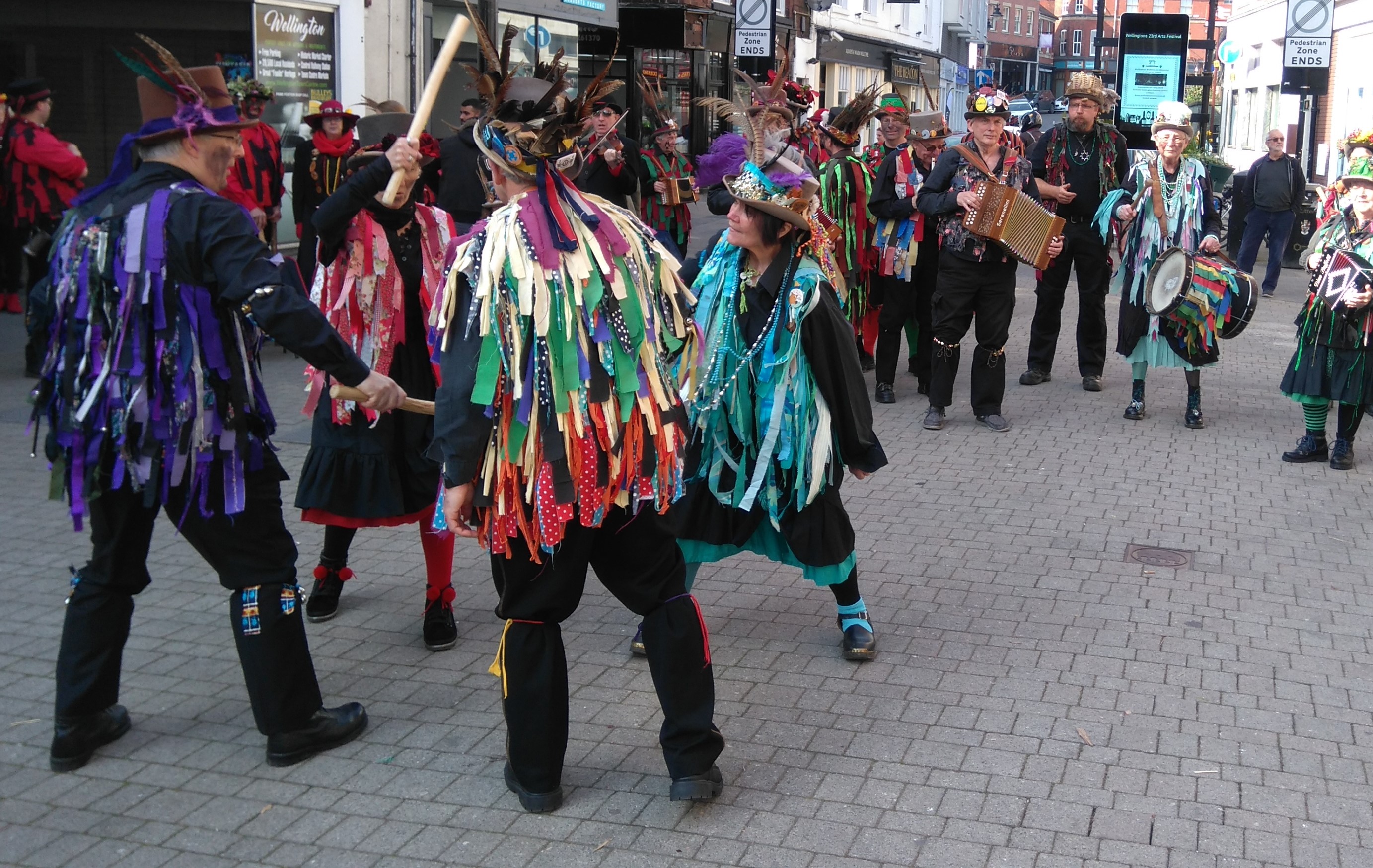
One of my topics under the heading of folk customs was the tradition of Morris Dancing, and I interviewed two members of Plum Jerkum, Warwick’s own Border Morris side. You will see a photo of them has made it to the front cover.
So I was delighted to hear that they were keen to dance at my book launch, which will certainly add to the atmosphere of the occasion!
The bridge and river at Bidford-on-Avon, WarwickshirePlum Jerkum Border Morris Side, Warwick’s own border morris dancers
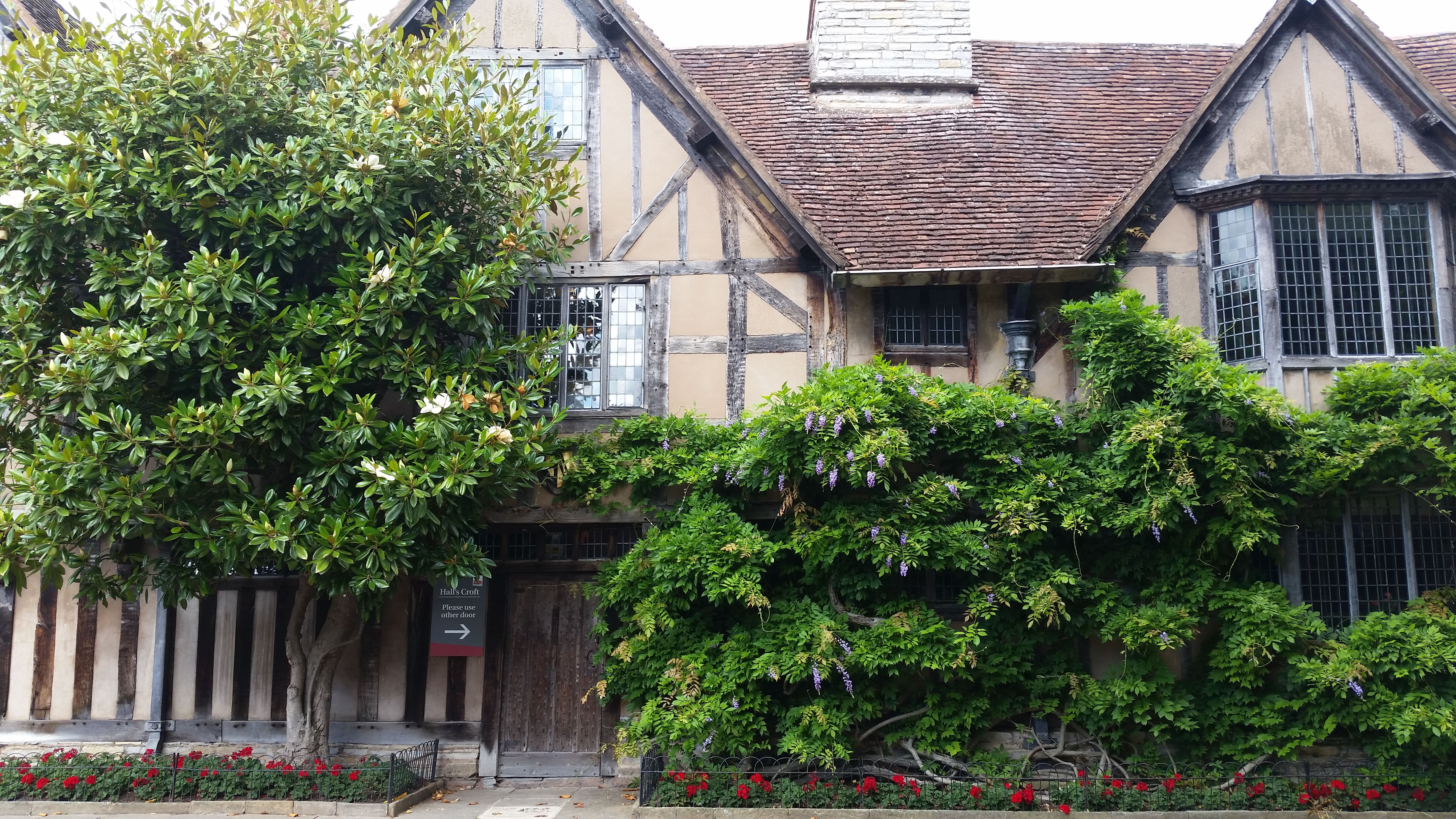
I hope you enjoy this selection of photos from my book.
It’s available worldwide in paperback and you can order it here, or go to the books page on this website to order signed copies from me.
Plum Jerkum, Warwick’s own border Morris Side, dancing in the streetHall’s Croft, otherwise known as Dr John Hall’s House, in Stratford-upon-Avon, WarwickshireFarmyard Scene in the village of Lower Quinton, Warwickshire
If you enjoy reading my blog posts please do sign up for my mailing list. I send out monthly news updates on publishing and writing news.
I’m pleased to be taking part in a blog tour today for fellow author Maressa Mortimer. I’ve had the pleasure of meeting Maressa several times at different author events and conferences, and she is a lovely ebullient lady with endless energy, who despite being the wife of a Baptist pastor and the mother of four children, is amazingly prolific as an author and also fantastic at design and author promotion!
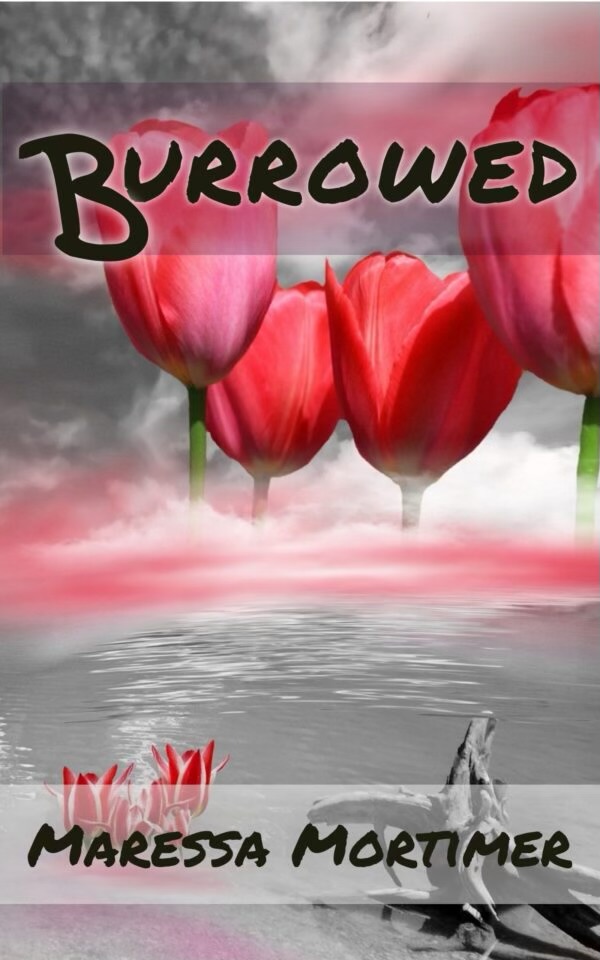
Book cover for novel ‘Burrowed’ by Maressa Mortimer
‘Burrowed‘ is Maressa’s fifth novel and it was published on 12th April 2022.
Author Maressa Mortimer
AUTHOR BIOGRAPHY
Maressa grew up in the Netherlands, and moved to England soon after finishing teaching training college. Married to Pastor Richard Mortimer they live in a Cotswold village with their four children. She is a home-school mum, enjoying the time spent with family, travelling, reading and turning life into stories, she wants to use her stories to show practical Christian living in a fallen world.
BURROWED
BLURB
The beautiful island of Ximiu has a plan for a more sustainable future. But not everyone living on the island is on board. Jasira, daughter of the governing matriarch, is determined to uncover the dark forces threatening her home. With the help of her friends she embarks on a desperate bid to save her island community. When the price is higher than she had bargained for, will Jasira still find faith and beauty in the world around her?
MY REVIEW
I found this novel captivating, set in the rather sinister but beautiful fictional island of Ximui. The island is run by a matriarchy, and is striving to go “green” – very quickly. The main protagonist, teenager Jasira, is daughter to the leader of the community, who is known as The Xibai. Jasira’s best friend Ilori is the son of the Vice-Xibai. The author demonstrates great skill at creating a creeping sense of anxiety in a setting which is in many ways like our own world, but at one remove. She refers to The Mainland as the place to which people escape, who cannot endure the pace at which the island of Ximui is going “green”; but it is also the place, possibly, to which “the disappeared” are taken. For the story concerns the disappearance of female babies and young girls.
This gives us enough resonance with some of the evils of our own world, to build our sense of unease. Throughout the story, the author sustains an underlying sense of this world being out of alignment with our own, especially in the unusual choice of names, which fascinated me. In the way it deals with contemporary societal issues, it may be regarded as a “speculative” novel.
The author deals with the issue of “going green” so cleverly that I began by thinking, “So, it’s going green. That’s good, isn’t it?” and I ended up by feeling totally different about it. In fact, although the author may not have intended this, it almost put me off “going green” at all! It made me grateful for all the advantages of our modern world: for asphalt roads, for electricity, for supermarkets, television, cars, diesel, and many other things. Other issues which arise in this novel include “combining genetics” and interference with DNA.
In this story, the ruling Council of the island have an official agenda which sounds good but a current of disturbing reality runs along beneath it, in the way these principles are worked out in the people’s lives, and the unpleasant consequences that result from this. A fear arises, that the changes made on Ximui have caused all the baby girls to be stillborn. Jasiru and Elori, seeing themselves as detectives, pursue the strange albino brother and sister, Axixa and Kamau, believing them to be behind all the strange disappearances. So many things are inexplicably going missing, as well as the babies and young girls: cars, electricity, energy, asphalt from the roads, even bags of flour.
The story takes a dramatic turn when we discover who the strange pair are, and where they come from: who are their people, where they dwell, and the truth about their malevolent agenda which threatens the island and everyone on it.
Ultimately Jasira must take a decision to put herself and her friends in extreme danger as she commits to a seemingly impossible mission to save the island. I found this part of the story very vivid and compelling.
A most unusual novel which may be thought of as Young Adult, but I believe to be of crossover appeal, because of the strong emphasis on serious societal issues in contemporary society.
I had the pleasure of meeting Charles Harris as we were both among the authors who attended the Brechin Book Festival in Brechin, Scotland in November, 2021.
The authors at the Brechin Book Festival, Angus, Scotland, November 2022
It was great chatting to Charles, award-winning film director and screenwriter, and fiction author. He has also written, besides his fiction, a complete screenwriting course.
Charles Harris, film director, screenwriter and author
I’ve now read two of Charles’ dark and witty books, and here are my reviews below.
The Breaking of Liam Glass by Charles Harris – book cover image
This satirical book is compulsive reading as we follow the disastrous journey of desperate journalist Jason on the trail of a story. The only trouble is, this story involves a real tragedy, a 14 year old boy stabbed in the street and now in a coma, while his grieving mother sits at his bedside hoping he will be restored to life. And in order to clinch the story, and grab the exclusive, Jason makes ever more inethical, illegal and even callous choices.
I spent the first half of the book mostly in sympathy with Jason. I think we all have an instinctive desire to be the one to “break a story”. Imagine what it must be like for journos in the hard world of newspapers whose careers hang on that byline, along with money and fame and praise and everything that goes with it. I believe all writers can probably identify with that base desire, no matter how much they claim higher motives.
As this is a satire of our contemporary British society, focused on a particular area of London, nobody comes out with any kind of noble or high-minded sheen. The novel is peopled with huge number of named characters from the kaleidoscope of our familiar world, and I admit I wrote them all down on a list to try and keep track of them. (The last time I felt I had to do that was when I read JK Rowling’s ‘The Casual Vacancy’). The author here drives the narrative along with a waspish wit reminiscent of SJ Perelman and Joseph Heller. Several moments are hilarious. I particularly loved the description of all the rival journos and photographers descending upon the private hospital.
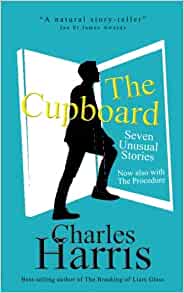
The Cupboard is a collection of short stories and one novella, bringing together several ‘tales of the unexpected.’ Contained within these short stories are the creepy, the disquieting, and the macabre. Charles Harris here gives us his curious and unpredictable take on life, in stories that sometimes remind me of Roald Dahl and and at other times have a Woody Allen-like flavour. They are the sort of stories that leave you with a frisson of unease. I do like the Classic Tales of the Macabre and in some ways the author’s style puts me in mind of those: an elegant narrative that suddenly twists you round and drops you into a dark pit. Recommended to all lovers of noir, and to those who like to be shocked out of their habitual ways of seeing things.