On Saturday night 7 December 2013 our local community choir, Songlines, conducted by Bruce Knight, gave a concert at St Mary’s Church, in Leamington Spa, to raise money for Water Aid.
Bruce Knight conducting Songlines Community Choir in a performance of Nkosi Sikelelik ‘lAfrika in St Mary’s Church Leamington Spa on Saturday 7 December 2013
It was a night where we saw and felt the power of music to bring joy and to uplift.
A standing ovation and calls for an encore confirmed this.
Our programme encompassed community choir arrangements of the moving Zulu song Egalile, full of exhuberant synchronized movements, including our well-rehearsed African shuffle; Let the River Run by Carly Simon, Sunday Morning by Reed & Cale, arr.Knight; the Beatles’ song Nowhere Man; Wake Up by Nick Prater arr. Ali Orbaum, and the Samoan song Fa’afetai i le Atua arr. Tony Backhouse.
A smaller group called Extra-stronglines also sang the gorgeous harmonies of the Beatles’ song Because.
A highlight was a performance of the South African National anthem Nkosi Sikeleli’l Afrika in tribute to the recent passing of Nelson Mandela.
And at the end, we walked off the stage, singing Love is like a river, let it flow, let it flow, let it flow.
Long may we celebrate the gift of music in our lives.
We spent a few days in England’s lovely Lake District during the recent autumn half term.
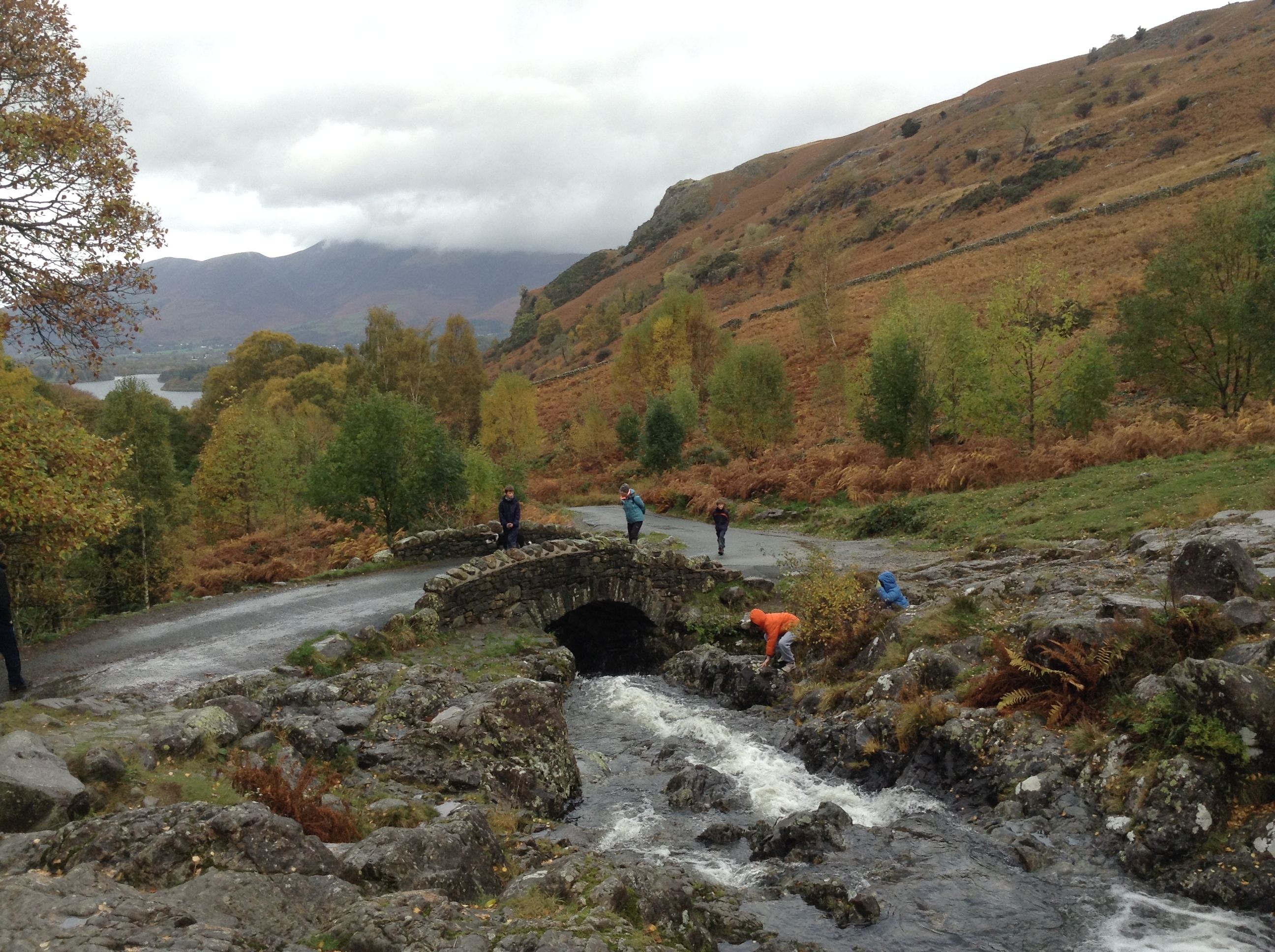
Ashness Bridge, near Derwentwater (photo credit Abigail Robinson)
The Lake District is special to me, not only because of its association with numerous famous writers, with Beatrix Potter, John Ruskin, William Wordsworth; but also because of memories from childhood holidays there, and the fact that I regularly visited it during the time I spent as an undergraduate at Lancaster University (approximately 40 minutes drive from Windermere).
As a member of the university hiking club, I became familiar with the Old Man of Coniston and Scafell Pike and I soon learned that hiking didn’t mean gentle rambling, it meant something very akin to mountain-climbing except without the ropes and crampons, as we scrambled up and slid down steep slopes of scree!
cruise on Lake Windermere (photo credit Abigail Robinson)Surprise View, Derwentwater (photo credit Abigail Robinson)
Bowness-on-Windermere is distinctive for me, as I would go there with my parents when they came to visit me for the weekend. For me, it was a translation from the world of student accommodation to the Old England Hotel. I returned there on later occasions with friends, for afternoon tea on the terrace, overlooking Lake Windermere. The Old England Hotel has held a special place in my memory ever since.
It is said that the Lake District has the highest rainfall in England. Those who go there must take mist, rain, muted colours, a moist atmosphere, brooding clouds, along with everything else the Lake District has to offer; and be prepared to carry on regardless, wearing waterproofs. If you experience the lakes and mountains in bright sunshine, count yourself blessed!
The Lake District is an inspirational place that speaks directly to the spirit.
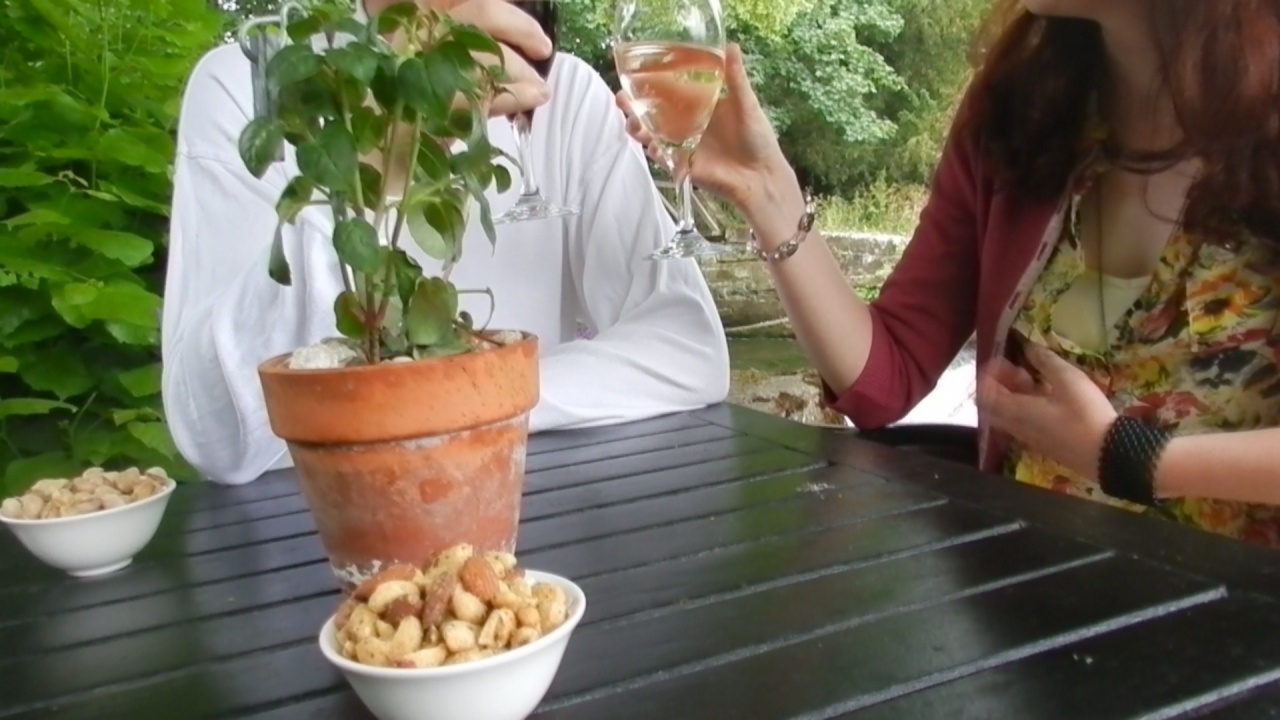
Craig’s Farmhouse in MYSTICAL CIRCLES (photo credit Abigail Robinson)
Directed, produced, filmed and scripted by my daughter Abigail Robinson, who is a Creative Media Production student, it’s been six months in the making, and Abigail has done brilliantly.
For those of you living in England, in the deep chill of November, watch the idyllic shots of the Cotswolds in high summer, and may your spirits be lifted, as mine are.
Please share in the comments as I’d love to know your thoughts on the trailer!
Since everyone in our house loves the Doctor, I’ve asked myself this question. And I concluded that we love the Doctor because:
* As a fictional character, he is a perfect combination of science and religion. He has the Christlike qualities of power, knowledge and goodness; combined with the vast possibilities of science. He plays into our archetypal longings for balance and justice in the universe, plus our thirst for knowledge and our fascination with the potential of science and our quest for empowerment.
* he has power over time. Time, death and the ageing process are among those things we cannot control, though we dream of doing so.
* he engages us on a spiritual level. He represents the perpetual battle between good and evil.
* the character of the Doctor, with all this power, knowledge and goodness, contains both playfulness and gravity. We respond at a deep level to paradox. Every one of the eleven actors who has played the Doctor has at some level combined the weight of ultimate responsibility and moral integrity with a quirky, mercurial quality. And the twelfth Doctor seems set fair to carry this same quality.
* we are always learning new things about the Doctor. He always retains his mystery.
* the Doctor is essentially lonely and poignant. He loves, and he evokes love. Yet he can never become emotionally attached to any one human – not without tragic repercussions or complex tampering with the space time continuum.
* he regenerates, just like nature, just like the Green Man, a symbol of rebirth, found in many cultures from many ages around the world.
The Doctor is all these things and more.
Doctor Who rules in teen bedroom (photo credit Abigail Robinson)
And we love him not only because of all this, but because of the genius of all those involved: the executives, actors, writers, directors, producers, monster-creators, technical people, visual and special effects people and composers and musicians. They will have overcome everything that human weakness can throw at them, during the fifty years of the programme’s life, as we saw only too well from the Adventure in Space and Time episode about BBC executive Sydney Newman, actor William Hartnell, producer Verity Lambert, and director Waris Hussein.
Yet the archetypal power of this fictional character, his relationships, his story represents for many our dream of transcending those limitations and that frailty.
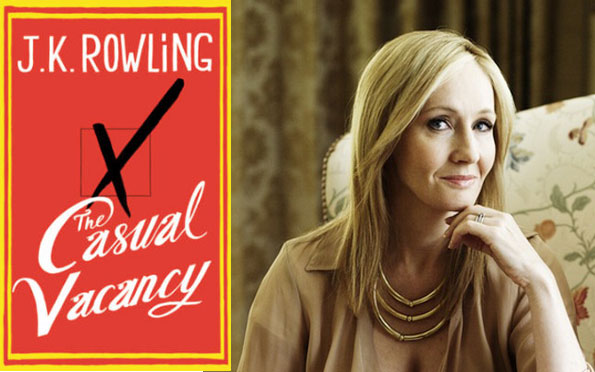
I’m a great admirer of JK Rowling both as an author, and on a personal level. So when I knew she’d published her first adult novel, I was keen to read it.
When I began to read The Casual Vacancy several months ago, I found it a struggle to get through the unrelenting nastiness of the characters, without finding any one individual I could identify or empathize with. And at that time I chose to put it down.
The Casual Vacancy/JK Rowling
Nevertheless, I was determined to come back to the novel later when I felt ready to tackle it. And I’m glad I did. I very quickly began to recognize elements from the hometown of my childhood – local characters & social/political/economic issues.
When the author begins to fill in the backgrounds of the characters, giving them greater depth, I started to feel, at some level, empathy for Terri, and for Krystal, and for their terrible plight – and glimmers of humour also relieved the grimness of the characters’ behaviour.
JKR inspires both pity & anger with her waspish vignettes of mothers who betray their children with submissiveness, moral weakness & cowardice, & fathers/husbands who trample close relationships with arrogance, intolerance & cruelty, & teenagers full of hatred & resentment. She also penetrates right to the heart of class consciousness & snobbery, & those who live with an innate sense of ‘superiority’. These attitudes riddle our society, & our hearts & souls; they blight lives, destroy hope, & ensure injustice and inequality prevails. They lower people’s self-esteem and propagate lies that last a lifetime. All this JKR skilfully conveys in The Casual Vacancy.
I found many sharp portrayals: the conversation as a social worker visits a drug addict; the inner life of a bullied teenager as she self harms, her situation made worse by a harsh, unsympathetic mother; the fragile threads upon which a drug addict’s rehabilitation depends; the pressures at home which force teenagers into depraved company and behaviour. JKR accurately conveys the effect that going to a certain sort of school has on one’s sense of self-worth, and upon the choices one makes in one’s friendships and future life.
It’s clear to me that the characters in this novel are behaving ‘their’ way – in other words, the default setting of human nature. It would be pointless and disingenuous for any of us who live in contemporary English society to pretend that we cannot recognize something murky of ourselves somewhere in this novel: something that points up the ‘devices and desires’ of our own hearts.
However, although I enormously admire what JKR has done in this story, I still feel it lacks a strong enough spiritual message or act of redemption at the end; and the potential for that is very strongly present as the narrative progresses.
JKR may not have wished to commit herself to an explicit spiritual message in the novel. But I cannot help feeling there is clear potential for an authentic Christian witness in this story, pointing to a different attitude, a different way of life.
Jesus knew all about the default setting of human nature, and the untrustworthiness of the human heart.
In John’s Gospel we read these words : But Jesus didn’t entrust his life to them. He knew them inside & out, knew how untrustworthy they were. He didn’t need any help in seeing right through them.
For The Casual Vacancy is, to me, essentially a story of ourselves as we are, now, in our communities, in our society today, just as we always have been; unredeemed, doing things ‘our way’ and not God’s way, and reaping the consequences. It’s only JK Rowling’s decision not to take the opportunity for a stronger redemptive message which prevents me from giving her book the highest possible rating.
As Russell Drysdale said, “In Australia there is a quality of strangeness that you do not find … anywhere else.”
Reviews of the exhibition were mixed, with a lot of criticism levelled at it in the UK. But from the first painting of a convict settlement, neat, well spaced out and idealized, through to the contemporary paintings struggling to reconcile the wounded history of cruelty, misunderstanding and conflict between aboriginal people and European colonial settlers, the exhibition created, for me, a strong sense of connection to my own experience of four and a half years living in this great continent.
There was no painting of Sydney Opera House, my favourite of all buildings; but there was one by Grace Cossington Smith of Sydney Harbour Bridge being built, (“The Bridge in Building”, 1929) viewed from below, demonstrating pride, hope, creative enterprise, ingenuity, and above, beyond and around it a distinctly spiritual resonance.
The indigenous artworks were particularly moving, with their distinctive cross hatched patterns characteristic of aboriginal artists, as they depict rain running down dunes, undulating landscapes, waterholes and trees and spirit ancestors, believing that we tread the earth for a while then come out of it and become part of the ancestral realm again.
But in addition to the aboriginal artworks, there were others which touched me deeply. In particular a swirling picture by Kenneth McQueen, a Queensland artist, of the rainforest-clad mountains reflected my own experience of this majestic landscape. I felt connected, then, to one of my former favourite haunts, Mount Glorious, which is part of the Great Dividing Range, forming the backdrop to the city of Brisbane. As soon as I saw his painting I thought “Yes! Maiala Rainforest” – conveyed just as I remembered it, in swirling patterns of movement.
The indigenous people of Australia are the ones who fully understand and imbue the earth with sacred forces. They are the ones who gave this continent its air of mystery and spiritual power. But I can be thankful, too, to those eighteenth century European settlers, because they prepared the way so that I,and many others, might have access to this sublime scenery.
Molly has now overcome her resistance to the idea of an alien cat in the house with her (albeit her mother)
But it took Willow a little while to overcome her annoyance at her daughter Molly’s initial rejection of her.
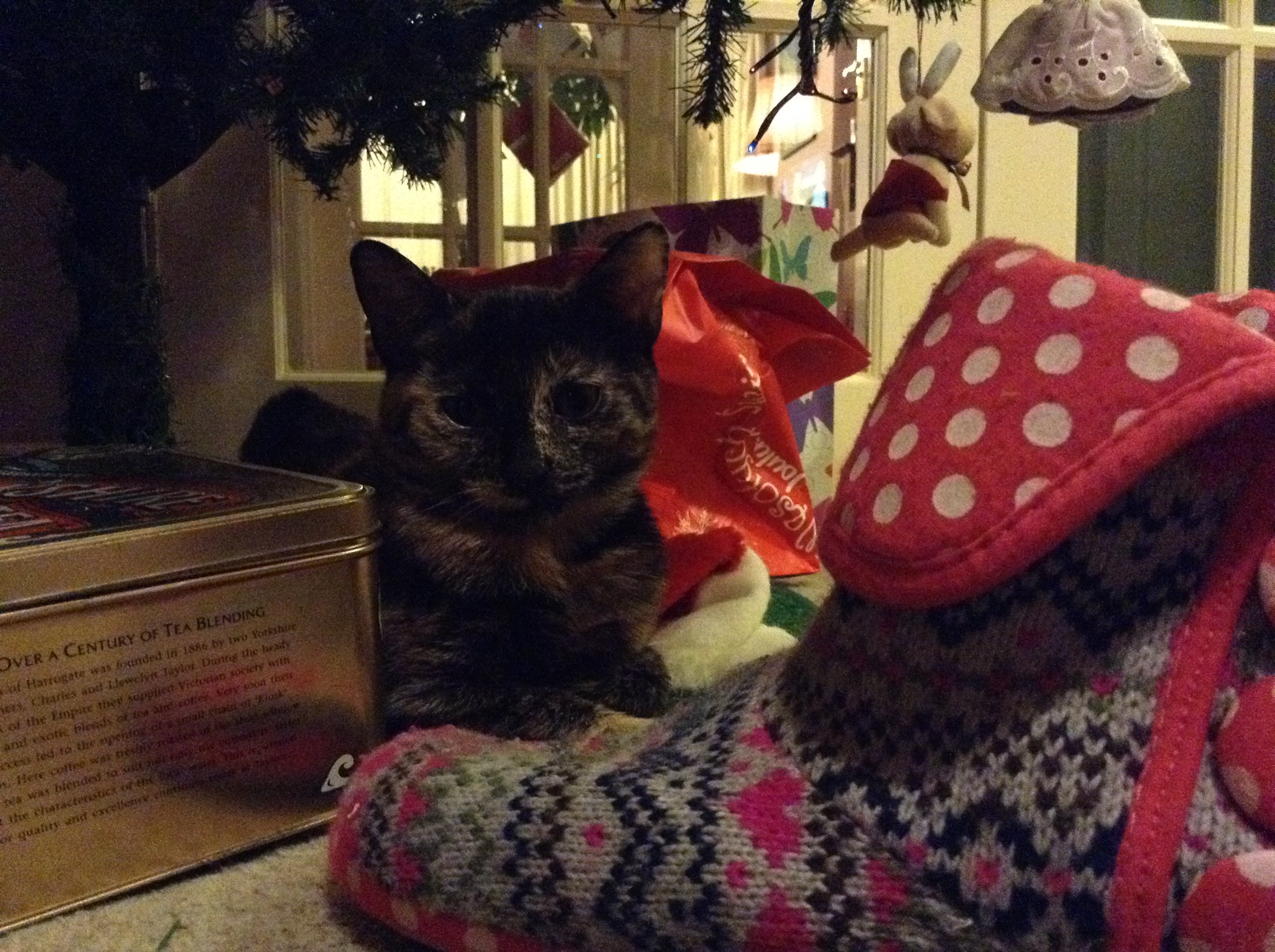
Willow and Molly 27 Oct 2013 (photo credit Abigail Robinson)
She spent a few days expressing her annoyance, and trying to exert some discipline.
She was a strict mother,and we watched her setting the boundaries.
“Behave!” she would say to Molly.
And then she discovered what it’s like to have your young one defying orders.
And later I was reminded of one of those classic situations which many young mothers bemoan; the toddler who won’t even let her mother go to the toilet alone.
Molly has been pushing at the door of the litter tray while Willow is in it, trying to jump in with her.
“Can’t I even go to the toilet in peace?” cries Willow.
Now we hear the scampering of feet across the floor as the two play-fight with each other and chase each other from room to room.
Relaxing? No. And sometimes those play-fights look horribly real.
But I reassure myself that the claws are retracted.
Otherwise the squeals and squeaks and cries that come from 8 week old Molly would be screams of pain.
Watching a relationship of mutual trust being built in the animal world has made me reflect on how this may apply to us humans too. Suspicion breaks down, the first tentative steps are taken; building trust is a process of experimentation and small moves forward. So we see ourselves and our own characters partially reflected in animal behaviour.
Mother and daughter relationships – a popular trope in TV sitcoms/family sagas/romantic fiction/women in jeopardy/social and romantic comedies and many other stories.
And in the last few days my family have been immersed in a poignant drama in our home between a mother and a daughter.
A mother who was separated from her little girl three weeks ago, and is excited to be together with her, and who longs to come close and look after her again.
And a baby who was separated from her mother, but now they’re reunited, she’s suspicious and hostile.
She spits, hisses and growls at her mother. And the hurt mother, cross and rejected, growls back – through the glass door that separates them.
The name of the mother: Willow, age 18 months.
Willow investigating the scratching post (photo credit Abigail Robinson)
And the name of her little daughter: Molly, age 8 weeks.
Molly age 8 weeks (photo credit Abigail Robinson)
Willow is a tortoiseshell/tabby cat and Molly a sparky little dark tortoiseshell.
Ever since Willow and Molly arrived in our home, side by side in their cat-carrier, courtesy of the Cats Protection League two days ago, I’ve watched this little family drama in the world of felines with a mixture of emotions.
And so has my own teenage daughter.
“It’s your mum! She just wants to be nice to you!”
No, she’s hiding in a hammock of her own creation at the back of the sofa; a hammock we’d never known was there.
Perhaps next week when I blog again, mother and daughter will be reconciled and happily curled up together again.
Rev Kenny Borthwick, Church of Scotland minister (photo credit holytrinity-westerhailes.org.uk)
This is just one among many cliches in the English language that we use without thinking.
Yet how often do we stop to realise they are meaningless?
Who sends these hard things to ‘try’ us? An almighty sadist in the sky?
This stands as one of the most popular arguments against Christianity. How can a supposedly all-loving sovereign God allow terrible things to happen to innocent people?
When I was in the sixth form at school we had an atheist English teacher who enjoyed challenging us on a personal level, arising from discussions about Thomas Hardy’s Tess of the d’Urbervilles.
Thomas Hardy was “a philosophic pessimist” and in Tess’s tragedy he suggests there is no purpose or meaning to her suffering, other than that “we live on a blighted star.”
Our teacher said, “All the evidence suggests that there is a random pain-inflictor, scanning round over human affairs, occasionally dropping a huge lump of tragedy onto someone.”
Discuss.
This would indeed be a good exam question in Religious Studies.
Two days ago I listened to a Church of Scotland minister, Kenny Borthwick, talk about why God does not send things to try us, and why the real battle when we suffer is to hold onto the goodness of God.
God, he said, is not a harsh God whose main aim is to teach us hard lessons through hard things.
Although it is true we can sometimes learn valuable things through suffering, we must be aware of this danger: if you over-stress a truth it can become a lie.
God does not send cancer to teach us a lesson.
God sent Jesus to teach cancer a lesson.
Kenny Borthwick is exactly the opposite of a traditional fire-and-brimstone preacher so beloved of numerous novels written by Catholic authors about their upbringing among religious authorities with a harsh view of God (how can I ever forget the sadistic priest in James Joyce’s Portrait of the Artistas a Young Man?) No religious authority figure has ever spoken to me like that; and yet we somehow recognise the cruelty and the fanaticism in this character.
Benny Borthwick spoke of Christians who magnify badness and repentance and magnify the strictness of God with a zeal He would not own.
Kenny’s message to Christians was this:
“You have been saved into the love of God, the goodness of God that He wants to pour into your life day by day.”
The face of God-the-Judge-Who-could-never-be-pleased disappears for ever.
BUT once we accept this, there is still a process.
When we live from the goodness of God which is limitless, we realise that today and every day we always have something to offer, whoever we are, even if we believe we have nothing – we always have something to give.
We need to reject a false spirituality which is frightened to use words like illness or depression, and frightened to cry and be distressed.
We can live each passing moment as a gift from God.
Jesus gave the water a new history when he turned it into wine.
He can give us a new history, with a sense of our new identity. When we are able to accept this, we can realise that our present doesn’t need to be controlled by our past.
Then we are able to make new choices – hope and trust rather than fear.
Then we can replace the old false spirituality and lies with a great truth: