Mystical Circles Romance and Psychological Suspense Free Promotion Bonanza!

ad banner for Mystical Circles romantic suspense fiction

Mystical Circles is on free giveaway to Goodreads members for the next month!

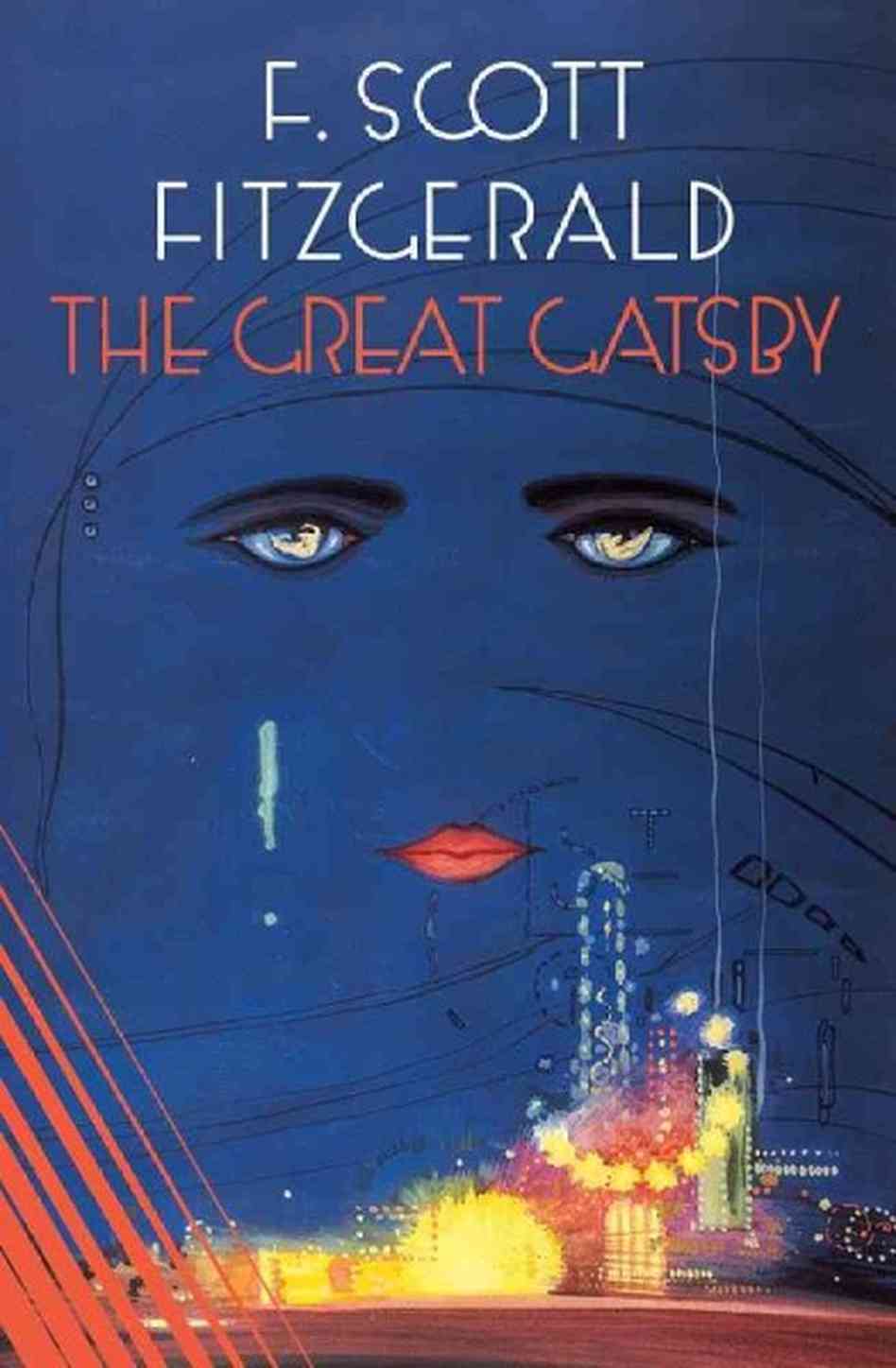
Mystical Circles cover image - romance & psychological suspense in the heart of the English countryside - intense & compelling
Mystical Circles cover image – romance & psychological suspense in the heart of the English countryside – intense & compelling

Five copies of the paperback second edition are on offer.

Goodreads Members, get on over there and sign up for the giveaway!

Mystical Circles is also FREE ON KINDLE FOR 5 DAYS STARTING NOW!

ROMANCE AND PSYCHOLOGICAL SUSPENSE IN THE HEART OF THE ENGLISH COUNTRYSIDE – INTENSE  & COMPELLING.

Add to your Goodreads shelf, download free on Kindle, or buy the paperback from the author!

The Curious Tale of a Rediscovered King, a DNA Trail and What It Tells Us of the Nature of Truth

“There were a lot of nasty rumours spread about me,” says Horrible Histories actor Jim Howick in his  hilarious portrayal of King Richard III. “Tudor propaganda, it’s all absurd. Time to tell the truth about Richard III.”

Who was he? “That King they found in the car park in Leicester”. This will have been the phrase on many lips, of those who, with little historical knowledge, will nevertheless find this a topic of conversation with friends.

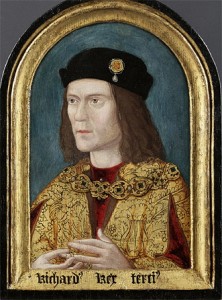
Richard III - earliest surviving portrait (credit : medievalhistories.com)
Richard III – earliest surviving portrait (credit : medievalhistories.com)

The story of Richard III to me illustrates how nothing in this life can guarantee any particular outcome. And as I read “the book that inspired the dig”:  The Last Days of Richard III and the fate of his DNA by John Ashdown-Hill, this was brought vividly alive to me.

According to Ashdown-Hill, historian, genealogist, and member of the Richard III Society, Richard III was a young man probably too kind, too naive and too forgiving. If anything sewed the seeds of his downfall at the Battle of Bosworth in August 1485, it was that trust –  for he was betrayed by the Stanley brothers, men he could easily have captured and imprisoned in the Tower much earlier, if he’d been sharper and more rutheless.

Because his death and defeat  on that Bosworth Battlefield meant the end of one dynasty – the Plantaganets – and the beginning of another – the Tudors – a lot of hard work subsequently went into “re-writing history”: blackening his reputation, falsifying his story and character, and destroying historical evidence.

I cannot read of a historical figure like Richard III without seeing the parallels between his story and fate, and our own experience in this life.

For the basic principles of life do not change.

Nothing and no-one can guarantee any particular outcome for us. Not vice, not virtue. Not piety, not betrayal.

But of one thing I now feel assured by Ashdown-Hill’s book: where there is integrity and focused persistent research, and rigorous dedication, as in the painstaking work of the best historians and genealogists, truth, ultimately, will out.

Richard III facial reconstruction based upon his skull (credit: cnn.com)

Though it may be centuries later, and only after hundreds of years of fabrication and half truths and lies and myths.

On that day, 22 August 1485, at 8 am, Richard III rode onto the battlefield an anointed King, new marriage plans very much alive, expecting to reign for many more years. At 9.15am he was killed. And later, at 2 pm,  he left the battlefield, a mud-and blood-spattered corpse, naked (stripped of his finery by the local scavengers who would have surrounded every medieval battlefield), slung over a horse, later to be tipped unceremoniously into a shallow grave in Leicester.

Only nine years later, in 1494, did his successor, Henry VII, cause a tomb to be erected over his grave at the Greyfriars church in Leicester – and then only because it served Henry’s own interests that it be publicly known that Richard III had been a true King, and not a usurper of the throne.

I can throroughly recommend Ashdown-Hill’s book; if you love history I believe you too will be fascinated by  his methodology, as a historian and genealogist, as he teases out the trustworthy from the untrustworthy, the probable from the unlikely, evaluating the different grades and types of evidence and the quality of witnesses and testimonies against each other.

You too may  find cause to reflect, as I have done, on the fact that tales about historical figures can often be total fabrication, or embroidered, or half- or quarter-truths, and only rigorous painstaking historical research can correct them.

A Pilgrimage By Steam to The Shrine of a Martyr in Canterbury Cathedral

“This world nis but a Thurghfare ful of wo

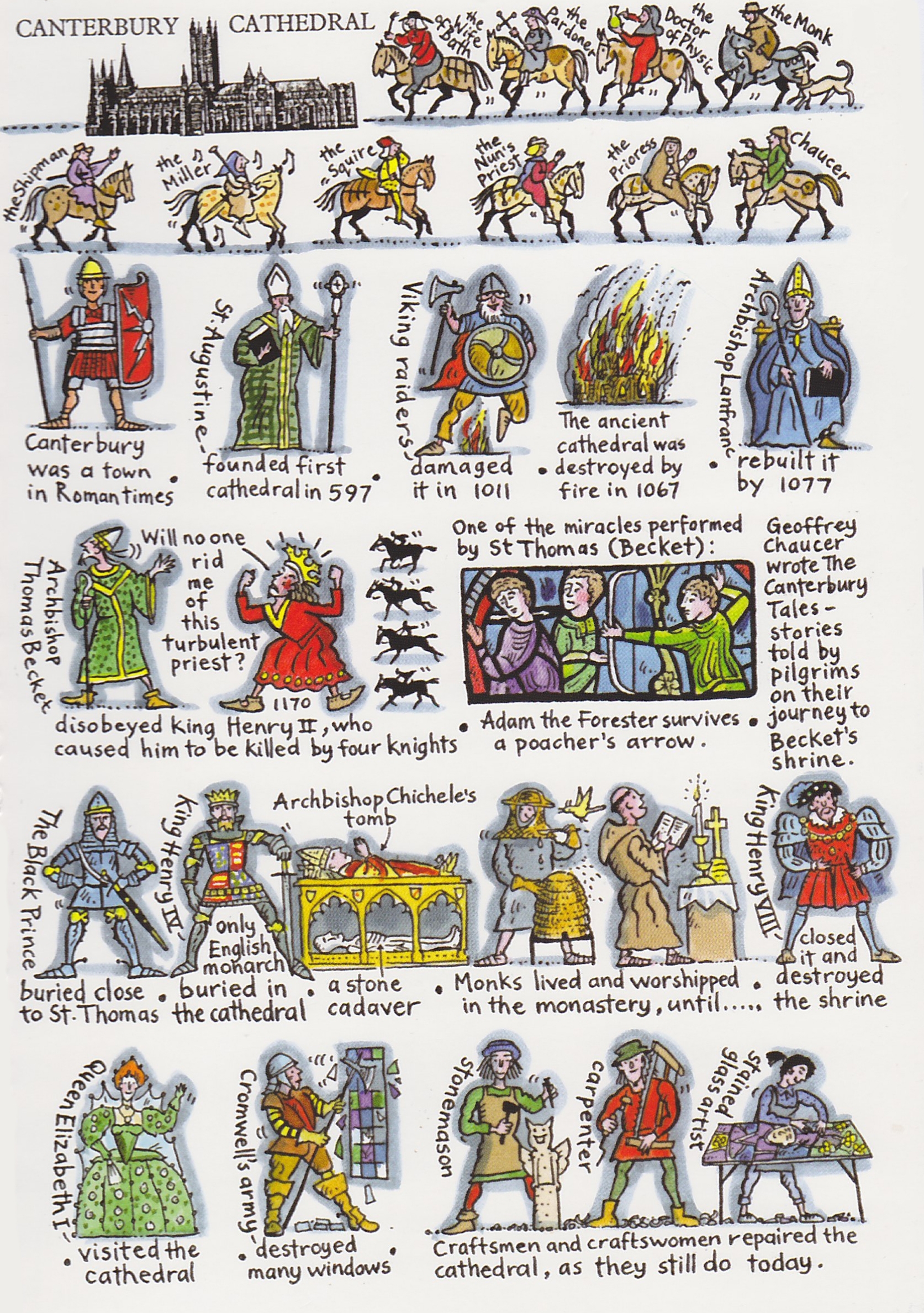
Canterbury cathedral and its pilgrims

And we ben Pilgrimes passinge to and fro.”

So says Chaucer’s Knight, towards the end of his tale as recounted by Geoffrey Chaucer, the author of The Canterbury Tales.

Gloomy those words may be, but they totally belie the racy, colourful and much-loved tales told by the Wife of Bath, the Miller, the Nun’s Priest and many others.

And they all made their pilgrimage to Canterbury Cathedral. So did my husband David and I make the  pilgrimage to Canterbury Cathedral last Tuesday – by steam train!

The Cathedrals Express (photo credit: David Robinson)

Steam Dreams operate the Cathedrals Express. The locomotive pulling our train was The  Tornado, a lovingly built A1 Steam Locomotive. It took part in the BBC Top Gear Race with Jeremy Clarkson, and had its own very own programme made for the BBC, a documentary called ‘Absolutely chuffed’.

I was very impressed with the speeds it achieved, as as it journeyed from Newbury to Canterbury.

Only when you travel by steam do you experience the pleasure and delight of seeing many different people waiting alongside the railway embankment, or in back gardens, keen to wave at you as you pass by, or standing in fields with cameras. Steam engines evoke great affection, excitement and notalgia and of course can now not be thought of apart from the Thomas the Tank Engine stories.

And at the end of the journey – Canterbury Cathedral.

Few things in this life can compare to the awe and wonder that a great cathedral can inspire; and at its centre, a shrine to a martyr; in this case, Archbishop Thomas Becket, who was murdered there in 1170 by four of Henry II’s knights in response to the king’s exclamation: Who will rid me of this turbulent priest?

The Martyrdom, Canterbury Cathedral (photo credit: David Robinson)


The sight of the single candle burning in the great space which once held Thomas Becket’s shrine, before it was destroyed on the orders of Henry VIII, was very moving.  So too was the chapel where great saints and martyrs of the twentieth century are commemorated, including such people as Dietrich Boenhoffer, Martin Luther King, and Archbishop Oscar Romero, who was murdered while he celebrated Holy Communion.

Spiritual energy is concentrated at the sites of these places of pilgrimage – and I was very conscious of this as I lit a candle at the votive light stand, at the entrance to the chapel in the Cathedral which is now called The Martyrdom.

The number of people visiting British Cathedrals has risen by 30% in this millennium.

St Paul’s Cathedral, Westminster Abbey and Canterbury Cathedral are again among the top visitor attractions in the UK, according to the latest statistics from the Association of Leading Visitor Attractions (AVLA). The 4,500,000 visitors to those three famous churches are only part of the numbers visiting more than 16,000 Church of England buildings across England.

I’ve visited all three of those attractions in the past couple of years. And from all of these, together with my latest visit, to Canterbury Cathedral, I clearly see the reason for  the trend noted in the paragraph above: a cathedral is a place where we may make contact with the numinous, our sense of the holy. It is a place which fills us with awe and lifts our hearts and minds to something much greater than ourselves.

And pilgrimage now is more important than ever, by whatever means we choose to travel.

The Joy of Singing, from the Challenge of J.S. Bach, to A Community Choirs Festival in Stratford-upon-Avon

Singing is  a gift of God, and a channel for empowerment.

Community Choirs Festival

This weekend has been an amazing time of singing.

And I’ve learned a few things about this life too.

On Saturday night, the choir I sing with, the Warwick & Kenilworth Choral Society, gave a performance of Bach’s B Minor Mass that truly honoured the composer’s purpose.  This was against all expectations – our own, and those of the conductor.

And yet, despite weeks of agony and doubt and struggle in rehearsal (plus the temptation, I suspect, for several singers, to give up) we succeeded.

“There will be some stunning moments,” said the conductor at the final afternoon rehearsal, “and some very hairy moments. Just find the next cue when you can come in.”

Not for a single rehearsal had the first sopranos ever sung it without getting lost.

And yet, on the evening itself – we sang it all the way through, even the most difficult bits, and didn’t get lost.

At the end,the conductor (probably rather bemused), said, with a beaming smile: “Well done. That was superb!”

This experience has taught me, that whatever we dare to believe, sometimes God’s grace snatches success out of the most unpromising places.

From a major choral work to a community choirs festival in Stratford-upon-Avon on Sunday.

Here, a gathering of different community choirs from around England, all came together to learn some new songs, under the guidance of four Natural Voice Practitioners – dynamic, fun, energetic and inspirational.

Untrammelled by inhibition, these gifted singing teachers gave of themselves for the joy of others.

The whole day was a totally uplifting, empowering experience.

Through a mixture of harmony songs – slave songs from the American south, songs from the Eastern orthodox church, or songs arising from Australian aboriginal or North American Indian spirituality, to “Price Tag” by Jessie J – the different choirs delighted with their singing.

I was enthralled to watch the varied styles of the conductors. Some conducted in a tradiitonal manner, others danced and bopped around in from of their choir.

And at the end the four teachers treated us to a hilarious and top-rate performance of the Beachboys’ song God Only Knows What I’d Do Without You.

A wonderful life-enhancing weekend of singing!

Youth, Time and Soul – Old Photographs & Memories: Coloured Rags or Treasures?

Birthdays and old photographs.

Timeline Photos - birthday celebration - Sheila Skillman
Timeline Photos – birthday celebration – Sheila Skillman

How they arouse our emotions!

So many words have been written about time, and our attitude to it.

Memory is a crazy woman that hoards colored rags and throws away food said Austin O’Malley.

How much is concentrated in this deceptively simple remark: far more than a comment on human fallibility,  these words carry a spiritual connotation too.

But I believe an acknowledgement and acceptance of our past is vital to our ability to live in the present and look positively towards the future: and this gives us our sense of belonging.

This weekend I celebrated my birthday (St Patrick’s Day) with two parties, one for my family on Saturday and one for my friends on Sunday – I couldn’t get them all into the house at the same time!

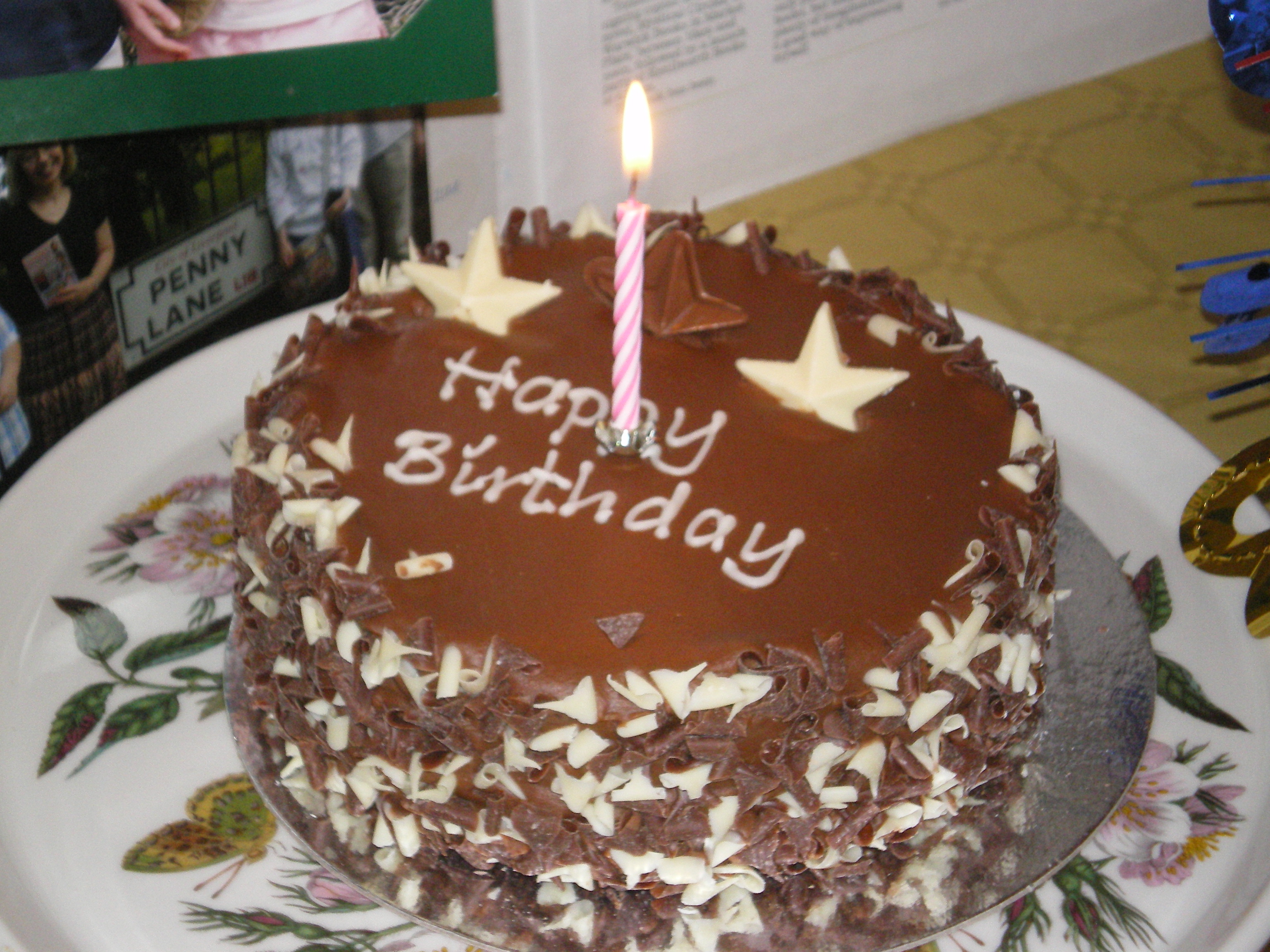
Sheila's birthday cake
Sheila’s birthday cake

I put a timeline of photos up for guests to see and it was great inspiration for conversation and questions!

One guest said to me (apologies if he reads this blog but I thoroughly empathise with him) , “Oh I never look back at old photos;  they make me feel so depressed.”

The truth is I was dreading the task – going back through the photo albums. But I felt impelled to do it, as I believe people do appreciate these displays. I had to psyche myself up to do it, and nearly backed out.

But it was a surprisingly positive thing to do. I looked at photos of a past holiday and felt a wave of happiness. Instead of a sense of loss and nostalgia,  I took inside myself all the joy of that time.

Of course, I chose photos of positive occasions, so I admit it was a strongly biassed timeline! School prizegivings, weddings, new babies, anniversary celebrations, holidays. And I realised that I’ve travelled to Australia five times.

I didn’t include photos of Me Making the Worst Mistake of My Life, or a photo of Me Writing the Letter I Wish I’d Never Sent, Which I Regret To This Day, or Me With the Man I Wish I’d Never Met (or got involved with). Oh no. There were no pictures like that on the timeline.

And when it comes to remembrance of things past, I’m only too well aware there are those who have damaging, soul-destroying memories of horror, tragedy and grief – as I see when I read the accounts sent to us by the homelessness charity Centrepoint.

But when it comes to owning good memories, without regret or nostalgia, I feel that way about Australia, where I lived for four and a half years from 1986 to 1990. I eventually came back to England, feeling drawn to my own country again.

Although I miss the subtropical rainforests, mountain lookouts, and mangrove boardwalks, the bellbirds,  bougainvillea, and jacaranda trees of Queensland, I don’t feel a sense of loss. Instead I feel they are treasures I always carry with me.

These treasures are vital in creative writing: both the easily-recognized treasures in happy memories and the hidden treasures in our negative experiences too. For a fiction writer, no experience in this life is lost, good or bad.

How do you feel about old photographs? Do you look at them or avoid them? Are old prints lost in forgotten albums? Or have you stored them in electronic files, instantly accessible?

Or are you too busy living in the present?  I’d love to hear your thoughts!

Please share in the comments!

Shakespeare’s Wronged Women: A Reflection In The Light Of International Women’s Day

The other day I went to a see a production given by  Playbox Theatre, held at their local headquarters,  Dream Factory, Warwick.

Alice Woodhouse in Shakespeare's Wronged Women (copyright Kenilworth Weekly News)
Alice Woodhouse in Shakespeare’s Wronged Women (copyright Kenilworth Weekly News)

There we saw members of the Shakespeare Young Company present to us “Shakespeare’s Wronged Women”.

In the words of Stewart McGill & Mary King, the Artistic Directors of this company,  “Having explored with SYC the torments of The Winter’s Tale, in parallel we were discovering the wronged natured of many of Shakespeare’s heroines. It seemed a catalogue was emerging whereby the women in the plays were victims of male power, greed, status and political actions, not to mention infidelity and sexual domination. From Juliet and Hermia across the canon to Queen Katherine in Henry VIII these women demanded to be heard.”

After listening and watching the young people acting the roles of these wronged women, (among whom I may single out Alice Woodhouse as Hermione in A Winter’s Tale, and Mairi Ella Challen as Rosalind in As You Like It for their superb acting) I reflected: What do they all have in common? All these wronged women, as Shakespeare portrays them?

It’s this – they all inherently know their own self-worth.

They all know they deserve better.

Shakespeare gives them a voice. They express themselves powerfully, eloquently, passionately.

They won’t necessarily succeed, in worldly terms, because they are up against the brutish force of power politics and superior physical strength and sexual violence.

But their voices ring out.

The young actors, (I later speculated) perhaps thought this:

This will never happen to me.

I will never get myself into this situation.

I would never let anyone treat me like this.

I would never make this mistake.

But in years to come, maybe they will remember those impassioned words – from Kate in The Taming of the Shrew, from Hero in Much Ado About Nothing, from Juliet, or from Helena in A Midsummer Night’s Dream.

International Women’s Day was necessary because there are many women in this world who also have the same value and worth, but are not able to express themselves powerfully, eloquently, passionately.

And may they, and all the oppressed women for whom International Women’s Day was first created, know their own worth and live it out and fully possess it.

International Women’s Day 2013 in Leamington Spa – Women and Girls, Come and Support the Cause!

I shall be selling signed copies of “Mystical Circles” at the International Women’s Day event at The Sydni Centre, Leamington Spa, this afternoon (Friday 8 March 2013).

You can find The Sydni Centre here.

Mystical Circles by SC Skillman

This is a Women and girls only event, held at the SYDNI centre – ALL WELCOME 0-90 – bring your daughters mothers sisters – range of activities and events – live music, singing, dance, self defence, arts workshops, CommunityPhilosophy, discussions, films, food – please come and celebrate the day with us! Free!

Supported by local women, various agencies voluntary & statutory.

The event is from 4-8pm. Do drop in if you’re in the area at that time!

Jennifer Lawrence, Young Success, and The Gift of The Present Moment

Picture this. A 22-year old actress who has  won an Oscar, is asked at her press conference: “You’re awfully young to have so much success so far. Do you feel it’s a good thing? You’re not worried about peaking too soon?”

Jennifer Lawrence,  winner of best actress award at 2013 Oscars (photo credit CalgaryHerald)
Jennifer Lawrence, winner of best actress award at 2013 Oscars (photo credit CalgaryHerald)

What can she do, but smile, give a baffled grimace and say, “Well, now I am.”

Fortunately, this did bring much laughter, as did her answers to other questions. When I watched this, I thought Jennifer may well have wished she was being questioned by Caesar Flickerman instead.

But this enquiry to the actress who played Katniss in The Hunger Games and has now won as Oscar for her performance in Silver Linings Playbook led me on to these reflections:

How can a young person ever feel they’ve ‘peaked too soon’?

What is she to say? “Oh yes. I’m terrified I’m going to suffer burnout at 30.”

For Jennifer Lawrence, as with any talented, creative young person in a similar position, the recognition she has already received is simply something that has happened to her, which is good, and which she receives with pleasure.

“Peaking too early” and “burnout” are concepts only people with decades of experience in this life can ever grasp.

Many writers and philosophers  have spoken on the subject of time.

Here’s one for both Jennifer Lawrence, and the hapless journalist who questioned her:

Yesterday is history, tomorrow is a mystery, today is a gift of God; which is why we call it the present (Bil Keane).

The Lovely Bones Film – New Insight Onto a Terrifying Subject

What could be worse than losing someone you love through untimely death?

Poster for The Lovely Bones movie

And what could be even worse than that?

Losing them through murder.

And then worse than that?

Just imagine – the person you love, who is murdered, is a child, with all life and hope ahead of them.

This is the nightmare scenario for many parents.

And I would share those feelings absolutely. For this reason, when I first read about Alice Sebold’s novel The Lovely Bones it immediately struck me as a novel to avoid reading.

But I watched The Lovely Bones movie on DVD recently.

Why, you may ask? The reason was because my teenage daughter wanted to see it. She’d seen a trailer and found it appealing; she likes the young star of the movie, actress Saoirse Ronan; and her friend had recommended her to see it.

So I added it to my “LoveFilm” list and it duly arrived a few days ago.

The Lovely Bones by Alice Sebold was a book which has elicited very mixed responses. Although we are told “it  received much critical praise and became an instant bestseller” on its publication in 2002, nevertheless I have spoken to people who have described it as “depressing”.

A young girl is raped and murdered by a serial killer and watches her family fall apart, from limbo.

From my point of view, as a romantic suspense author, I thought this a painful and difficult subject to handle in a novel.

Yet upon watching the movie I was totally captivated. The delicacy and beauty and wisdom with which the subject was handled reversed all my expectations.

Without reading the novel, I had thought the premise of the story essentially flawed. Firstly, telling people in this situation to ‘move on’ for its own sake, seems specious. Evidence tells us that in such cases victims above all desire justice – and until they have seen justice to be done, they cannot ‘move on’.

Secondly, to my mind, telling the story from the viewpoint of a murdered child in limbo, seemed to me a device that changes the subject in an artificial way right from the beginning. In this life, any such tragedy would be instantly rendered less agonizing if you knew for sure the lost person was in fact very close to you, present with you, and also in heaven. And of course the idea of wandering around in “limbo” as part of the post-death spiritual journey, is derived from Catholic tradition, and one of the explanations popularly given for ghosts.

I believe that in real life we never do have such immediate and uncontrovertible assurance – with or without religious faith.

So I thought it a very dubious quasi-spiritual approach to such a theme. And yet, in the hands of a skilled director – in this case,  Peter Jackson – a book can be turned into a movie where these difficulties recede, and another message comes through.

In some respects, the subject invites comparison with the book The Shack.

In this book, too, a young girl is lured to a ‘killing place’ and murdered. The story follows the reaction of Missy’s father to this tragedy, and moves on into an exploration of God which, I dare to believe, hs the power to transform our habitual attitudes.

I felt that in each story a device of separation is used: defamiliarisation. It seems that some of the worst experiences in life can only be truly understood from a distance. This has long formed part of the genres of mystery and imagination.

This was well underscored by the music – slow, languorous and dreamlike behind the “In-between world” and edgy clanging discordant notes as the murderer starts to saw wood and construct his next killing den. The visual effects too were very powerful; shadows moving across rays of light “in the blue horizon between heaven and earth” like images in dreams,  and the creepy dismal gloom of the world of grief which the family inhabit, with the father’s initial denial and continuous refusal to let go. Very striking too was the silence behind the murderer as the blackness slides aside to reveal him sitting in his house.

The words “I knew then even though he loved me he had to let me go ”  restate the theme, as do the words, “I begin to see thing in a way that let me hold the world without me in it.”

Have you seen the movie? Do you believe that a flawed premise in a novel can be transformed by a movie director? Please share your own thoughts, on this, or on the issues it raises.

Take a Look at My Author Interview on Rebeccah Giltrow’s Blog

Hi everyone!

Mystical Circles cover image

Another kind blogger has just published an Author Interview with me. You may like to take a look at the interview here.

Many thanks to Rebeccah Giltrow for giving me this opportunity!