The Next Big Thing: A Passionate Spirit

I was invited to take part in “The Next Big Thing” – a blog hop for authors –  by Fay Sampson who has written many wonderful books for children and adults arising from Celtic history, and also includes mystery, suspense and crime fiction in her output.

In her capacity as a manuscript editor for The Writer’s Workshop, Fay also read my novel “Mystical Circles” in draft form, appraised it and gave me guidelines for revision.  I reworked it according to her suggestions, and she then read the novel again. It was Fay’s encouragement that led me forward to publication, and she kindly allowed me to print her testimonial on the cover. So thank you Fay!

And now for ten questions on my Next Big Thing:
 
1.  What is the working title of your book?

A PASSIONATE SPIRIT

2.  Where did the idea come from for the book?

As this novel is set in an English retreat centre I’ve drawn upon my knowledge of these centres (several of which I’ve visited and stayed in over the years), & also any environment in which disparate people are drawn together for a period of time in an enclosed setting. I’ve drawn too upon my  insights into human motivation and behaviour; chief among which is that “nothing should be taken at face value: people are often not what they seem”.

3.  What genre does your book fall under?

Romantic Suspense

4.  Which actors would you choose to play your characters in a movie rendition?

Zoe Blake, main protagonist, age 23:   Amanda Seyfried

Theo, Zoe’s husband of 15 months, and Warden of the Centre:   Bradley James

James Willoughby, unexpected guest:   *Hugh Grant

Natasha, his sinister girlfriend:   Talulah Riley

Llewellyn, Poet-in-Residence:   Matt Baynton

Bernie, the House Manager:   Mark Williams

Alice, Retreat Centre Secretary:   Georgia Moffett

Jessica Leroy, Chair of Trustees:   Sarah Lancashire

* As a postscript to this particular casting, may I say I’d love to see Hugh Grant play my character James Willoughby, because this is a role that would require Hugh to be sexy, villainous, very handsome, manipulative, double-dealing, charming and treacherous. Also, I ‘d love to see Working Title Productions do this film.

A Passionate Spirit has the potential to be a great British movie.
5.  What is the one-sentence synopsis of your book?

Inexperienced young woman finds herself running an English retreat centre in the teeth of intense opposition from two malevolent guests.

6.  Will your book be self-published or represented by an agency?

I’ll be seeking representation from a literary agent to win a contract of publication with a traditional publishing house.

7.  How long did it take you to write the first draft of your manuscript?

One month – I wrote it during November 2011’s National Novel Writing Month.

8.  What other books would you compare this story to within your genre?

My story has elements you may find in books by Susan Howatch, Barbara Erskine and Phil Rickman.
9.  Who or What inspired you to write this book?

Various people I’ve met over the years have inspired me for the characters of Zoe, Theo and James. I’ve also been inspired by characters and themes in my favourite films and TV dramas. Additionally, I interviewed a retired Anglican parish priest who told me several stories from his own experience around the subject of the deliverance ministry; one of his stories in particular not only forms the basis of a scene in my novel, but also inspired my character Natasha.

 10.  What else about your book might pique the reader’s interest?

The exploration of the psyche of a dysfunctional person holds a fascination for today’s novel reader, and therefore a strong place in the fiction market. Alongside this runs a deep interest in mental health issues and in spirituality, the supernatural and paranormal. These are in high demand, and extremely popular subcategories within today’s market. A Passionate Spirit contains elements of all these.

This is my vision:

to offer readers everywhere stories that delight and entertain, capturing their imaginations and touching their hearts with powerful universal themes that affect us all.

The themes that most engage me are these: love, loyalty and bravery; intrigue, longing and desire; redemption, reconciliation and forgiveness.


I am tagging Meg Harper

Lindsay Rumbold

Wendy Jones

Their posts about their new projects will be live on or around 19 December.

Darkness into Light: Celtic Spirituality

Heart of Darkness, Sharing the Darkness, embracing the darkness – the archetypal theme of darkness versus light is ever-present in our lives, through books, movies, media, faith, life experience.

The church at Morton Bagot (photo credit: Julia Gardner)

Last week – on the night of the full moon – I was at a Celtic Christian service in the 13th century church at Morton Bagot, Warwickshire.

And the theme: “Sun, Moon and Stars: Finding a Way in the Darkness.”

The Celtic-inspired service was led by Annie Heppenstall, and comes from her book The Healer’s Tree.

Ten of us gathered together in the chancel, where Annie had hung from a central chandelier a large hoop, to which she had tied the feathers of local birds, which she had found in her garden. The hoop represented the circle of the year. During the service we tied ribbons to the hoop to represent ourselves.

This lovely ancient church (which has no electricity) was lit only by candles.

I am one of those who is sensitive to atmospheres, and the feeling I receive from this church is one of deep peace, goodness and harmony.

Angel in the church at Morton Bagot (photo credit: Julia Gardner)

My sister Julia, on a recent visit to the Uk with her husband, visited this church with me,  and both were conscious of this very special atmosphere. Julia took the photographs that illustrate this post.

During Annie’s Celtic Christian service, we each took two dark pebbles, and considered how these represented different aspects of the darkness for us, then we carried the pebbles to the lighted candle and placed them there.

Annie loves to focus on animal symbolism, rich in Celtic spirituality and in the Bible. The two animals she chose for this service were the bear and the cat, to represent different aspects of the darkness.

Interior of church at Morton Bagot (photo credit: Julia Gardner)

I find the incorporation of pre Christian Celtic spirituality into contemporary Christian practice very moving.

Religions and all thought systems assimilate elements of what went before, and then we move on.

To me, the ability of the Christian faith to assimilate aspects of the pagan world – nowhere more evident than in our Western celebration of Christmas – is part of its strength and enduring power.

In all things, we take with us something of what went before, and we move on.

About the Writer

SC Skillman is a British romantic suspense author Her debut novel “Mystical Circles” is available to order at your local bookstores or online. A signed copy may be purchased direct from the author’s website, and the ebook may be downloaded on Amazon Kindle.

Page-Turning Psychological Suspense Free on Kindle

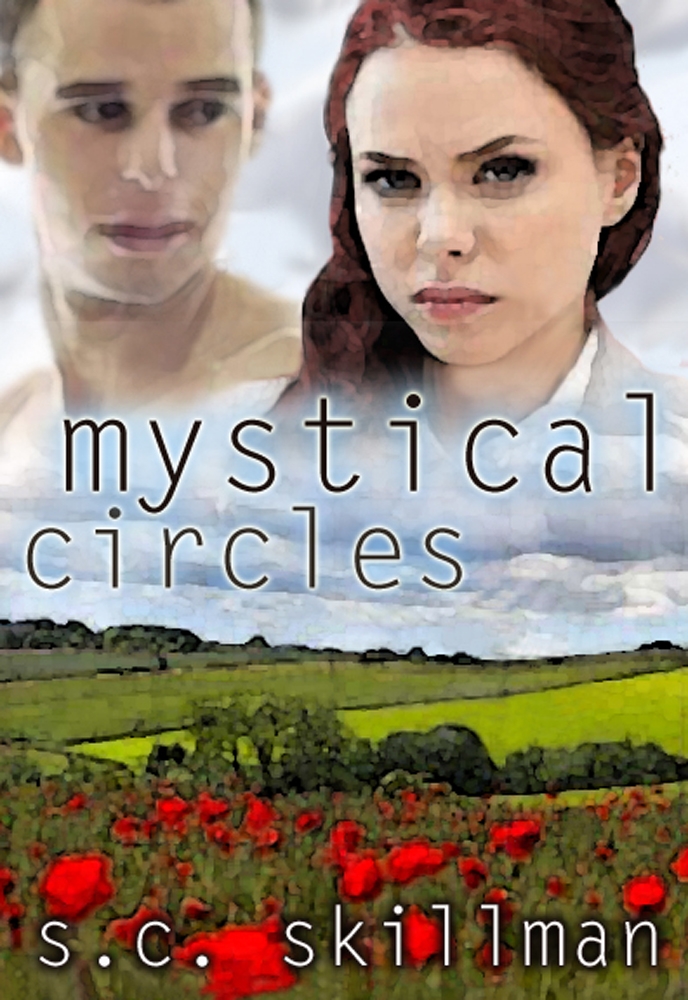
Mystical Circles cover image

Mystical Circles

by SC Skillman


PAGE-TURNING ROMANTIC SUSPENSE   

FREE ON KINDLE

Download for free any time between 8pm on 24 November and 8am on 27 November

“Hi, you in crowded, stressed old London from me in the peaceful, perfect Cotswolds. Massive change of plan. I’m in love. Craig is gorgeous, sexy, intelligent. Paradise here. Staying forever.”

Juliet, concerned that her younger sister has fallen for the charismatic Craig, leader of the Wheel of Love, sets off for the Cotswold hills to investigate.

She arrives at Craig’s community hoping to rescue Zoe. But intrigues, liaisons and relationships flare and flourish or fizzle out quickly within this close circle and, despite her reservations, Juliet is drawn into the Wheel of Love – with completely unforeseen consequences.

PRAISE FOR MYSTICAL CIRCLES

“Skillman weaves romance and attraction with spiritual searching and emotional needs, powerful universal themes”
Marie Calvert (Arts Psychotherapist and Retreat Leader)

“Mystical Circles will captivate you from the first paragraph… From page one my antennas were up… like any good mystery the more I read the more questions I had.. if a great mystery would not keep you reading there was a touch of romance as well… Mystical Circles is definitely a page turner. I recommend this book.”
Marsha Randolph (US Book Reviewer)

“I highly recommend this book for anyone!”
Kristina Franken (Goodreads Book Reviewer)

“AMAZING!!!!!!!!!!!!!!!!!!!!!!!!!!!!!!!!!!”
Paddy O’Callaghan (Goodreads Book Reviewer)

Mind Programming: What is the Central Desire of Your Life? And Who Put It There?

IN a recent episode of the BBC Drama Series “Merlin” we saw Guinevere being “brainwashed” by Morgana.

Now Arthur’s beautiful queen (who was previously all goodness) is in Morgana’s power,and doing her will.

Guinevere in the Dark Tower (media.tumblr.com)

Although of course she did use the full force of her magical powers as well, Morgana used long-established brainwashing techniques on Guinevere. She subjected her to a terrifying ordeal of sensory deprivation; she sewed in her mind doubt and distrust about all the people she loved and trusted; and then she introduced into Guinevere’s mind the notion that she, Morgana, was the one person who cared for Guinevere, and whom she could trust.

Morgana has planted her own “central idea” in Gwen’s mind.

In reality it is possible to do such things, though it usually takes much longer: many weeks, months or sometimes years.

The person who plants the central idea in our minds may be of no moral character themselves.

All they need do is be convincing or charismatic, and come along at a time when we’re open to them.

None of us can avoid being vulnerable, unless we get locked up in a high tower for our own protection.

How can we be sure a central idea is a true idea, and comes from one who never changes, one who can be utterly trusted with your life?

Certainly Christians would have an answer to that.

And it is a question I’ll leave open for you to comment on.

But of one thing I’m sure; this is a subject which interests me greatly; it appears in my novel “Mystical Circles“, in which I describe vulnerable people being drawn in by a charismatic leader; and it is an idea which resurfaces again in my new novel “A Passionate Spirit”.

We do act according to our central desire. And our unconscious desire always takes precedence over our conscious desire (as is the case for all main protagonists, according to Robert McKee in his book  Story).

I used to think that the central idea of my life was to write popular novels. And the person who put it there was Enid Blyton. Not a person of great moral character. Biographies of Enid Blyton tell us that she was callous and cruel towards her family. But I don’t believe she herself inspired me. The instigating factor lay much deeper than that, embedded in the stories she wrote: children flying under the radar of the adult world, vulnerable people going off to grab life in both hands, which meant excitement, adventure, and often calling to account those very adults or authority figures.

That dream embedded itself in my unconscious. Perhaps that was what I wanted to achieve. Therein lay my central desire, much deeper than a mere desire to succeed in the eyes of the world.

Please consider leaving a comment. I’d love to hear your ideas and thoughts on this.

What is the central desire of your life? And who – or what – put it there?

Historical Novels versus History Books, and Hilary Mantel’s Wolf Hall: The Power To Make You Feel You’re An Insider in the World of Henry VIII

Hilary Mantel’s  success in winning the Man Booker Prize for her novel “Bring Up the Bodies” has provoked many varying opinions of her work. For my part, I look forward to reading this second book in her Tudor Trilogy.

Hilary Mantel has opened up the life of Thomas Cromwell (photo credit: guardian.co.uk)
The other day I had a conversation with a keen reader who said, “I don’t like historical novels. I’d far sooner read a history book. If I read a historical novel, I think: But how can they possibly know?”

Of course, how can Hilary Mantel possibly know? But when I’d finished “Wolf Hall”, I felt as if I’d been an insider in the world of Henry VIII. I bought the book following a friend’s recommendation. She said she found it so powerful that she couldn’t read anything else for a considerable amount of time after she’d finished it.

And certainly, reading this book changed the view I previously held of Thomas Cromwell, whose mind we are in throughout the novel. Upon reading Hilary Mantel’s account of this man, I admire him and can understand his role in relation to Henry, and his extraordinary gifts as he navigated Henry’s changing whims.

As to Henry himself… what was his prayer? That he might have a healthy, long-lived, legitimate male heir to take over the English Throne for the Tudors, and hold it strongly into the future.

I can imagine now how he must have felt each time Katherine of Aragon and Anne Boleyn miscarried a child. He felt professionally devastated and personally anguished; frightened that he had incurred the displeasure of God; afraid that after having been in his hands the throne would go where he did not want it to go; afraid his hopes and dreams would never be fulfilled; afraid that this was God’s punishment. After all, the English Throne was his professional business, his livelihood, his calling.

Now, of course, with historical hindsight, we can see how wrong he was:  wrong to have Anne Boleyn beheaded; and wrong to have various people brutally slaughtered for not agreeing with his divorce, and for not thinking the right things at the right time about religion, and for thinking he, Henry, was wrong.

But what should he have done instead, according to us with our historical hindsight? We may think he should have stuck with Anne Boleyn, forgiven her, and patiently and with forbearance lived out his life married to her.

What actually happened? Ultimately the English Throne became strong and proud under a very long reign by the child Anne Boleyn bore him – notwithstanding the fact that this monarch was a female – a monarch who became in the eyes of many then and since, Britain’s best and most famous monarch: Elizabeth I.

So we may well say that God answered Henry’s prayer – but not in the way he expected.

This philosophical rumination has been inspired by “Wolf Hall” simply because so many of us are familiar with the Tudor story – but in fact the narrative of this, the first novel in the trilogy, only goes as far as the execution of Sir Thomas More leaving the downfall of Anne Boleyn still in the future.

Perhaps the thing that most fascinated me about “Wolf Hall” is the way the reader follows through delicate, graceful, civilised conversations – gentle, balanced, measured… and then out of them comes a decision to burn someone alive, or have them hanged, drawn and quartered.

One sentence in the book stands out for me: “all that youth, beauty, grace and learning, turned to mud, grease, and charred flesh.”

Emotionally stirring, moving, shocking and instructive, what this book shows you about human nature  will stay with you.

Searching for Love… And Craving Celebrity

In my last post, on the case of Jimmy Savile, I wrote about the dark side of celebrity.

We crave love, fame,wealth, success - but where is it leading us? (image credit: GoToSee.co.uk)
We crave love, fame,wealth, success – but where is it leading us? (image credit: GoToSee.co.uk)

We live in a society obsessed with celebrities – the gods of this secular age.

And we try to convince ourselves that fame would guarantee entry into a perfect region of love, wealth and success. Yet the reality for the famous themselves is often not as appealing as we might think.

There are many examples of celebrities who suffer from depression.

“It is strange,” observed Albert Einstein, “to be known so universally and yet to be so lonely.”

The cure for loneliness, we are led to believe, is love.

And in our midst, there are those who feel unloved and unlovable. These people may not take a recognizable form. The most attractive people may be among those who feel unloved and unlovable. The rise of depression, anxiety and stress in our society provides ample evidence of this – as does the incidence of poor body-image, low self-esteem, and eating disorders such as anorexia.

It is rare to find love that is not conditional.

“All you need is love,” sang the Beatles. And as it happens, I’m listening to them singing those very words right now as I write this.

But the love we need must be unconditional.

Unconditional love is a very difficult concept for human beings to grasp. Only divine love can be unconditional.

The love of God can work through the most unexpected people – and that includes people who are not religious, and have nothing whatsoever to do with churches.

So it may indeed be that the cure for all this is unconditional love.

Compassion, humility, and gentleness are not the exclusive province of religious people.

I believe we taste something of that unconditional divine love in any place where compassion, grace, love and faithfulness are to be found.

The Big Bad Wolf, the Human Capacity to Deceive, and the Case of Jimmy Savile

In recent weeks many of us have been shocked by the case of Jimmy Savile and the BBC, and wondered how someone who did so much good in the world could turn out to have such a dark side.

Little Red Riding Hood and the Wolf by Gustave Dore

The case of Jimmy Savile should make us all look with new eyes at the cult of celebrity, at the nature of good and evil, and at the capacity of human beings to appear as Angels of Light and yet to have dark hearts beneath.

Joseph Conrad’s novel Heart of Darkness explores this, as does Robert Louis Stevenson’s Strange Case of Dr Jekyll and Mr Hyde.

This is what celebrity is all about: people who seem to be, who look and sound and do good. And we so much want to believe in them.

So many people were hypnotized for so long by the power of Savile’s Celebrity Personna, and his Good Works.

Today I learned on the Radio 4 Today Programme that Philip Pullman is re-telling 50 Grimms Fairy Stories. Neil Gaiman was also in the studio to discuss the archetypal appeal of fairy stories. Why do fairy stories work? Neil Gaiman gave this as his number one reason:

Fairy stories warn us “There are monsters out there.  Beware of strangers – beware the wolves in the  wood.”

Running through archetypal story structure, we find wolves in sheep’s clothing, fair maidens who turn out to be evil sorceresses, beautiful queens who are power-hungry murderers.

These characters form part of  the “giant glorious background clutter we carry with us into adulthood”, says Neil Gaiman.

In the case of Jimmy Savile, and in other notorious cases in recent years, we have seen cunning people playing with and subverting the English tendency to say something and mean exactly its opposite, conveying this purely through subtle changes in tone of voice.

I’ll never forget somebody I met years ago (working at the BBC)  saying in my presence, “I am a black hole in the spiritual firmament.” We were all sitting in a recording studio, making a programme for religious schools radio about the Iona Community. This colleague was a great character, probably one of my favourite people in the office:  funny, colourful, down-to-earth, with a subversive sense of humour.  “If holy people see me coming in on the radar,” he went on, “they’ll say: ‘Watch out, there’s something alien coming in here’.”

We all laughed, and later I wrote it in my journal, I was so amused and intrigued by his words.

Of course he was probably joking.

But so did many many people persuade themselves Savile was joking. So did Fred West convince neighbours and acquaintances he was joking. So did Peter Sutcliffe, the Yorkshire Ripper, convince work colleagues he was joking.

Convincing yourself people are joking is an excellent way to avoid responsibility to follow the promptings of your first instinct.

Of course these are exceptional cases, and there is  a very high probability that when my amusing work colleague spoke those words, it could simply have been a theatrical way of saying, “I’m not religious”. Or it could have indicated bad feelings about himself arising from negative messages received in childhood; or it could have meant that he knew he had done – and perhaps continued to do – bad things that we didn’t know about.

Should not reasonable people be able to see “something alien” coming in on their radar?

Many people were blind to that “something alien” in Jimmy Savile.  Human beings have a vast capacity to deceive.

What is your take on this? Please share your thoughts on the case of Jimmy Savile, or any reflections arising from it.

The Heavenly Choir, Voices of Lothlorien, and Glimpses of Eternity

The most profound emotions, the deepest experiences of the human spirit may be evoked by the sound of a heavenly choir.

Choir of Angels (credit: crossfiremc.com)

There has often been debate about which is the greatest musical instrument. And of course each of us will have different favourites. It has been said, for instance, that the grand pipe organ is “the King of Instruments”.

But I believe the greatest musical instrument is the human voice.

The other day I listened to a heavenly choir – the Armonico Consort – sing some of the most sublime choral music ever composed in St Mark’s Church, New Milverton, Leamington Spa.

As I listened to Barber’s Agnus Dei, and Allegri’s Miserere Mei float through the church, I heard with new ears, and saw with new eyes.  I’ve been going to this church for 14 years and had not previously realised quite how beautiful it is. The power of the music had opened up not only the sense of hearing.

Why do we respond so instinctively to the sound of those voices?  Because, I suggest, they give us a glimpse of eternity.

Whenever a film director wishes to evoke in the audience pity, grief and sorrow, or joy, bliss, peace and gladness, the best choice of background music is that provided by a heavenly choir.

In the first part of The Lord of the Rings film trilogy directed by Peter Jackson, we find this used to good effect on several occasions.

When the Fellowship of the Ring meet Haldir of Lorien, we hear the first long sustained notes of those ethereal voices. The Lady of the Wood is waiting. The Lady Galadriel appears, and the voices of the heavenly choir crescendo.

In Lothlorien, again the massed voices are heard in the background, an aural tapestry evoking mystical power, visions, prophecy, wisdom, insight.

And at the end of the film, they are heard once more, immediately after Frodo has turned to his faithful companion and said, “Sam, I’m glad you’re with me.”

Here, the heavenly choir evokes values like love, loyalty, courage, determination, self-sacrifice.

In the bible we find these words: “God has written eternity on our hearts”.

I can affirm this by personal experience, again and again throughout my life.

Please share your thoughts on this. Have you too experienced the sublime through music? And do you too have a strong sense that God has written eternity on your heart?

Beyond The Scream of Edvard Munch, into Reflections on Identity

The other day I was reading through the typescript of the novel I wrote about my university life, finished a few years after I graduated:
 it was called “A Degree Without Honour“.
The Scream by Edvard Munch
I had some astonishing shafts of self-knowledge from it… things I was entirely unconscious of whilst writing it. I was trying to see what I could learn from it, though I admit I meant initially to pick out a passage which might help in my current novel.
But then the ms had to be put away in the bottom drawer of the filing cabinet again – I could bear only so much of delving into the past like that!
Anyone reading an old journal, or looking through old photos, might feel the same.
The sometimes unwelcome light of self-knowledge, in extreme cases, may make us feel like the tormented figure in the famous painting “The Scream” by Edvard Munch.
 

“The Scream” is uncomfortable viewing. Through his art, Munch’s fascination with self-image, and obsessive self-expression are themes that still resonate today.

It occurred to me, that humans desire more than anything else, “to be known”. The current passion “to become a celebrity” and for social networking are just two of the many contemporary phenomena that express this.

But we can bear only so much knowledge – either of ourselves, or of others.

As I read in a recent article on “The Scream” from the London Institute of Contemporary Christianity, we seek “an identity that gives us a unique sense of belonging and a connection to others. Knowing this, in modern life, truly sets us free.”

Childhood Imaginary Worlds

When I was a little girl, my friend Alison and I created imaginary worlds.

A map of the imaginary world "Coneland" created by Alison & Sheila as children
A map of the imaginary world “Coneland” created by Alison & Sheila as children

One of these was the land we named “Coneland”. We wrote stories about the royal family of this land; at the bottom righthand corner of the map is the palace and the royal park, situated of course in the capital city, Coneington.

Alison is now a gifted textile artist who regularly exhibits her work in London and throughout the UK. Early expressions of her creative imagination may be seen in the worlds we designed before the age of 10.

Among the most famous examples of imaginary childhood worlds is that composed by the Bronte sisters, “Gondal”. Emily and Charlotte and their siblings actively worked on the complicated fantasy world of “Gondal” for 16 years, and some of their creations at this time may be seen in the Bronte Museum at Howarth in Yorkshire.

Painting of the Bronte sisters by Branwell Bronte

Of course, the artist Grayson Perry is well known for his childhood teddy bear Alan Measles, who was “the dictator and god of the imaginary world” in which Grayson Perry dwelt throughout his childhood (and of course well into his adulthood!)

In 1979 an author called Robert Silvey wrote a letter to “The Author”, a journal published by the Society of Authors, in which he invited contact from anyone who had created imaginary worlds in their childhood. He was gathering material for a book which was to be An Enquiry into the Imaginative Worlds of Childhood.

Alison and I sent off copies of our material; pictures and maps, a description of our imaginary world, the land of “Coneland” and its inhabitants.

This is an extract from Robert Silvey’s reply:

 “It’s so interesting having two perspectives on this same ‘paracosm‘ (as we call it). The first thing that struck me about the map of Coneland was the similarity of the outline to that of the New Hiniwan States of which I was for some years the President. I suspect that this similarity has something to do with the dimensions of foolscap paper!”

Sadly, Robert Silvey died before completing the book.

But it remains true, as he said in his original letter to “The Author” magazine, that “had it not been for the subsequent fame of the Bronte sisters, no one would ever have heard of Gondal or Angria. Yet they were not the first, not will they be the last, children whose fantasy-life takes the form of an imaginary world.

Did you ever create imaginary worlds during your childhood? And how has that influenced your adult life and vocation? If so, I’d love to hear from you!