Reflections on Australia: Binna Burra, Rainforest Resort in the Gold Coast Hinterland

As my daughter Abigail and her friend Gaby have just flown out to Australia to stay with my sister in Brisbane for the next few weeks, I’m thinking of Australia – and of the times I’ve visited that continent, and of the four and a half years I spent living and working there.Binna Burra 2007
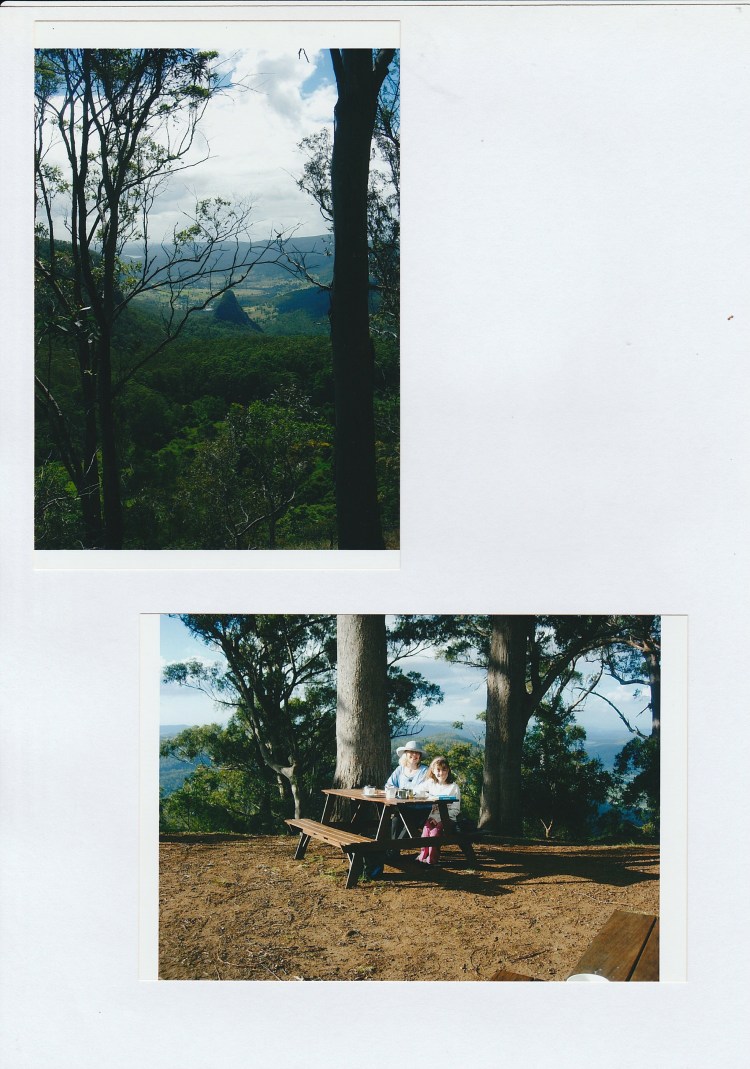
 

I’ve written before about the Gold Coast Hinterland, Queensland in my Places of Inspiration.  series, along with several other locations around the world.  What all these places have in common is spirit of place.

I found this spirit in India, at Uluru in Australia, in London, in the White Garden at Sissinghurst in Kent, and in Sydney Opera House. Today let me show you another part of Australia – Binna Burra.

On the border of Queensland and New South Wales, behind the Gold Coast, you may find a beautiful mountain range. This is known as the Gold Coast hinterland. The road winds up via many mountain passes from Southport, just north of Surfers Paradise. You travel via the town of Canungra where you may choose between two roads, going to two mountain resorts: Binna Burra and O’Reilly’s. I have spent time at both these resorts but here I’m concentrating on Binna Burra.

Binna Burra is special to me. Why is this so?

Binna Burra holds many memories; and it is a very important stage on my spiritual journey. I’ve been up there on my own, and in company with others, and have always found it a very powerful place, full of spiritual resonance. I remember standing there listening to the birdsong echoing across the mountain range, their peaks and valleys hazy with eucalyptus vapour; of waking up early in the morning, stepping outside my cabin, and tasting the mountain air as if it was fine wine.

I remember going on the Coomera Circuit, the longest of the many rainforest walks visitor may take from the lodge, which passes the beautiful Coomera Falls. there was the time we went out on a night time walk to see the luminous fungi, and another time we went to see the glow-worms.

I remember when I went on my own to Binna Burra, and found a table of other single visitors, who were so welcoming and fun and friendly. Then there was the occasion when I visited Australia with my friend Alison and my daughter Abigail and we met up with friends who lived on the Gold Coast, Paul and Mark, and we all went up to Binna Burra and had lunch in the clifftop dining room with its panoramic views of the mountain scenery.

And then of course there’s the wildlife; the possums and rainbow lorikeets and the red-eyed tree-frogs. And of course the snakes that may be lying across your path; and are a good reason to take a torch with you when you walk by night.

Do you have a special place that means a lot to you, a place of inspiration, that you believe you will constantly revisit, or at least remember for the rest of your life? Please share in the comments below!
 

Wildflower Inspiration from Highgrove

One of the loveliest things about England is the sight of our native wildflowers. wildflower meadow at Highgrove

For some it may be possible to take these things for granted, but to me, cow-parsley growing in the hedgerows, and bluebells appearing in unexpected places, is something miraculous – along with the oxeye daisy, the meadow buttercup, viper’s bugloss, red clover, the cowslip and many others exquisite plants and wild grasses. And so I was delighted to visit the Prince of Wales’ garden to Highgrove again last Wednesday, to see his wildflower meadow in its full glory, and to hear a talk on Plantlife.

I first wrote about Highgrove when I visited the garden last August, and then I noted how quirky, playful and imaginative it is.  However the wildflower meadow had been mown and it wasn’t the time of year to appreciate its true beauty. Now, however, we could delight in it as we learned about orchids and buttercups, about crested dogtail and sweet vernal grass.  Afterwards we enjoyed a glass of Pimm’s on the terrace then went into the Prince’s visitor reception centre the Orchard Room, for a delicious meal and a talk from Plantlife about the Coronation Meadows project, which aims to have created 90 wildflower meadows around the UK by the Queen’s 90th birthday. The talk was highly inspirational and by the end I was determined to create a wildflower meadow in a 4 metre square area of our own garden.

Later I was reading the Prince’s book on Highgrove Garden and I was particularly struck by what he says in his foreword. He wrote about the so-far 36-year process of creating a garden like this from scratch (in 1980 when he bought Highgrove there was nothing but extensive grassland with a few trees). Though he was talking about gardening, many of his words related closely to the creative writing process too:

He spoke of “moments of magic… light becoming dreamlike, illuminating intensity” and in such moments when we are “lost in wonder that such beauty is possible, inspiration can come.” It can “easily go wrong if you rush at it,” he wrote; and he advised against “forcing a plan or design.” Instead he believes we must “wait for an intuitive idea to form itself when the moment is right.” In many cases, he observed, it was “several years before the correct setting dawned on me.” He hoped that visitors, whether garden experts or not, would find something here to “inspire, excite, fascinate or soothe.”

Some may regard this view of the creative process rather high-minded; and of course, perfectionism can create its own problems;  and yet I believe there is much truth in these words, and they can be applied across many creative endeavours.

If you’d like to visit Highgrove take a look here for further details.

I’ll Be at Costa Coffee Royal Priors Leamington Spa on Friday 24th June 2016 Signing Copies of Mystical Circles and A Passionate Spirit

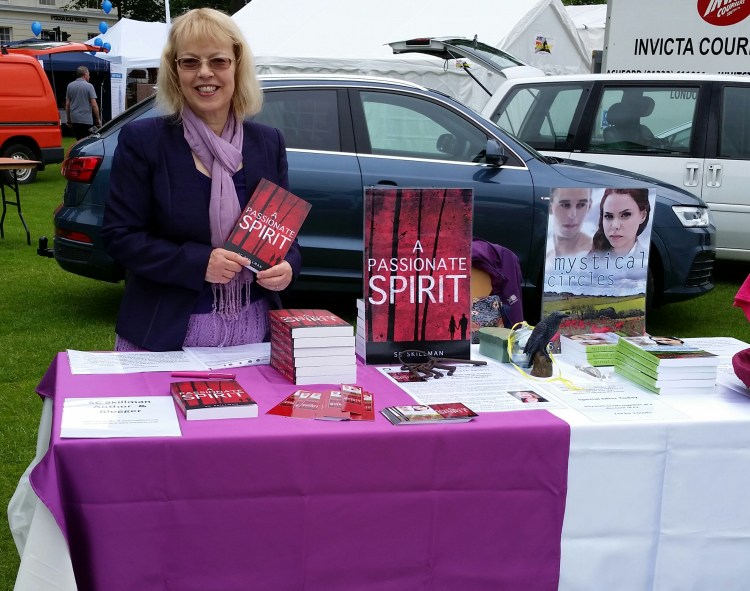
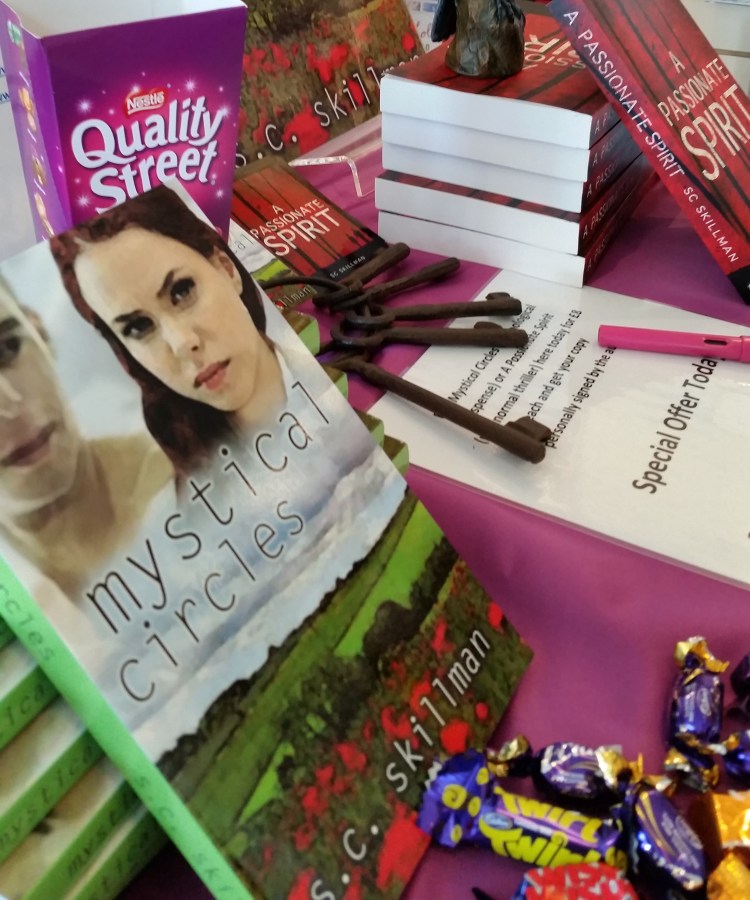
Please do join me in Costa Coffee if you’re in the Royal Priors Shopping Centre, Leamington Spa, on Saturday 24th June.cropped image of my booksigning table

I’ll be there between 11am and 2pm on that day handing out free bookmarks and postcards as well as signing copies of my two thriller / suspense novels Mystical Circles and A Passionate Spirit.

Costa are great supporters of local community projects and that includes local authors! And in common with many others, one of the things I love to do is while away an hour or so in a coffee shop… and Costa features among my favourites.  Even better if you are a writer who is able to while away several hours in a corner with a cup of coffee writing in your A4 lined pad… whether or not that café is in Edinburgh and has a view of the famous castle!

Hope to see you there.

Inspiration from Foreign Language Films in our Film Club

During the course of this blog  I’ve written about sources of inspiration from many directions – from people, cities, landscape, history, buildings, travel, books, art, TV drama and films.

Certainly films I love have enriched my creative life. Writers benefit from cross-fertilisation all the time!  A few years ago my writer friend Meg Harper set up a film group, and we’ve been meeting ever since. At each meeting six of us watch a film together which one of us chose the last time, and then we discuss it.  This way, I’ve seen several films which would otherwise never have come to my notice.  Some of them have been brilliant and moving; films from Germany, France, Poland and India. Today I bring you an article by my media student daughter Abigail on the Film Debate website about her five recommended foreign language films.

Abigail has chosen:

Pather Panchali, part of the Apu Trilogy (India); He Loves Me He Loves Me Not (France); Untouchable (France), Ida (Poland) and Run Lola Run (Germany).


Do have a look at Abigail’s article and read about all these films. And I’d love to have your thoughts either in the comments here on this blog, or perhaps you may choose to comment directly on the Film Debate website.


Thank you to Mog and Pauline of Warwick Books for hosting my book-signing event on Saturday 7th May

Many thanks to Mog and Pauline at Warwick Books for hosting my book-signing in the shop on Saturday 7th May… and thank you to those lovely customers who bought copies of my two novels Mystical Circles and A Passionate Spirit.SC Skillman in Warwick Books for book-signing 7 May 2016Although the beautiful weather kept custom low  – I suspect all the regular clientele may have been out and about, or sunbathing, rather than in the shop buying books! – nevertheless I was happy to sign books for some enthusiastic visitors.

One of my book-buyers said:

“I just cannot resist buying books when I come into a bookshop. I know I shouldn’t. My bookshelves are full. But it’s an addiction isn’t it?” When he learned I was a local author selling signed copies of my books, psychological suspense set in the Cotswolds, he immediately said, “Are you? Oh, well I’ll have to buy one of them then! Which one shall I buy?” I told him my 18 year old son Jamie, who was with me, had read both books. He said, “Your son must be saintly! Tell me then…” addressing himself to Jamie… “which book do you recommend me to buy?” So Jamie recommended him to buy “A Passionate Spirit.” He said, “All right then. I’ll buy that one.” So I signed it and sold it to him.

This is the sort of customer I love!  I wish all subsequent customers had followed in his footsteps! But an author  is only too well aware how varied people are especially in their reactions to published books, as shown by online book reviews: and I am grateful for those who encouraged me with their response.

May I also congratulate Pauline for being nominated in the British Book Industry Awards shortlist for bookshop manager of the year.

My next local book-signing event will be in Leamington Spa in  June, so watch out for details of that!


I’ll be at Warwick Books Signing Copies of Mystical Circles and A Passionate Spirit on Saturday 7th May

Join me on Saturday 7th May at Warwick Books, 24 Market Place, Warwick CV34 4SL, where I shall be signing copies of Mystical Circles and A Passionate Spirit from 11am to 2pm.IMAGE 2


If you’re out and about in the area, and enjoy reading thriller suspense fiction, Warwick Books is the place to be on Saturday morning.

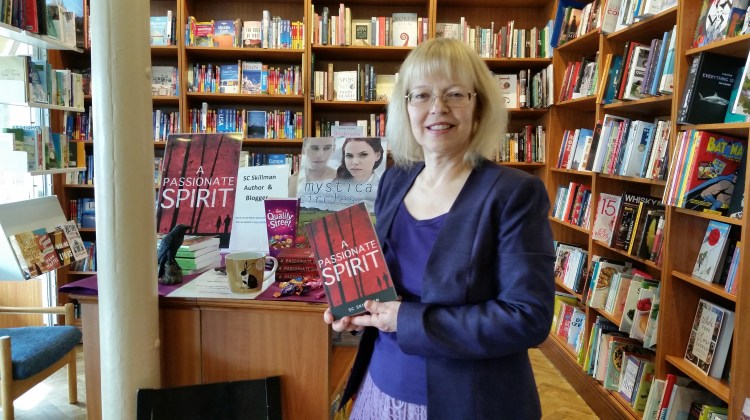
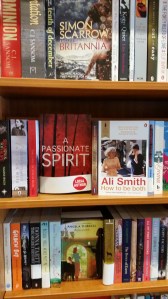
APS on display on shelf in Warwick Books


I’d love to see you there!


Come and chat to me, browse through my books and many others, and support Mog and Pauline, managers of this lovely independent bookshop which, in common with many other independent bookshops, offers a personal service, a friendly welcome and a strong encouragement to local authors.

Warwick Books
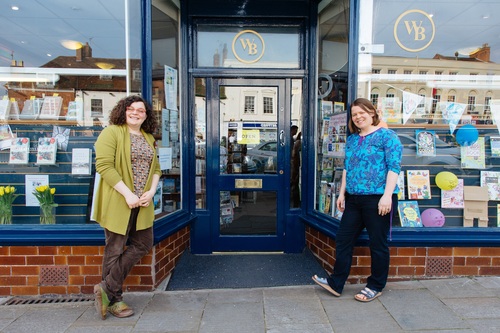
Mog and Pauline outside Warwick Books


“Inner Child” Faces Down “the Perpetrators” at Constellations Therapy Workshop at Hayes Conference Centre

The most powerful workshop I took part in at the conference “Continuing the Journey: Rummaging for Reality” last week was a constellations therapy group run by a therapist who specialises in working with people who have suffered spiritual, satanic and sexual abuse.continuing-the-journey-home Approximately 12 of us took the part of various ‘voices’ in the client’s brain (identity confidential of course). The client had herself, over a long, and painstakingly slow process with the therapist, identified and written down the words spoken by the voices in her head. She had given permission for the therapist to use this material in her workshop with us – and was hoping to benefit from our experience with it.

We all took different roles – in this case, the names of the roles included Me, Body, Sexuality, Inner Child, Anger, Faith, Church, Priest, Nuns, Uncle (the last 4 named roles were all perpetrators). I took the role of Inner Child. As we read out our scripts, and then started to move around in relation to each other, inside the client’s brain, we decided how to interact with each other, and what we needed in order to progress and make changes.  As the workshop progressed, each one of us entered into our roles so strongly we were no longer using scripts. The whole thing became dynamic, and compelling.  I found myself, as Child, being strengthened and supported by Anger; together we were able to challenge and weaken the lies of the perpetrators.  I don’t think anyone who took part in that workshop is likely to forget it for a very long time! I heard different members of the group describing it to others afterwards as “stunning.” For a while during the rest of the conference, when I looked at each person, I found myself thinking of them as the role they had been playing.

I wondered at one point how this experience might play into my fiction. I then realised that even if I were to create fictional characters based upon these different voices in the client’s brain, I would not be able to replicate what happened in the group. For each voice / character needs to be fully rounded in fiction; even if someone is a ‘perpetrator’ and has done terrible thing to a vulnerable victim, we would have to see why that character has behaved in this way. We would need to look into their own childhood, their own background, and would need to understand them from the inside as well as the outside. That we were not in a position to do, within the circumstances of the constellation therapy group.  All I knew was that the voices of the perpetrators had to be faced down.

How this will impact upon my new novel, I cannot yet say as it will take time to process!


Rummaging For Reality at the Hayes Conference Centre, Swanwick

Here I am, a psychological suspense writer,  at a conference for psychotherapists, healers, counsellors and creative people – and together with them  I am rummaging for reality.

This is  very brief post in a spare hour before I go off to a workshop this afternoon. But already I feel I am working my way towards a new clarity and insight both into this life and into my new novel.  One came this morning. It was very simple: only these words: “We are exploring different parts of the same reality at different stages of our lives.”

A few days before coming on this conference I was doing some of my own rummaging, through a file of newspaper clips which I’ve kept for about 3 decades now – just to see what jumped out at me in my current situation, a new work-in-progress before me.


And it was an article from the Sunday Times 10/5/92 written by the novelist Wendy Perriam called ‘Heaven Can Wait’. It was subtitled Do bad Catholics make good writers? And considered the fact that many great writers – e.g. Greene, Joyce, Spark, Waugh, O’Brien and Lodge – either lapsed, or struggling with their faith, poured out words as once they poured out prayers.

In this article Wendy Perriam says many things which touch me profoundly, despite the fact that I am not a Catholic, present or lapsed. I’ll quote just one point here, which I resonate with, and which shone out at me from my ‘rummaging’:


‘A sense of religion does give a depth and resonance to fiction, and if our characters have immortal souls, they’re surely more important, more valuable to their creator, than if they’re regarded as mere accumulations of vibrating molecules.’

Hopefully I may have some more insights from my rummaging to share with you in next week’s post!


Thoughts on Three Dimensional Characters in Films and Novels – Inspired by Hugh Grant

On the Graham Norton Show which was broadcast on BBC One on Friday 16th April 2016, Meryl Streep and Hugh Grant in Florence Foster Jenkinsactor Hugh Grant said he took on the role of St Clair Bayfield in the newly-released film Florence Foster Jenkins against his previous intentions, because a) the script was so good and b) because he was attracted by the three dimensional character he was being invited to play – which implies he thinks all his previous characters were one dimensional.

Hugh said that the character he plays, St Clair Bayfield, is “a failed actor” who has chosen to protect Florence (played by the wonderful Meryl Streep) from true self-knowledge because he loves her. In the film, this character goes to extraordinary lengths to collude with Florence’s self-deception, by covering up her lack of ability as a singer and paying off bad reviewers and hiding her from the truth.  In other words he does what seems to be cowardly, morally weak, wrong and even cruel, for complex reasons that are not straightforwardly immoral, and because he is emotionally invested in supporting her and upholding her in the dream she believes in.

I haven’t seen the film yet and so cannot offer a review, but I was fascinated by the point Hugh Grant was making. Many love the characters Hugh has played so far during his film career, but his comments brought me back again to the vital importance of three dimensional characters, not only in persuading major actors to take on film roles, but also in winning success for a novel.

Three dimensional characters in fiction are those whose actions, words, relationships, behaviour and inner life all work together to win our empathy.  Just as the hallmark of a great leader is the ability to win people’s confidence, the sign of a great character in fiction is that we care for them deeply, whether their actions are “good” or “bad” or far less easily defined. Whilst reading a recent novel I was starting to intensely dislike a certain character, when his actions and behaviour were depicted from the viewpoint of someone else. But then the author took me into his viewpoint – and my attitude to him was transformed.

I believe we only need to see and understand someone’s inner life, to feel that empathy for them.

Do share in the comments. Which are your favourite three dimensional characters in fiction, and why?

Reflections on Crime, Wickedness, and Redemption from the Crime Museum Uncovered, Museum of London

On Thursday 31st March 2016 I read many stories at the Crime Museum Uncovered, an enthralling exhibition currently showing at the Museum of London, London Wall.  Crime cases from Victorian times to 1975, solved by the Metropolitan Police. Most of the criminals were hanged; some were miscarriages of justice; vulnerable people, who today would have received 10 years in jail and might then have turned their lives around and gone on to achieve great things.

Others were people we might think “deserved to die” because the crimes they had committed were so ruthless and wicked (for instance the woman who, under the guise of running a care service for children of the poor, murdered 15 babies).

In some cases, black and wicked hearts were exposed, hearts “as hard and merciless as rock”; and victims whose names we only know by the terrible manner of their deaths, and the disposal of their bodies by their murderers.  People, it seems, who we were to define by the way they died.  And yet, as a novelist, I am convinced that no-one is ever defined by the manner of their death.  We are all complex beings, mind, body and spirit, with our joys, sorrows, memories, dreams, passions and impulses. We don’t define the greatest by their deaths; neither Mozart, nor Shakespeare, nor any other. So why should we define the lives of anyone in that way, no matter how obscure, how ‘ordinary’ they were during their lives on this earth.  This exhibition set out to ‘give the victims a voice’ and yet I did feel it fell into the trap of defining the individual victims by the manner of their deaths.

I am fascinated by human wickedness and this will impact upon the theme and plot of my third novel, following on from “Mystical Circles” and “A Passionate Spirit”. I touched on an aspect of evil in “A Passionate Spirit” but will go much deeper in my next novel. I’m not sure yet whether the paranormal will be there, but psychological suspense certainly will, and so will crime, setting the characters a huge challenge.

The Christian faith teaches that no-one is beyond redemption.

This is just one Christian concept I, along with, I suspect, many others, struggle with.

Alexander Solzenitsyn in his great book The Gulag Archipelago , which I read in my teens, describes  what he calls “the threshold magnitude of evil”. Evildoing also has a threshold magnitude. Yes, a human being hesitates and bobs back and forth between good and evil all his life. He slips, falls back, clambers up, repents, things begin to darken again. But just so long as the threshold of evildoing is not crossed, the possibility of returning remains, and he himself is still within reach of our hope. But when, through the density of evil actions, the result either of their own extreme danger or of the absoluteness of his power, he suddenly crosses that threshold, he has left humanity behind, and without, perhaps, the possibility of return.”

Every so often, over the years since reading that book, I have been brought back to Solzenitsyn’s observations.  Whenever I read books about the Nazi Holocaust, his words come to mind.

Yet have we ever considered that, when Jesus took upon his shoulders the sins of the world, as Christian theology teaches, he at that moment was the worst person in the world.

It is a mind-blowing thought.  We read of wicked acts in our news every day, and (unless we are suffering from compassion fatigue) we shudder.

Yet Jesus was the most wicked person in the world, at that time of darkness, before his resurrection.

It shows once again the huge paradox that is the Christian faith. “The foolishness of God is wiser than the wisdom of men.”