Book Review: Born Survivors by Wendy Holden

This is the story of how three young women – Anka, Rachel and Priska – hid their pregnancies from Dr Josef Mengele on the ramp at Auschwitz, and went on to suffer in the concentration camps and give birth to their babies just before Liberation in April 1945. All three of those babies then met for the first time at the age of 65 and became very close because of the astonishing similarity of circumstances in which they had been born.

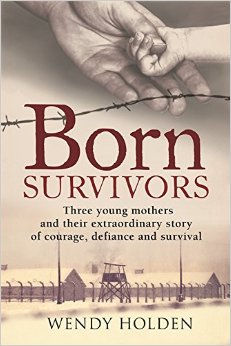
Born Survivors by Wendy Holden

I’ve read several books about and by Holocaust survivors, and yet each time I read the detailed account of an individual’s experiences I feel the horror afresh. This account, brilliantly told by Wendy Holden, spares none of the terrible details; the one thing that keeps you going, as the reader, through the grotesque inhumanity of the Nazis, is the knowledge that “this story is only being told because the three women and their babies survived.”

As survivor Esther Bauer put it: “The first twenty years we couldn’t talk about it. For the next twenty years no-one wanted to hear about it. Only in the next twenty years did people start asking questions.”

When reading these books I have two immediate responses. One is to try to imagine how I would have coped with those kind of circumstances, and how I would have behaved. The second response is always to ask what this tells us about the nature of human beings,  of good and evil, hope and despair.

This time, I had the following thought:

The essential requirement for “hope” seems to be “macro” thinking. For many of us, when life’s “normal” we live our little lives with our small goals. But when Force Majeure intervenes, throwing us into a survival situation – be that earthquake, tsunami, terrorist atrocity, or Nazi Holocaust – our goals shift from “micro” thinking to “macro” thinking, at the point where lives and hopes and dreams are torn apart – a shift takes place. A new goal replaces the old: to survive; or to know that your story might be known in the future. And these three women would have hoped that their as yet unborn babies would be the living embodiment of that.

Book Review (English Social History): “Through the Keyhole” by Susan C Law

It seems part of the psychological make-up of the English people to bestow power upon the wealthy and privileged; whilst at the same time depriving them of the right to privacy.

And as we’ve all recently seen in the General Election, you have to be tough to play for high stakes; winner takes all, and  unsuccessful opponents lose everything.

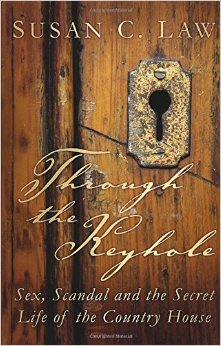
Through the Keyhole by Susan C Law

Today’s obsession with the private lives of celebrities and those “in high places” finds its parallel in Georgian and Regency England, where the public was hungry for moral lapses among the aristocracy. This fascinating and scrupulously researched book shines a spotlight onto a universal aspect of human behaviour – but the scholarly focus is upon how eighteenth century society reacted to it, thus enriching our knowledge of the social history of the time.

Aristocratic rakes are the stuff of novels set in Regency England. One of the most striking things about the book is how intensely the opinion-makers of the time wanted to hold on to the idea of “rank co-existing with honour”, despite all evidence to the contrary. Another outstanding aspect of Susan Law’s account is the hypocrisy of the society as the popular press indulged itself in moralising and judgementalism, along with minimal respect for confidentiality, slander and libel, thus feeding a voracious appetite by the public. But I was also surprised by the disregard that the adulterous aristocrats themselves paid to covering up their tracks, and their failure to have due regard to the ominipresence of their servants. Tumbled bedclothes, two dents in the bed, and hair powder on the pillowcases seem obvious tracks to cover up!

Susan Law examines the craze of the 1790’s for printed court reports of adultery trials, which continued through to the late 1830’s with the popularity of the “Crim Con Gazette”. She examines the changes that took place up until the 1832 Great Reform Act which altered the way the nation saw itself in terms of social hierarchies – opening up “previously unthinkable possibilities for the middle class”. Certainly in the early part of the period it is very noticeable that often “cuckolded” husbands (themselves equally guilty of adultery) might be awarded huge damages and then go on to an honourable career in high office, while adulterous women were far more likely to be “sent away” in shame and have their lives ruined.

Chief among the adulterers later on of course was the Prince Regent, and I was amused to read the opinion of Theresa, sister of the Earl of Morley, who wrote in a letter “’tis dreadful to think of the open profligacy of that Monster…. we must all go to the dogs should he ever unfortunately come to the throne.”

To the non-academic reader, the most interesting parts of this book are when the author gives accounts of specific cases, such as that of Lord Ellenborough and his young wife Jane. There are among these stories accounts that will draw a variety of different responses from the reader; for as the blurb points out, the different stories are passionate, scandalous, poignant and tragic.

A fascinating insight into eighteenth century social history, with plenty of material which will give us cause to reflect upon the preoccupations of today’s Britain as well.

A Journey through Golden Fields to Stratford-upon-Avon to see Classic Cars at the Motor Festival

Today I found myself in the driver’s seat once more (6 weeks after my hip operation) and joining the queue of cars heading into Stratford-upon-Avon.

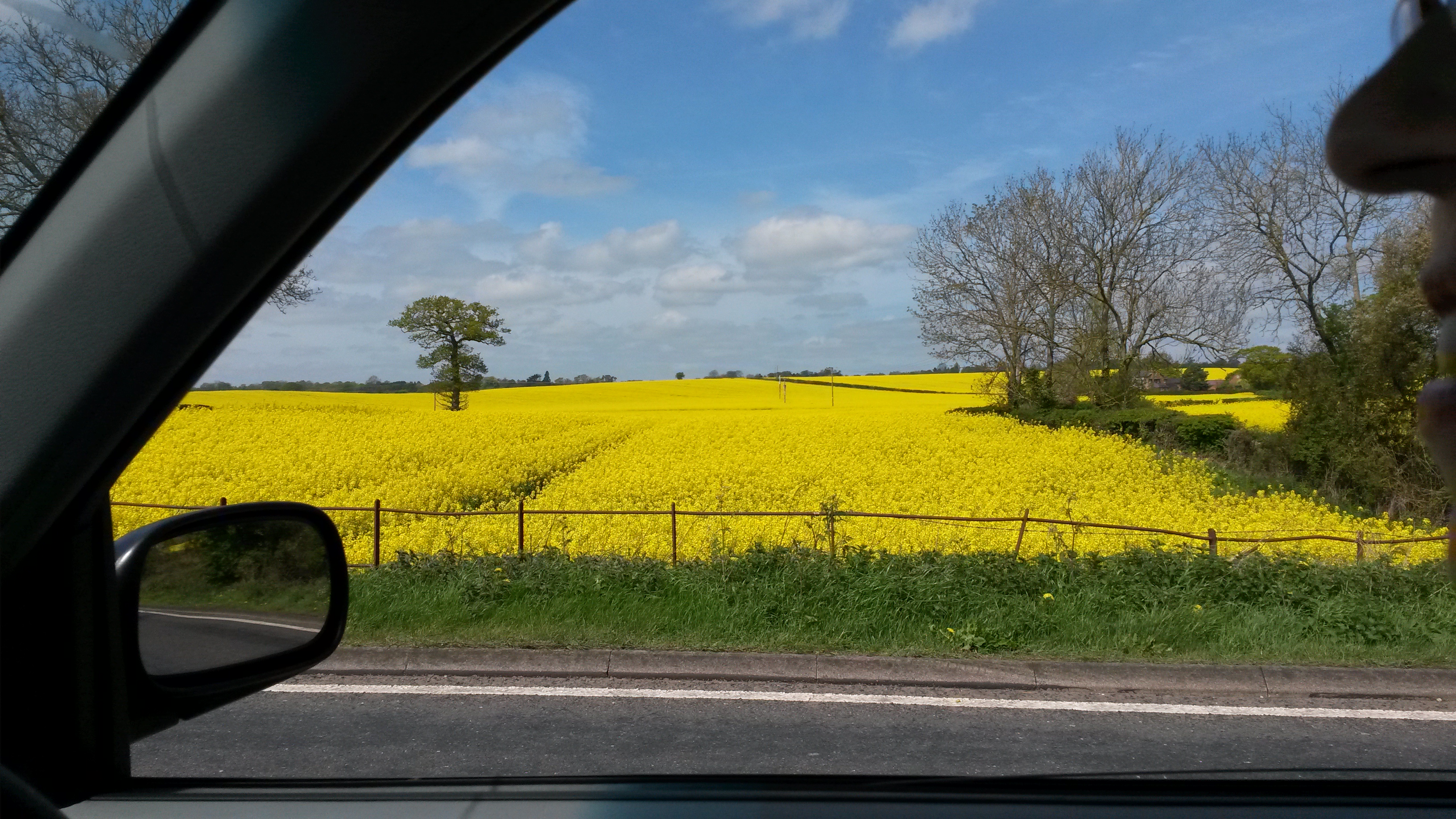
View of  fields on the journey from Wariwck to Stratford upon Avon
View of fields on the journey from Wariwck to Stratford upon Avon

The long traffic queues were because Stratford was hosting its annual Motor Festival today. So this gave Abigail plenty of opportunity to take photos of the lovely fields of rapeseed flowers on either side of us.

I cannot think of golden fields, sunshine and Shakespeare without being reminded that the short-lived nature of English sunshine, and the passing of time, are some of Shakespeare’s most beloved themes, constantly recurring in the Sonnets.

As I gazed at the fields I was reminded of the words Full many a glorious morning have I seen/flatter the mountain-tops with sovereign eye/kissing with golden face the meadows green/gilding pale streams with heavenly alchemy; and could imagine that Shakespeare felt just as I did, viewing the glorious landscape around Stratford-upon-Avon.

Stratford upon Avon Motor Festival 4 May 2015

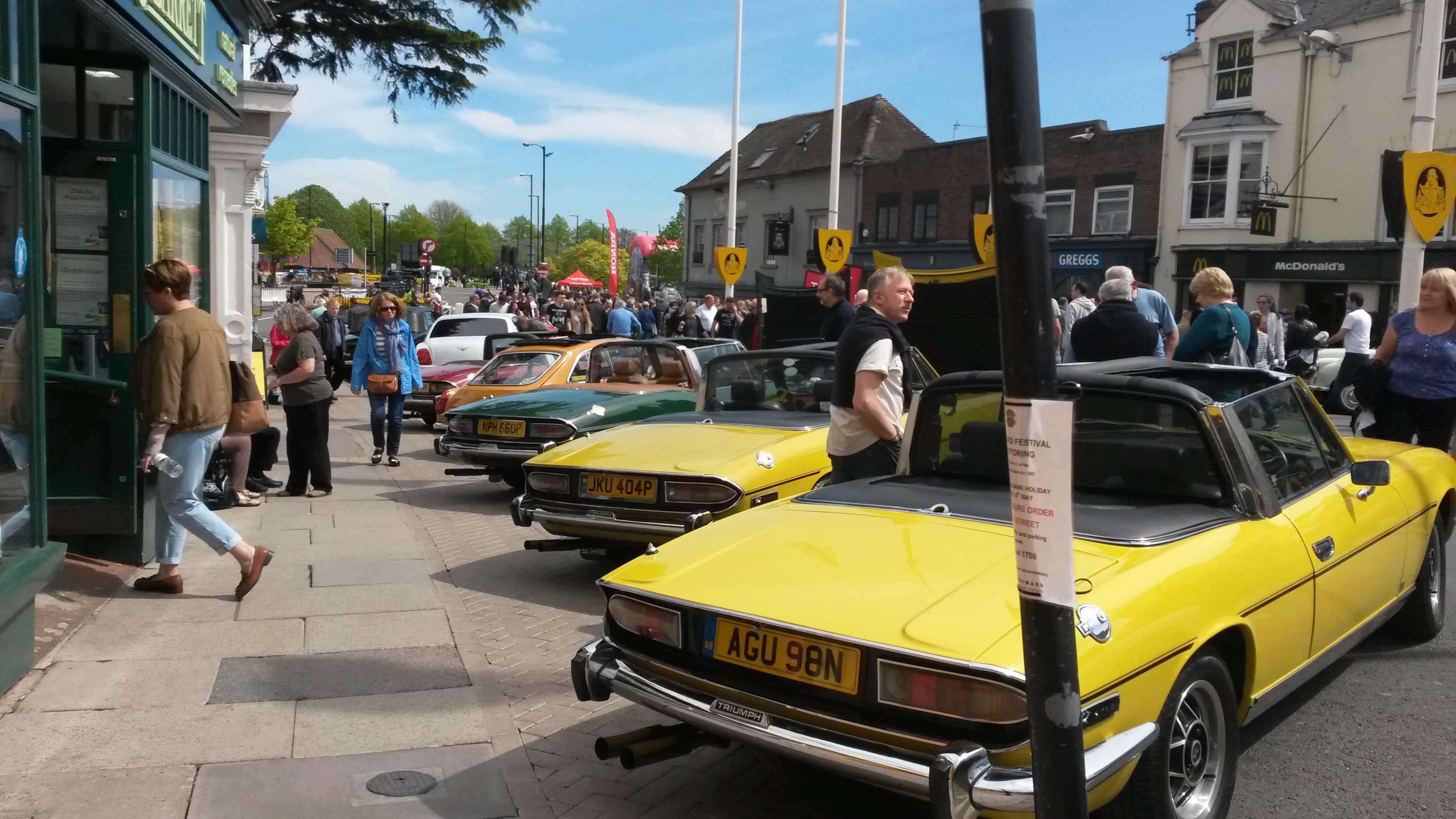
Once in Stratford, we enjoyed the atmosphere of the motor festival.

All the way down Bridge Street and Henley Street and in front of the Royal Shakespeare Theatre, the Shakespeare Centre and the Shakespeare Birthplace were the kind of cars that I only know about because Jeremy, James and Richard have at one time or another taken them round the Top Gear track.

Gleaming paintwork, exquisite design and immaculate engines were on display, and the owners of these wonderful machines sat beside them at picnic tables, drinking red wine, and keeping a close eye on their showpiece.

I always love visiting Stratford-upon-Avon, for many reasons, and feel so lucky to live nearby.

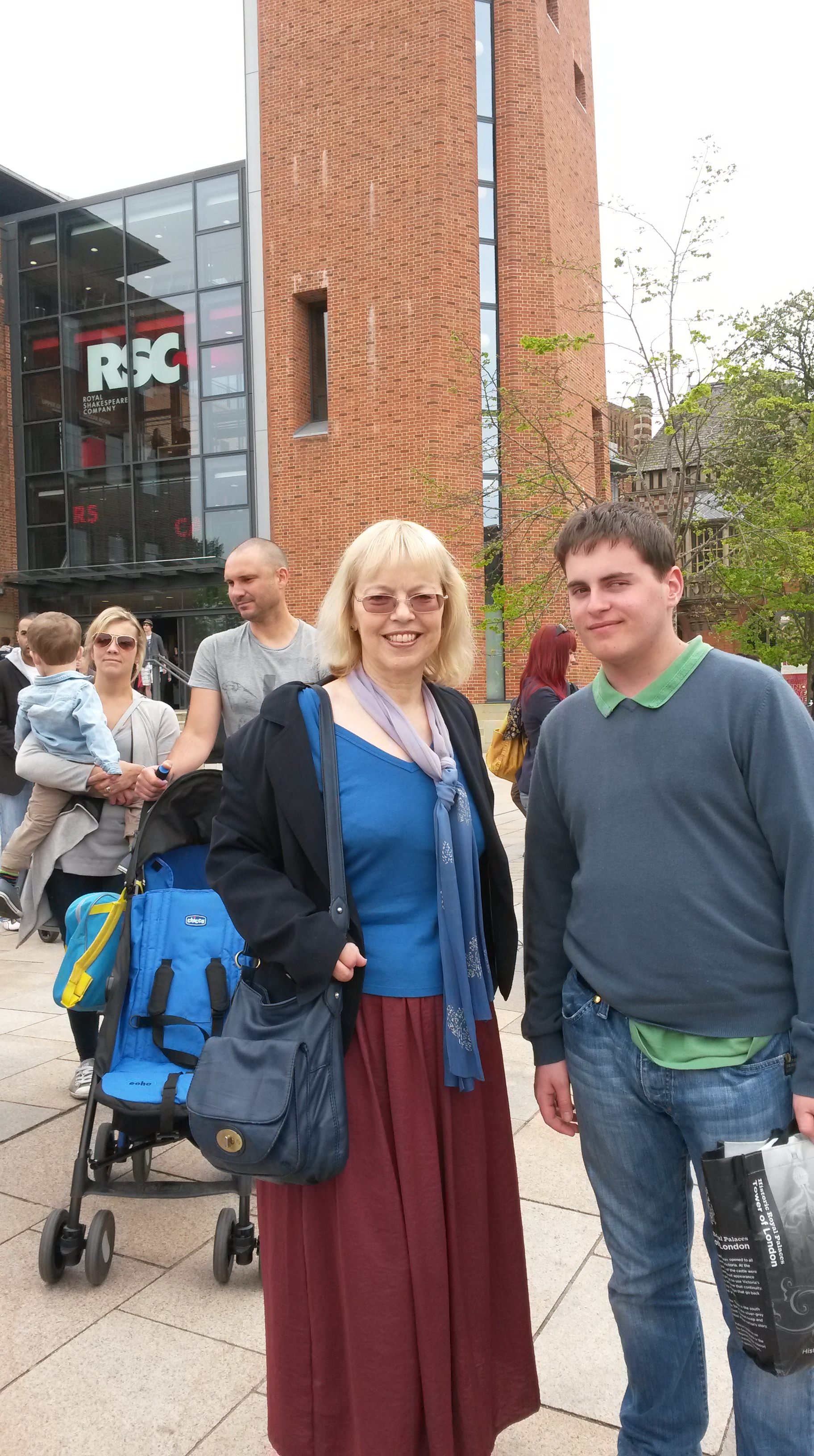
Sheila and Jamie in Stratford upon Avon

Secret Gardens: The First Glimpse of the ‘Privy Garden’ at Kenilworth Castle for Elizabeth in 1575

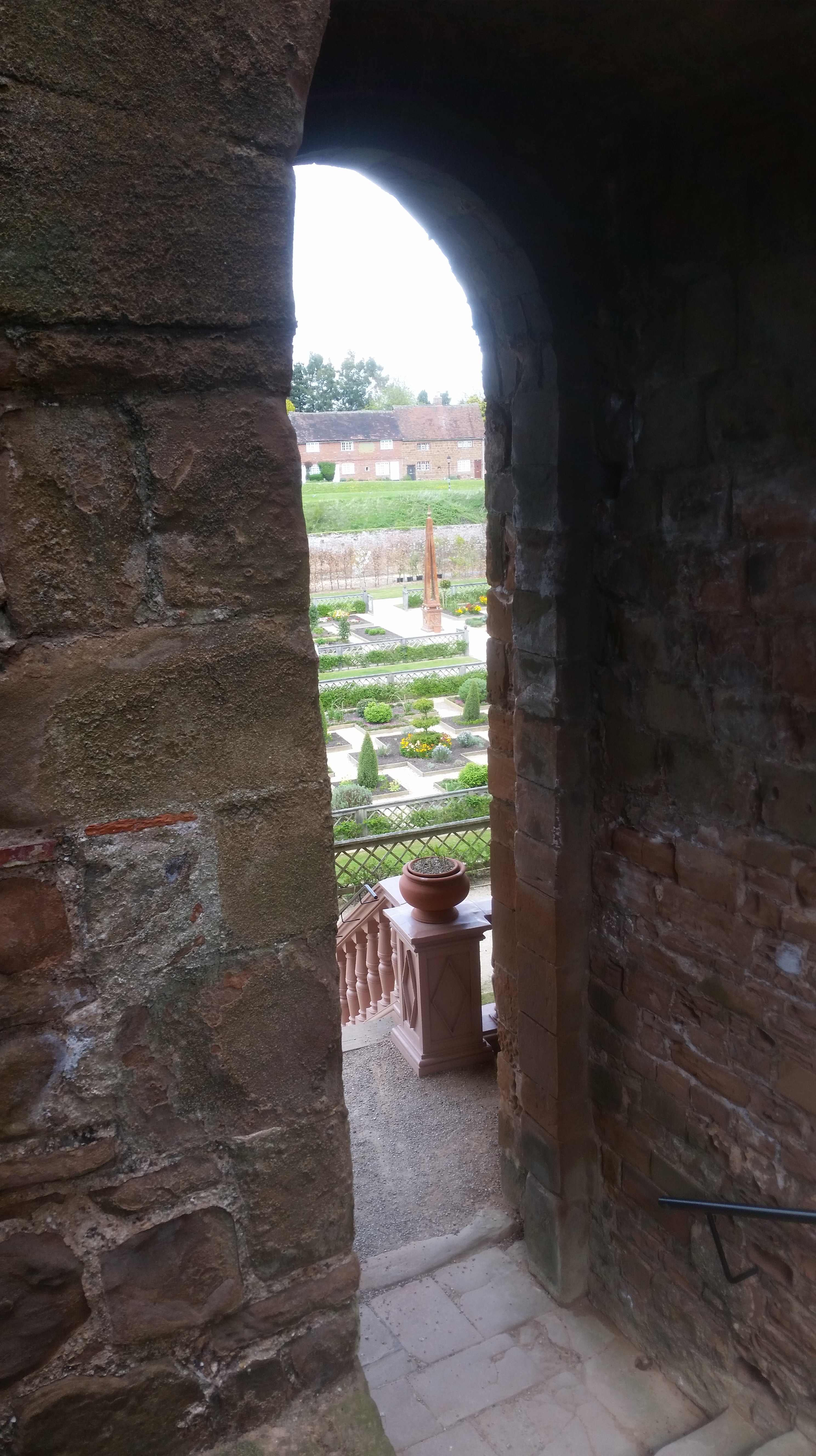
I find this view of the Elizabethan Garden at Kenilworth Castle very evocative.

Approaching the steps down into the Elizabethan Garden at Kenilworth Castle

It would have been the view Elizabeth  first saw when Sir Robert Dudley led her into the garden in 1575, hoping that this time she’d accept his proposal of marriage.

This first sight of the garden, glimpsed from the Keep, conjures up for me visions of secret gardens, of a lovely vision opening up unexpectedly from a dark approach.

Secret gardens are a strong archetype, a central image in my childhood reading.

They represent the Golden Age of children’s literature and this is reflected in a book I found on the subject.

The classic children’s writers who have touched upon this theme include Lewis Carroll, Kenneth Grahame, George Macdonald, Louisa May Alcott, Frances Hodgson Burnett, A.A. Milne and others whose books I have loved. No wonder, then, that this view immediately appealed to me when I visited Kenilworth Castle again today.

View from the Keep into the Elizabethan Garden at Kenilworth Castle

The Creative Power of an Intense Group of People in the Hothouse Environment of a Writers Retreat

Mystical Circles by SC Skillman

I’ve now finished my series of Cave posts as new inspiration has intervened!

One of my fellow bloggers Lance Greenfield has just opened up thoughts of writers retreats by reblogging this post on the subject by Max Dunbar. Lance then went on to ask his own followers for their responses to Max’s thoughts, and whether it would be worthwhile for him to go on one of the many writers’ courses or retreats that are available here in the UK.

Part of my inspiration for my novel Mystical Circles was an Arvon Foundation poetry course which I attended at Totleigh Barton farmhouse in Devon. My fellow poets that week reflected the wide variety of characters to be found at a writers’ retreat in the UK – and in the story of Mystical Circles.  Among these you may find – alongside whatever idiosyncracies you yourself may bring – several complex personalities; and your interactions with others, and your observations, form an inexhaustible source for a writer. And I believe it’s vital to write about people, no matter how deeply flawed, with love and empathy, never in a detached or critical spirit.

Below I list some of my favourite plays, books and films which have achieved this:

Unnatural Causes by PD James (detective novel set in a literary community)

Peter’s Friends (film directed by Kenneth Branagh and starring  Stephen Fry and Hugh Laurie)

Abigail’s Party by Mike Leigh (brilliantly developed and improvised by playwright and actors and first broadcast by the BBC in 1977)

Heartbreak House by George Bernard Shaw (a group of people are invited to one of Hesione Hushabye’s infamous dinner parties, to be held at the house of her father, the eccentric Captain Shotover)

If you’re fascinated by group dynamics and it’s relevant to what you’re writing, then a writers retreat – a small group of intense people in a hothouse atmosphere – may be ideal for you!


Words From a Cave – Part 3

e61029a81a1cffb20b2a7361b1aae148
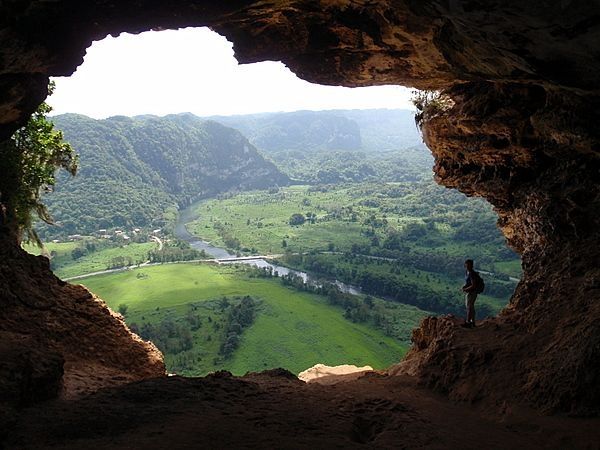
La Ventana Cave, Puerto Rico

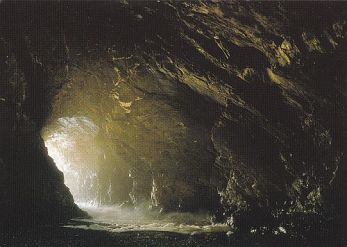
Here I am about to step out of the cave nearly 3 weeks after my hip replacement operation – without crutches!

Yesterday I took part in a beautiful performance of Mozart’s Requiem with the Coventry Spires Philharmonic Choir in Holy Trinity Church Coventry. I think that, together with a walk through the Coventry city streets, counts as a temporary exit from the cave!

I’ve also been doing plenty of reading and have just finished Phil Rickman’s A Crown of Lights, one of his excellent Merrily Watkins series of novels

I expect to be walking freely without use of crutches before the next blog post, so I’ll be back once again on topic for this blog –  which is, whatever has inspired me during the preceding week.

I’ve also received a very positive and encouraging report from a beta reader on my latest novel A Passionate Spirit; have made a few changes as a result of her feedback; and am now waiting to hear from a publisher who currently has the first few chapters and synopsis. So I feel as if this photo of the wonderful view from La Ventana Cave, Puerto Rico, is ideal for where I am right now. Thank you again for your encouragement, for your views and comments, and thanks also to new followers of this blog – I greatly appreciate you all!

Versatile Blogger Award

I was very pleased  to learn that I’ve been nominated for this award by fellow-blogger and Goodreads friend Lance Greenfield whose blog I follow.

Lance is the author of “Eleven Miles” a book which I reviewed recently and which I can thoroughly recommend.

Writing a weekly blog post is an excellent writing discipline, and a wonderful creative outlet, as I write about anything which has inspired or intrigued me during the week. I began the blog shortly after my debut novel Mystical Circles was published, with the idea of appealing to those who might enjoy reading my fiction. I especially like writing on spiritual subjects, as well as history, the arts, films, books, people and places of inspiration. I hope that my blog readers will be keen to buy my next novel (provisional title: A Passionate Spirit) when it comes out (hopefully this year). Meanwhile I love writing my blog for its own sake, and have also found several other engaging and talented blog writers on the internet.

I hope you enjoy exploring my blog and that you will give me plenty of feedback.

I am very happy to accept this award. Thank you Lance!

My nominations for the Versatile Blogger Award

Now I’d like to nominate the following blogs that I’ve been following with interest for some time.

http://ramonacrisstea.com/ – a lovely blog by a young Romanian fashion designer who posts beautiful photos of herself in her own designs

https://megharperbooks.wordpress.com/ – the blog of my friend and fellow author Meg Harper

https://zenandtheartoftightropewalking.wordpress.com/ –  author Vivienne Tufnell’s imaginative, sensitive and intelligent blog

http://spookymrsgreen.com/ – posts from another fellow author, Catherine Green, who writes paranormal fiction and whose posts about her life as a young mother are touching and engaging.

https://delemares.wordpress.com/ Meditation, Mental Health and Mindful Crochet – a very thought-provoking and discerning blog from Sandra Delemare, retired mental health nurse.

http://www.sheepdressedlikewolves.com/ – written by Andy Mort who is consistently one of the wisest and most thoughtful voices on the internet


Finally, to fulfill the conditions of my award, and these are the conditions that all recipients must follow, so please do so if you have been nominated by me, I must state the rules of the award and list seven things about myself that you may not know.


The Seven things about myself that you may not know

1. I did a parachute jump over Bickmarsh Airfield near Stratford-upon-Avon in 1976, with the BBC Parachute Club.

2. I flew over the Outback of Australia in a hot air balloon in 1990.
3. I was in Rhodes on holiday with my sister and her friend when war broke out over Cyprus, between Greece and Turkey. We were unable to leave the island for a while, and discovered that all the male staff of the pension we were staying in had gone off to join the war, so we had to make our own meals.

4. I wrote a play about my time there, and all the characters I met, called Fortnight of the Cockroach which I sent to the BBC. It was turned down. Since then I’ve lost the original ms. I’m hoping it’s somewhere around the house and that I might uncover it again one day!

5. I lived and worked in Brisbane, Australia, for four and a half years.
6. During my childhood and early teenage years I sang with a girls choir in Orpington, Kent. We were ‘the chorus of younger angels’ in a performance of Mahler’s 8th Symphony at the Royal Albert Hall, conducted by Leonard Bernstein. I’ve also sung under the baton of Andre Previn and Simon Rattle.

7. My most outstanding holiday experience was in a town in the Himalayas called Badrinath, (close to India’s border with Tibet) where I saw Neel Kanth, ‘mountain of light’.


The Award Rules

  • Thank the person who gave you this award.
  •  Include a link to their blog.
  •  Next, select  several blogs/bloggers that you follow.
  •  Nominate those bloggers for the Versatile Blogger Award.
  •  Finally, tell 7 things about yourself.

Full details of the award can be found on the VBA website through this link.

Words From A Cave – Part 2

Mulu Caves Malaysia
Mulu Caves, Malaysia

Since last week’s post I’m starting to see the light flooding through into my cave. I’m moving around on my crutches (and sometimes without them.) I went to the Maundy Thursday, Good Friday, and Easter morning services at my church (St Mark’s Leamington Spa) and then later on Easter Sunday I was out at a local beauty spot, Burton Dasset Hills, near Banbury, enjoying the lovely views  and watching a white Scottie dog barking excitedly at two very indifferent and unimpressed sheep!

My novel, A Passionate Spirit, has been sent to a publisher and so this is a very opportune time for me to be taking a break.

I promised you the fruits of any creative thinking I manage to do. One thing I’ve learned is this: when you spend a significant amount of time in a cave, you stand to discover who your angels and demons are: because they’re all in there with you. I’ve identified 4 demons, the details of which I won’t reveal here, save for one: that is ‘the demon of compulsion to compare myself, unfavourably, with others’ – and in particular, other authors and their perceived success.  It’s good that I’ve identified and named these demons for that is the first stage to banishing them.

Of the angels, I can say that I’ve received one fruit of creative thinking; I’ve recognised  where my point of interest now lies, as an author: it’s actually the point of breakthrough. I’m interested in spiritual / paranormal / supernatural / otherworldly things breaking through into the real, solid, contemporary world. I’m interested in the crack – the clash of worlds and worldviews and different understandings of life / the universe and the way it operates – and most critically of all, how the people in this ordinary world react to and handle it.

A creative person , I realised, gets an idea and runs with it – and then, somewhere along the way, discovers something striking, surprising, unusual, a new angle – which gives the project an outstanding quality.

More insights from the cave next week – although I may then be walking out of it!

Words From A Cave – Part 1

merlin-cave
Merlin’s Cave, Tintagel

I had a hip operation last Tuesday, and am now recovering at home. It’s difficult living with reduced functionality, relying on crutches and a cocktail of drugs. The best metaphor I can think of to describe my emotional well-being is that of living in a cave. I’ve always been in good health and this is something new for me. I’m learning how to re-think all the most ordinary things that we take for granted during our daily lives. And I’m learning to ask other people for help instead of maintaining my hold on independence, thus bringing out new caring skills in those closest to me. I hope the next few weeks will be a time of creative thinking. I will post the fruits of this over the next few weeks. Thank you for your loyalty!

Exciting Times for the People of Leicester, for Those Who Love English History, and for the Power of Story

In the last few years we’ve seen an astonishing and exciting thing here in our country: a relatively small, minority interest group dismissed by some as a gathering of eccentrics, has been triumphantly vindicated in the most extraordinary way. And the Ricardians‘ journey has drawn with them a city, a nation, the sweep of English history, and something powerful that has touched our spiritual roots.

The group is of course the Richard III Society – whose existence I first heard of 15 years ago whilst viewing an exhibition during my walk along the York City Walls – and the triumphant vindication is the discovery of the remains of Richard III, their authentication through a thrilling blend of science and history, and the captivation of millions by Richard’s story, and by the solemn and beautiful ceremonial with which his remains were received into Leicester Cathedral.

I’ve written about Richard III on this blog before, after visiting Bosworth Battlefield myself, and also after reading and reviewing John Ashdown-Hill’s excellent book The Last Days of Richard III and the Fate of His DNA. Now I expect that this book, along with the tourist industry in Leicester and the economic fortunes of that city, will be given an enormous boost by the last few days’ events.

IN my former blog post about Richard III, I wrote this:|

“I cannot read of a historical figure like Richard III without seeing the parallels between his story and fate, and our own experience in this life.

For the basic principles of life do not change.

Nothing and no-one can guarantee any particular outcome for us. Not vice, not virtue. Not piety, not betrayal.

But of one thing I now feel assured by Ashdown-Hill’s book: where there is integrity and focused persistent research, and rigorous dedication, as in the painstaking work of the best historians and genealogists, truth, ultimately, will out.”

How many people must have watched Channel 4’s coverage of the events surrounding and including the reception of the body of Richard III into Leicester Cathedral, with a mix of emotions? Among us there would have been those who were amused, astonished, partly disbelieving, fascinated, excited, uplifted, moved. It was poignant, dramatic, dignified, graceful and solemn.

Certainly we are seeing “a fusion of everybody’s beliefs bound up in a very English moment which allows us to transcend the present moment and is big enough to accommodate all of us.”

Richard III represents and illustrates once again the “what ifs” with which British history is so liberally scattered.

As I watched the coverage of Richard’s remains travelling through the streets of Leicester, packed with onlookers, I saw many people throwing white roses onto the carriage. And I thought that with every white rose thrown, each person was somehow connecting with, claiming their place, inhabiting a story which expresses all the unaccountable mutations of life.